
Lawn Care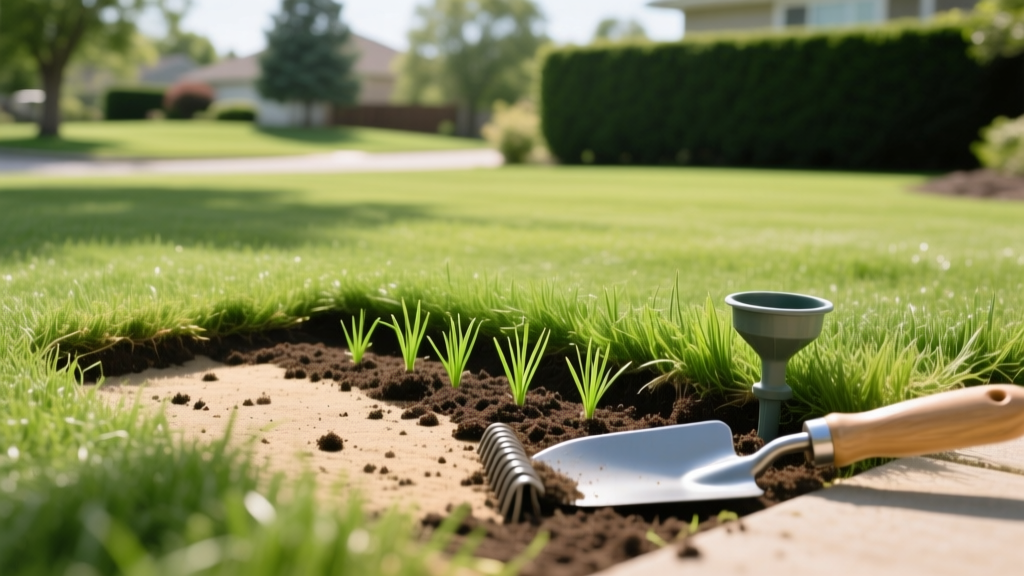
How to Fill Holes in Lawn: Step-by-Step Repair Guide
Diagnose the Root Cause Before Filling
Before you unroll your wheelbarrow, you must identify why the hole exists. Filling a void without addressing the underlying cause guarantees the repair will fail within a single season. Holes generally fall into three categories: animal excavation, soil subsidence, and mechanical damage.
- Animal Excavation: Skunks and raccoons dig shallow, cone-shaped holes (3 to 4 inches wide) searching for white grubs. Voles create dime-sized exit holes connected to shallow surface runways. Dogs dig deep, erratic craters out of boredom or prey drive.
- Soil Subsidence: Large, wide depressions often occur over decaying tree roots, buried construction debris, or poorly compacted fill dirt left by builders.
- Mechanical Damage: Heavy equipment tracks, aerator misfires, or localized settling from irrigation leaks create sharp-edged divots and sinkholes.
⚠️ Warning: The Grub Connection
If your lawn is dotted with dozens of shallow, skunk-dug holes, do not just fill them. According to University of Kentucky Entomology, these holes are a primary indicator of a severe white grub infestation. Filling the holes without applying a targeted curative or preventive grub control will result in the animals returning the very next night to dig up your fresh soil.
If your lawn is dotted with dozens of shallow, skunk-dug holes, do not just fill them. According to University of Kentucky Entomology, these holes are a primary indicator of a severe white grub infestation. Filling the holes without applying a targeted curative or preventive grub control will result in the animals returning the very next night to dig up your fresh soil.
The Ideal Soil Amendment Matrix
Pouring pure topsoil into a hole is a common mistake that leads to drainage issues and future sinking. You need a structural mix that retains moisture but allows excess water to percolate. Below is the professional-grade mixing matrix for 2026 lawn repairs.
| Hole Type | Base Material (50%) | Organic Amendment (30%) | Drainage Additive (20%) | Est. Cost per Cu Ft |
|---|---|---|---|---|
| Animal Digs (Small) | Screened Topsoil | Fine Compost | Masonry Sand | $4.50 - $6.00 |
| Subsidence (Large) | Coarse Fill Dirt | Peat Moss | Gravel / Crushed Stone | $2.00 - $3.50 |
| Clay Soil Lawns | Topsoil | Composted Pine Fines | Coarse Builder's Sand | $5.50 - $7.50 |
Step-by-Step Procedure: Filling Small to Medium Holes
For holes ranging from 2 inches to 8 inches deep (typical dog digs or skunk foraging), follow this precise sequence to ensure the patch integrates seamlessly with the surrounding grade.
- Clear the Debris: Use a hand trowel to remove loose thatch, torn grass blades, and rocks from the bottom of the hole. If the hole was dug by an animal, scrape away the loose, mounded dirt at the perimeter.
- Loosen the Base: Stab the bottom and sides of the hole with a garden fork or trowel to a depth of 2 inches. This breaks up compacted soil and allows the new amendment to bond with the native earth.
- Mix and Fill: Blend your soil matrix in a wheelbarrow. Shovel the mixture into the hole, but stop filling when the soil is exactly 1 inch below the surrounding lawn grade. This accounts for natural settling over the next four weeks.
- Tamp and Hydrate: Use a steel hand tamper or the flat head of a landscaping rake to firmly press the soil. Apply 1 quart of water to the hole to eliminate hidden air pockets, then add a final half-inch of dry soil mix to bring it perfectly flush with the lawn.
- Seed and Cap: Broadcast your grass seed at the manufacturer's recommended overseeding rate. Lightly rake the top 1/4 inch of soil to cover the seed, then apply a thin layer of weed-free straw or peat moss to retain moisture.
Addressing Large Sinking Craters and Tree Root Voids
When dealing with depressions wider than 2 feet or deeper than 10 inches—often caused by decaying underground roots or old construction trenches—the standard fill method will fail. If you dump 12 inches of dry soil into a void, it will inevitably sink 3 to 4 inches during the next spring thaw, creating a dangerous tripping hazard and a water-collecting bog.
The Layered Tamping Technique
Deep voids require structural engineering on a micro-scale. You must build the fill in 3-inch lifts (layers).
- Shovel 3 inches of coarse fill dirt or gravel-heavy topsoil into the crater.
- Tamp it aggressively with a heavy iron tamper or a vibrating plate compactor for areas larger than 4 square feet.
- Soak the layer with a hose until it is muddy, forcing water into the microscopic gaps.
- Repeat this 3-inch lift, tamp, and soak cycle until you are 2 inches below the final grade.
- Finish the top 2 inches with your premium seed-ready soil matrix (topsoil and compost).
According to University of Maryland Extension, proper soil layering and hydration during renovation prevents the anaerobic conditions and subsequent settling that plague amateur lawn repairs.
Post-Repair Seeding and Sod Integration
The success of your repair hinges on matching the existing turf. As of 2026, premium turf-type tall fescue blends (like Jonathan Green Black Beauty Ultra) cost between $14 and $18 per pound, while high-end Kentucky Bluegrass blends run $18 to $24 per pound. Do not use cheap, generic contractor seed; it will introduce wide-bladed weeds and mismatched color tones.
Pro Tip: The Sod Plug Shortcut
If you are repairing holes in a warm-season lawn (Bermuda, Zoysia, or Centipede), skip the seed entirely. Purchase a flat of sod plugs matching your grass species. Press the plugs directly into the leveled soil, leaving 1/4 inch of the plug exposed. This shaves 4 to 6 weeks off the recovery time and eliminates the risk of seed washout during heavy rain.
If you are repairing holes in a warm-season lawn (Bermuda, Zoysia, or Centipede), skip the seed entirely. Purchase a flat of sod plugs matching your grass species. Press the plugs directly into the leveled soil, leaving 1/4 inch of the plug exposed. This shaves 4 to 6 weeks off the recovery time and eliminates the risk of seed washout during heavy rain.
Long-Term Deterrence for Animal Diggers
If your holes were caused by wildlife, structural repair is only half the battle. You must make the environment unappealing to prevent recurring damage.
- For Grub-Foraging Animals: Apply a preventive grub control containing chlorantraniliprole (such as Scotts GrubEX1) in mid-April to early May. This active ingredient targets the larvae before they grow large enough to attract skunks and raccoons in late summer.
- For Voles and Moles: Voles hate crossing open spaces. Keep your lawn mowed to a height of 2.5 to 3 inches to expose their runways to predators. For active tunnels, insert castor oil-based repellent spikes or use a targeted trap at the main exit hole.
- For Dog Diggers: Dogs often dig in specific corners to bury items or escape heat. Burying chicken wire 2 inches beneath the soil surface in their favorite digging spots creates an uncomfortable tactile barrier that stops the behavior without harming their paws.
Final Assessment: Filling lawn holes is not merely a cosmetic fix; it is a critical soil management procedure. By diagnosing the root cause, utilizing a structurally sound soil matrix, and employing layered tamping for deep voids, you ensure a level, healthy, and resilient turf canopy that withstands both foot traffic and local wildlife.

