
Lawn Care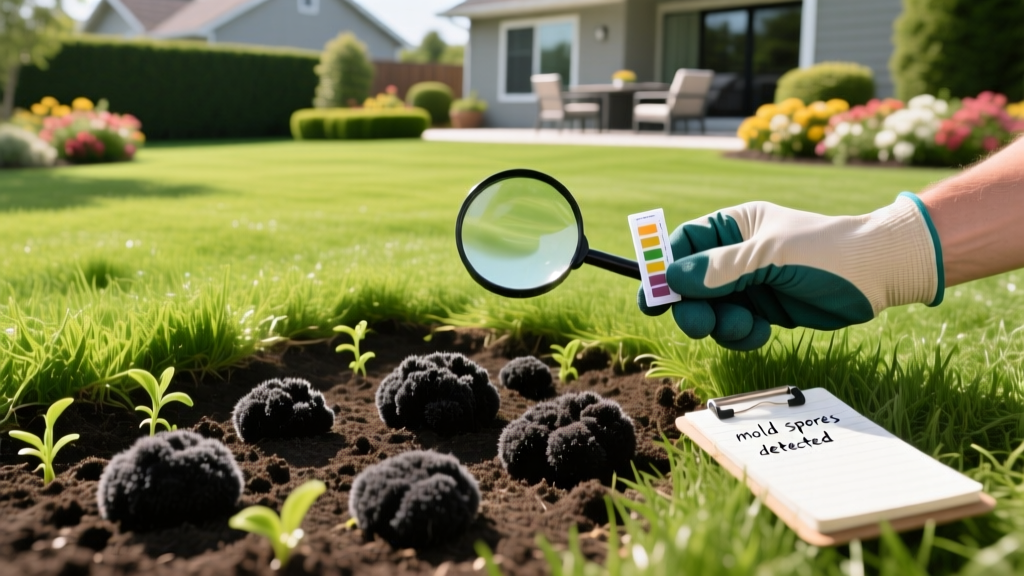
How to Fix Black Mold on Soil in Lawn: Diagnosis & Rescue
Spotting dark, fuzzy, or slimy black patches spreading across your yard is an alarming sight for any homeowner. If you are searching for solutions to black mold on soil in lawn environments, the first step is a critical reality check: true toxic black mold (Stachybotrys chartarum) does not grow on outdoor turfgrass soil. It requires the stagnant, hyper-humid conditions of water-damaged indoor drywall and wood.
What you are actually observing is one of three common outdoor organisms or soil conditions that mimic black mold. Misidentifying the culprit leads to wasted money on ineffective fungicides. Below, we break down the exact symptoms of these three imposters and provide the precise, actionable rescue protocols to eliminate them and restore your soil biology.
⚠️ Diagnostic Warning: Do not apply broad-spectrum chemical fungicides until you have identified the organism. Slime molds are not fungi, and cyanobacteria are bacteria. Applying a standard azoxystrobin fungicide to these organisms will kill your beneficial soil microbes while failing to eradicate the black patches.
The 3 Imposters: Diagnosing Your Lawn's 'Black Mold'
To execute the correct rescue fix, you must accurately diagnose the organism based on texture, smell, and environmental triggers. According to turfgrass pathology research from the University of Minnesota Extension, outdoor 'mold' complaints almost always fall into the following three categories.
| Organism / Condition | Visual Appearance | Texture & Smell | Primary Trigger |
|---|---|---|---|
| Slime Mold (Physarum / Fuligo) |
Ashy black, gray, or soot-like powder coating grass blades and soil surface. | Powdery when dry, slimy when wet. Odorless or faintly earthy. | Heavy thatch, prolonged morning dew, high humidity, decaying organics. |
| Nostoc Cyanobacteria (Witch's Butter) |
Black, jelly-like blobs on soil surface; turns into a hard, crusty black scab when dry. | Gelatinous and slippery when wet. Smells like stagnant water. | Severe soil compaction, poor drainage, low-lying areas that hold puddles. |
| Anaerobic Black Layer (Hydrogen Sulfide) |
Distinct black band in the soil profile (1-3 inches below surface), not on top. | Wet, mucky soil. Strong, distinct rotten egg (sulfur) odor. | Waterlogged soil, lack of oxygen, high sulfate levels, deep thatch buildup. |
Step-by-Step Rescue Fixes for Lawn Soil Fungus and Slime
Once you have identified the specific imposter, deploy the corresponding rescue protocol. These steps prioritize mechanical and biological interventions before resorting to chemical suppressants.
Protocol A: Eradicating Slime Mold
Slime molds are harmless to your grass; they simply use the grass blades as scaffolding to feed on decaying organic matter and bacteria in the thatch. However, they can smother turf by blocking sunlight.
- Mechanical Disruption: Vigorously rake the affected area with a flexible leaf rake or use a strong stream of water from a garden hose to blast the spore masses off the grass blades and into the soil.
- Moisture Calibration: Slime mold requires constant surface moisture. Switch your irrigation to deep, infrequent watering. Apply exactly 0.5 to 0.75 inches of water per session, no more than twice a week, allowing the top 1 inch of soil to dry completely between waterings.
- Biological Suppression: If raking fails, apply a potassium bicarbonate solution. Mix 1 tablespoon of GreenCure (or generic potassium bicarbonate) per gallon of water and spray directly onto the patches. This alters the surface pH, causing the slime mold fruiting bodies to collapse within 24 hours.
Protocol B: Removing Nostoc Cyanobacteria
Nostoc is incredibly resilient and can survive desiccation for years, rehydrating into a slippery hazard the moment it rains. Fungicides are entirely useless here because Nostoc is a photosynthetic bacteria.
- Physical Removal: When the Nostoc is dry and crusty, scrape it off the soil surface using a flat-headed shovel or a heavy-duty thatch rake. Dispose of it in the trash, not the compost bin.
- Core Aeration & Topdressing: Nostoc thrives in compacted, anaerobic clay. Rent a walk-behind core aerator and pull 2-to-3-inch plugs, aiming for 15-20 holes per square foot. Immediately topdress the area with #2 masonry sand (never use play sand, which is too fine and will worsen compaction) at a rate of 0.25 cubic yards per 1,000 square feet. Drag the sand into the aeration holes to create permanent drainage channels.
- Copper Suppression (Last Resort): For severe, recurring infestations, apply a copper-based bactericide like Bonide Liquid Copper Fungicide at a rate of 2 ounces per gallon of water per 1,000 sq ft. Note that copper can be toxic to earthworms, so use this only when physical drainage improvements fail.
Protocol C: Neutralizing the Anaerobic Black Layer
The black layer is a severe soil health crisis caused by sulfate-reducing bacteria producing hydrogen sulfide gas, which is highly toxic to turfgrass roots and causes rapid decline.
- Deep-Tine Aeration: Standard core aeration is insufficient. You must use a deep-tine aerator or a heavy-duty garden fork to pierce the soil to a depth of 4 to 6 inches, physically breaking through the anaerobic barrier to introduce atmospheric oxygen.
- Chemical Oxidation: Apply Calcium Nitrate (15.5-0-0) at a rate of 5 pounds per 1,000 square feet. The nitrate ion acts as an alternative electron acceptor for the bacteria, immediately halting the production of toxic hydrogen sulfide gas and oxidizing the black layer. Water it in heavily immediately after application.
- Wetting Agents: Apply a soil surfactant (like Aqua-Aid or a generic non-ionic wetting agent) at 3 ounces per 1,000 sq ft to eliminate localized dry spots and ensure uniform water infiltration, preventing the stagnant water conditions that feed sulfate-reducing bacteria.
💡 Expert Insight: The Thatch Threshold
According to turf pathology standards cited by the NC State University Turfgrass Program, a thatch layer exceeding 0.5 inches creates a microclimate that traps moisture and harbors slime molds and anaerobic bacteria. If your thatch is thicker than a standard AAA battery, schedule a power-dethatching service immediately before attempting any chemical or biological treatments.
According to turf pathology standards cited by the NC State University Turfgrass Program, a thatch layer exceeding 0.5 inches creates a microclimate that traps moisture and harbors slime molds and anaerobic bacteria. If your thatch is thicker than a standard AAA battery, schedule a power-dethatching service immediately before attempting any chemical or biological treatments.
Preventative Soil Health Protocol
Eliminating the visible symptoms is only half the battle. To prevent the recurrence of black slime, cyanobacteria, or anaerobic layers, you must fundamentally alter the soil environment.
- Annual Compost Topdressing: Apply a 1/8-inch layer of screened, high-quality compost every fall. This introduces competitive, beneficial microbes (like Bacillus subtilis and Trichoderma) that outcompete slime molds and decompose thatch naturally.
- Canopy Management: Prune lower tree branches to allow at least 4 hours of direct sunlight to hit the soil surface. UV radiation is a natural suppressant of surface-dwelling cyanobacteria and slime mold fruiting bodies.
- Soil Testing: Submit a soil sample to your local cooperative extension. If your soil pH is above 7.2, apply elemental sulfur at the recommended rate to lower the pH to the optimal 6.2–6.8 range for turfgrass, which simultaneously makes the environment less hospitable to Nostoc cyanobacteria.
Frequently Asked Questions
Is the black substance on my lawn toxic to my pets?
Slime molds and Nostoc cyanobacteria are generally not toxic to dogs or cats, though ingesting large quantities of Nostoc can cause mild gastrointestinal upset due to its bacteria load. However, the anaerobic black layer produces hydrogen sulfide gas, which is toxic to inhale in high concentrations. Always wear a mask and gloves when aggressively raking or aerating black, foul-smelling soil layers.
Will bleach kill black mold on my lawn soil?
Never apply household bleach (sodium hypochlorite) to your lawn. While it will temporarily bleach the surface organisms, it will permanently destroy your soil's beneficial microbial biology, severely alter the soil pH, and cause heavy metal toxicity. Potassium bicarbonate or targeted copper products are the only safe chemical alternatives.
Why does the black crust keep coming back after it rains?
If the black crust returns immediately after rainfall, you are dealing with Nostoc cyanobacteria. Nostoc forms a dormant, hardened outer sheath during dry spells that protects it from UV and desiccation. When water hits it, it rehydrates and swells within minutes. Permanent eradication requires fixing the underlying soil compaction via core aeration and sand topdressing, as detailed in Protocol B.

