
Lawn Care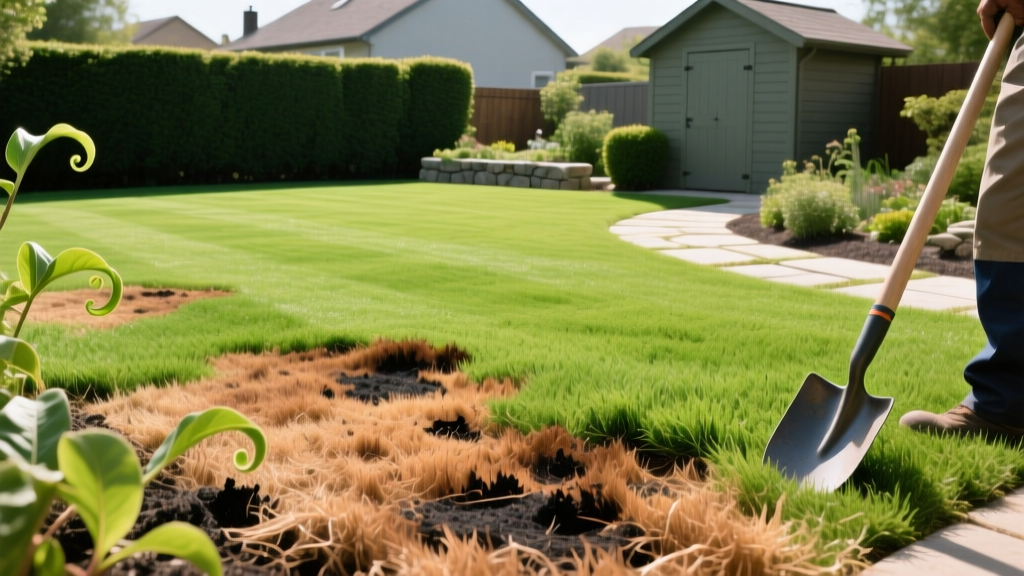
Burn Lawn Fertilizer Damage: How to Fix and Prevent It
The Chemistry Behind Burn Lawn Fertilizer Damage
Fertilizer burn is not a thermal event; it is a severe osmotic stress reaction. When synthetic, quick-release nitrogen sources are applied to turfgrass at excessive rates or without adequate irrigation, the concentration of soluble salts in the soil solution spikes. This creates a reverse-osmosis effect where water is drawn out of the grass roots and into the soil, effectively dehydrating the plant from the inside out. The result is the characteristic yellowing, browning, and crispy leaf tissue that homeowners recognize as fertilizer burn.
The severity of the damage depends entirely on the salt index of the nitrogen source used. According to agronomic standards, sodium nitrate is the baseline (salt index of 100). Common lawn care products vary wildly in their burn potential:
- Urea (46-0-0): Salt index of 75. Extremely high burn risk if not watered in immediately.
- Ammonium Sulfate (21-0-0): Salt index of 69. High burn risk, often used for quick green-ups but dangerous in heat.
- Scotts Turf Builder (32-0-4): Relies heavily on urea and ammonium sulfate. High burn risk during summer applications.
- Milorganite (6-4-0): Salt index of 1.5. Virtually impossible to burn a lawn with this slow-release, biosolid-based fertilizer.
Warning: Applying quick-release nitrogen when soil temperatures exceed 85°F (29°C) exponentially increases the volatilization of ammonia and the concentration of root-zone salts, guaranteeing severe burn lawn fertilizer symptoms even at standard application rates.
Diagnostic Matrix: Fertilizer Burn vs. Other Lawn Stressors
Before initiating a recovery protocol, confirm that the damage is actually from fertilizer. Misdiagnosing drought stress or fungal pathogens as fertilizer burn will lead to improper watering that exacerbates the problem.
| Symptom | Fertilizer Burn | Drought Stress | Brown Patch Fungus |
|---|---|---|---|
| Pattern | Uniform browning matching spreader overlap lines or broadcast edges. | Random patches, often starting in high-sun or sandy areas. | Circular rings (1-5 feet wide) with a distinct dark 'smoke ring' border. |
| Leaf Blade Inspection | Tips are scorched and crispy; base of the blade may still be green. | Leaves fold inward (rolling) and turn dull blue-gray before browning. | Distinct tan lesions with dark brown borders on individual leaf blades. |
| Root Health | Roots are shriveled, blackened, or easily pull up due to osmotic shock. | Roots are dry but structurally intact; soil is hard and hydrophobic. | Roots may rot at the crown; mycelium visible in morning dew. |
| Recent Activity | Application within the last 24-72 hours. | No rain or irrigation for 7+ days. | High humidity and night temps above 65°F for 48+ hours. |
The 48-Hour Emergency Recovery Protocol
If you confirm that you have a burn lawn fertilizer situation, the clock starts immediately. You have a narrow window to leach the excess salts below the root zone before the cellular damage becomes permanent.
- Calculate the Leaching Volume: You need to apply exactly 1 inch of water per day for three consecutive days. One inch of water equals 0.62 gallons per square foot. For a 1,000 sq. ft. affected area, you must apply 620 gallons of water daily. Use empty tuna cans placed across the zone to measure exact output from your sprinkler heads.
- Adjust for Soil Type: The leaching fraction changes based on your soil profile. Sandy loam soils drain rapidly and require only 0.5 inches of water to push salts down 12 inches. Heavy clay soils retain water and require up to 1.2 inches to achieve the same leaching depth. If you have clay soil, split the daily watering into two sessions (morning and afternoon) to prevent surface runoff.
- Halt All Chemical Applications: Do not apply herbicides, pesticides, or additional soil amendments during the flushing phase. The grass's cuticle is compromised, and systemic chemicals will cause further phytotoxicity.
- Raise the Mowing Deck: Do not mow burned grass. The remaining green tissue at the base of the plant is desperately needed for photosynthesis to fuel root recovery. If you must mow unburned surrounding areas, raise the deck to a minimum of 3.5 inches.
Advanced Soil Rehabilitation and Overseeding
Once the 72-hour flushing protocol is complete, the soil will be depleted of both toxic salts and essential nutrients. The turf will likely remain dormant or thin. This is the critical phase for structural soil rehabilitation.
Applying Humic and Fulvic Acids
Flushing leaches nutrients alongside salts. To restore the soil's cation exchange capacity (CEC) and stimulate root regeneration, apply a liquid humic acid supplement. Products like N-EXT Humic12 (approximately $22 per 32oz bottle, covering 3,200 sq. ft.) contain concentrated humic and fulvic acids. Fulvic acid acts as a natural chelator, binding to residual heavy metals and salts, rendering them inert, while humic acid improves soil structure and water retention. Apply at a rate of 3 oz per 1,000 sq. ft. using a pump sprayer.
Targeted Overseeding
If the grass crowns are entirely necrotic (black and mushy), the turf is dead and must be replaced. For cool-season lawns (Kentucky Bluegrass, Tall Fescue), wait until soil temperatures drop below 70°F in early fall. Use a starter fertilizer specifically formulated for new seed, such as Lesco Starter Fertilizer (18-24-12), which contains mesotrione to prevent weed competition without harming germinating seedlings. Apply at 1.5 lbs of nitrogen per 1,000 sq. ft. and keep the top inch of soil perpetually moist for 14-21 days.
Prevention Matrix: Safe Application Rates
Preventing burn lawn fertilizer scenarios requires matching the nitrogen release rate to the grass species and the seasonal temperature profile. The University of Minnesota Extension and the UMass Amherst Extension emphasize that slow-release nitrogen (Water Insoluble Nitrogen, or WIN) should comprise at least 50% of the total nitrogen applied in a single session.
| Grass Type | Max Nitrogen per 1,000 sq. ft. (Single App) | Minimum Slow-Release (WIN) Required | Optimal Application Window |
|---|---|---|---|
| Kentucky Bluegrass | 1.0 lbs N | 50% WIN | Early Fall (Sept) / Late Spring (May) |
| Tall Fescue | 1.0 lbs N | 60% WIN | Early Fall (Sept) / Late Fall (Nov) |
| Bermudagrass | 1.5 lbs N | 40% WIN | Late Spring (May) / Mid-Summer (July) |
| Zoysiagrass | 1.0 lbs N | 50% WIN | Early Summer (June) / Late Summer (Aug) |
Pro Tip: Always calibrate your broadcast spreader before applying. A misaligned spreader dropping 1.5 lbs of N instead of the intended 1.0 lbs is the leading cause of localized striping and overlap burn. Use the 'catch test' by running the spreader over a tarp or driveway to measure the exact output per square foot before touching the lawn.
By understanding the osmotic mechanics of salt toxicity and adhering to strict leaching and slow-release protocols, you can reverse early-stage fertilizer burn and build a resilient, burn-resistant soil profile for the long term.

