
Lawn Care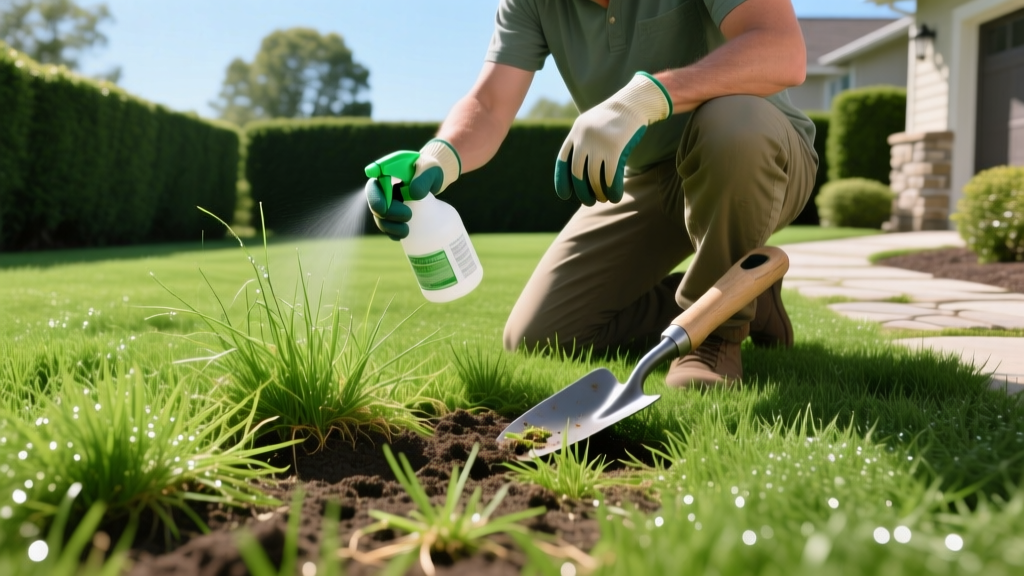
How to Fix Crab Grass Lawns: Step-by-Step Eradication
The Biology of Crab Grass Lawns: Why It Invades
Crabgrass (Digitaria sanguinalis and Digitaria ischaemum) is an opportunistic annual weed that thrives in the exact conditions that weaken desirable turfgrass. It does not randomly invade healthy lawns; it exploits bare soil, high soil temperatures, and low mowing heights. According to Penn State Extension, crabgrass seeds require light to germinate, meaning any thin canopy in your turf allows sunlight to hit the soil and trigger a massive germination event.
Fixing crab grass lawns requires a multi-phase approach that shifts the biological advantage back to your desired turf. Relying solely on chemical sprays without correcting the underlying cultural failures—such as soil compaction or scalping the lawn with a mower—will result in a recurring infestation every summer. Below is the exact step-by-step maintenance protocol used by professional turf managers to eradicate crabgrass and restore dense turf.
Critical Diagnostic Tip: Before treating, identify your crabgrass species. Hairy crabgrass has distinct fuzzy hairs on the leaves and stems, while smooth crabgrass is hairless and typically found in more compacted, wetter areas of the lawn. Smooth crabgrass is slightly more resistant to certain post-emergent herbicides and requires stricter adherence to surfactant usage.
Phase 1: Pre-Emergent Defense (Early Spring)
The most effective way to manage crab grass lawns is to prevent the seeds from germinating in the first place. Pre-emergent herbicides create a chemical barrier in the top 1 to 2 inches of soil that inhibits cell division (mitosis) in germinating seedlings, killing them before they reach the surface.
Timing the Application Perfectly
Calendar dates are useless for pre-emergent timing because spring weather fluctuates wildly. Instead, use a soil thermometer to measure the temperature at a 2-inch depth. You must apply the pre-emergent when soil temperatures reach 55°F for three consecutive mornings. In most northern climates, this occurs between late March and mid-April; in transition zones, it happens in early March.
Active Ingredients and Application Rates
Professional-grade pre-emergents offer vastly superior longevity and efficacy compared to consumer-grade granular products. Below is a comparison of the industry standards:
| Active Ingredient | Brand Example | Rate per 1,000 sq ft | Approx. Cost | Residual Control |
|---|---|---|---|---|
| Prodiamine | Barricade 65 WDG | 0.5 - 1.15 oz | $3.50 - $4.00 | 4 - 6 months |
| Dithiopyr | Dimension 2EW | 0.5 - 0.75 oz | $4.50 - $5.50 | 3 - 4 months |
| Pendimethalin | Pendulum AquaCap | 1.5 - 2.0 oz | $3.00 - $3.50 | 2 - 3 months |
Phase 2: Post-Emergent Eradication (Summer)
If you missed the pre-emergent window, or if a heavy summer rain broke the chemical barrier, you will need to deploy post-emergent herbicides. According to University of Minnesota Extension, post-emergent control is most effective when crabgrass is young (1 to 3 tillers). Once the plant matures and develops thick, waxy cuticles in late July, chemical control becomes highly erratic.
The Quinclorac Protocol
Quinclorac (commonly sold as Drive XLR8) is the gold standard for post-emergent crabgrass control. It acts as a synthetic auxin, causing the weed to grow itself to death. However, it requires precise mixing and application to avoid burning your desirable turf.
- Mix the Surfactant First: Crabgrass leaves repel water. You must add a Non-Ionic Surfactant (NIS) like Preference or Methylated Seed Oil (MSO) to your tank. Use 0.25% v/v (roughly 1/2 oz of surfactant per gallon of water).
- Add the Herbicide: Mix Quinclorac at a rate of 0.75 fluid ounces per 1,000 square feet. Do not exceed this rate, or you will cause severe phytotoxicity (yellowing and stunting) to Kentucky Bluegrass and Tall Fescue.
- Spot Spray Only: Avoid blanket applications during high summer heat. Spot-treat the crabgrass patches early in the morning when temperatures are below 85°F.
- Wait 14 Days: Quinclorac takes time to translocate through the plant's vascular system. The crabgrass will turn purple, then white, before collapsing. Do not re-spray prematurely.
Warning: Fine Fescue Sensitivity
If your lawn consists primarily of Fine Fescues (Creeping Red, Chewings, or Hard Fescue), avoid Quinclorac entirely. Fine fescues are highly sensitive to this active ingredient and will suffer severe damage. Instead, use Fenoxaprop-p-ethyl (Acclaim Extra) at 0.35 oz per 1,000 sq ft, which is safe for fine fescues but requires two applications spaced 14 days apart.
If your lawn consists primarily of Fine Fescues (Creeping Red, Chewings, or Hard Fescue), avoid Quinclorac entirely. Fine fescues are highly sensitive to this active ingredient and will suffer severe damage. Instead, use Fenoxaprop-p-ethyl (Acclaim Extra) at 0.35 oz per 1,000 sq ft, which is safe for fine fescues but requires two applications spaced 14 days apart.
Phase 3: Cultural Correction and Overseeding (Late Summer)
Killing the weed is only half the battle. The void left by dead crabgrass must be filled with desirable turfgrass, otherwise, the next generation of weed seeds will blow in and take over. Late summer (mid-August to mid-September) is the optimal window for turf recovery.
Aeration and Soil Decompression
Crabgrass thrives in compacted soil where desirable turf roots struggle to penetrate. Rent a core aerator and pull 3-inch deep plugs across the lawn. This alleviates compaction, improves water infiltration, and creates ideal micro-environments for new grass seed to establish.
The Mowing Height Rule
The single greatest cultural mistake homeowners make is mowing too short. Scalping the lawn to 1.5 inches removes the turf canopy, allowing sunlight to reach the soil and trigger crabgrass germination. Raise your mower deck to a minimum of 3.5 to 4 inches. Research shows that maintaining a 4-inch mowing height reduces crabgrass infestation by up to 80% compared to a 2-inch mowing height, simply by shading the soil surface.
Overseeding with Mesotrione (The Pre-Emergent Exception)
Standard pre-emergents like Prodiamine will prevent your new grass seed from germinating. If you need to overseed in the fall while maintaining crabgrass protection, you must use Mesotrione (sold as Tenacity). Mesotrione inhibits photosynthesis in broadleaf weeds and crabgrass but is completely safe for germinating Kentucky Bluegrass, Tall Fescue, and Perennial Ryegrass.
- Application Rate: 0.33 oz (2 teaspoons) per 1,000 sq ft.
- Timing: Apply at the exact time of seeding, and again 3 weeks later.
- Visual Effect: Mesotrione will bleach emerging weeds white before killing them. Do not panic if you see white weeds; the herbicide is working.
Frequently Asked Questions About Crab Grass Lawns
Can I pull crabgrass by hand instead of spraying?
Hand-pulling is only viable for isolated patches of fewer than 10 plants. Once crabgrass reaches the 5-tiller stage, its root system becomes extensive and fibrous. Pulling mature plants often leaves root fragments behind, which can regenerate. Furthermore, pulling creates divots in the soil, exposing fresh dirt to sunlight and inviting more weeds. For widespread infestations, chemical control followed by overseeding is vastly more effective.
Why did my pre-emergent fail this year?
Pre-emergent failure almost always stems from one of three issues: applying too late (after soil temps exceeded 60°F), failing to water the product into the soil (pre-emergents require 0.5 inches of irrigation within 48 hours to move into the root zone), or physical disruption of the barrier (such as heavy foot traffic, aggressive raking, or core aeration performed after application).
Does high nitrogen fertilizer cause crabgrass?
Timing matters more than quantity. Applying heavy doses of quick-release nitrogen in late spring (May/June) forces rapid, weak top-growth in cool-season grasses while simultaneously feeding germinating crabgrass. Shift your nitrogen applications to the fall (September and November) to build deep root systems in your desirable turf without fueling summer annual weeds.

