
Lawn Care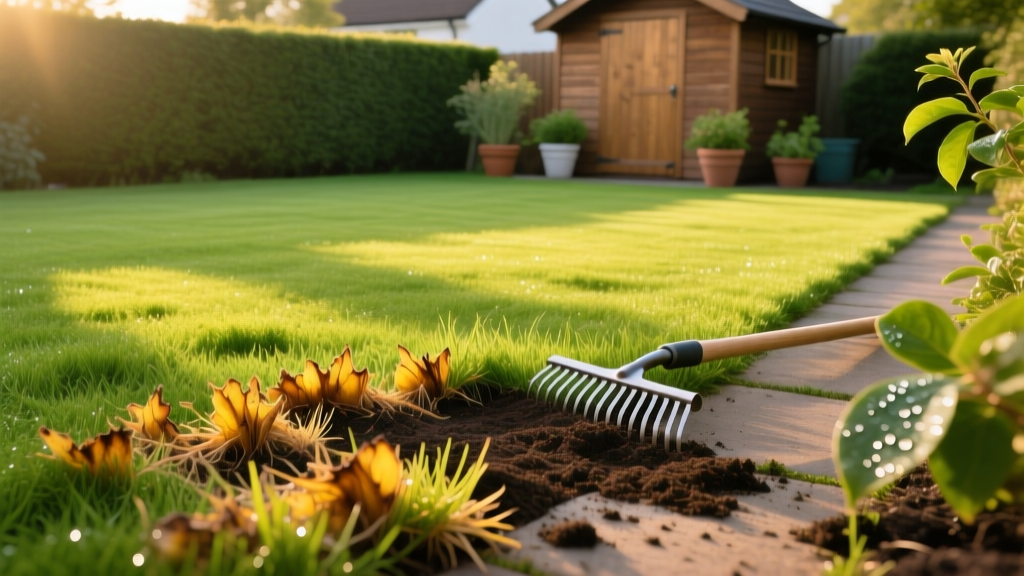
How to Fix Fertilizer Scorched Grass and Restore Your Lawn
Fertilizer scorched grass is a common but entirely preventable lawn care failure caused by the overapplication of synthetic nutrients or improper watering post-application. When excess mineral salts accumulate in the soil, they create an osmotic imbalance that literally pulls moisture out of your turf's root system, resulting in rapid desiccation and necrosis. If you are dealing with yellowing streaks, crispy brown leaf tips, or dead patches following a recent feeding, immediate intervention is required to save the turf crown.
The Science Behind Fertilizer Burn
Not all fertilizers carry the same risk of burning your lawn. The likelihood of fertilizer scorched grass is directly tied to a product's 'salt index' and its nitrogen release rate. Quick-release synthetic nitrogen sources, particularly urea and ammonium sulfate, dissolve rapidly and spike soil salinity within hours. According to Penn State Extension, applying more than 1.0 pound of quick-release nitrogen per 1,000 square feet in a single application drastically increases the risk of foliar burn and root dehydration.
Salt Index Comparison of Common Nitrogen Sources
| Fertilizer Component | Salt Index | Burn Risk | Release Speed |
|---|---|---|---|
| Potassium Chloride (Muriate of Potash) | 116 | Extreme | Fast |
| Urea (46-0-0) | 75 | High | Fast |
| Ammonium Sulfate (21-0-0) | 69 | High | Fast |
| Methylene Urea (Slow Release) | 15 | Low | Slow |
| Milorganite (Organic 6-4-0) | < 2 | Negligible | Microbial |
Warning: Never apply granular urea or ammonium sulfate to a drought-stressed lawn or during midday heat exceeding 85°F. The combination of high evaporation rates and concentrated salts will guarantee severe fertilizer scorched grass within 24 hours.
Immediate Triage: The 48-Hour Flushing Protocol
If you notice fertilizer burn within 12 to 48 hours of application, the turf crowns may still be alive. Your primary objective is to dilute the salt concentration in the top 3 inches of the soil profile and push the excess nitrogen below the root zone.
- Calculate the Required Water Volume: You must apply a minimum of 1 inch of water immediately. One inch of water equates to 0.62 gallons per square foot. For a 100-square-foot burn patch, you need to deliver exactly 62 gallons of water.
- Execute Deep Flushing: Run your sprinklers or use a hose-end sprayer to saturate the area. Do not allow water to pool and run off; if runoff occurs, pause for 30 minutes to allow for infiltration, then resume.
- Repeat Daily for 3 Days: Follow the initial flushing with 0.5 inches of water daily for the next three days. This continuous leaching process prevents the salts from re-concentrating near the surface as the soil dries.
- Suspend All Chemical Applications: Do not apply herbicides, fungicides, or additional soil amendments during the flushing period. The grass is highly susceptible to chemical stress.
Assessing the Damage: Recovery vs. Replacement
After the 4-day flushing protocol, wait 7 to 10 days to evaluate the turf's response. The University of Minnesota Turfgrass Science program notes that if the crown and lower stem tissue remain firm and white, the grass will regenerate from the base. If the tissue is brown, mushy, or completely desiccated, the plant is dead and requires replacement.
Damage Assessment Decision Matrix
| Visual Symptom | Crown Condition | Action Plan |
|---|---|---|
| Leaf tips are brown, but base is green | Firm, white, and moist | Mow to remove dead tips; resume normal care. |
| Entire leaf blade is yellow/brown | Firm, white, but dry | Continue light daily watering; apply kelp extract. |
| Grass pulls up easily with no resistance | Brown, mushy, or brittle | Rake out dead turf, amend soil, and reseed. |
Step-by-Step Reseeding for Severe Burn Patches
When the soil is heavily saturated with residual nitrogen from the burn event, standard seeding practices will fail. High nitrogen levels inhibit seed germination and burn delicate new root hairs. Follow this specialized protocol to re-establish dead patches.
- Step 1: Soil Excavation and Dilution. Use a bow rake to remove all dead thatch and grass. Scarify the top 1 inch of soil to break up any remaining fertilizer crust. If the burn was caused by a massive spill (e.g., a dropped spreader hopper), physically remove the top 2 inches of soil and replace it with fresh topsoil.
- Step 2: Select the Right Seed. Match your existing turf. For cool-season lawns, use a blend of Perennial Ryegrass (for fast germination in 5-7 days) and Kentucky Bluegrass (for long-term rhizome spread). For warm-season lawns, use vegetative plugs or sprigs, as bermudagrass seed requires soil temperatures above 70°F.
- Step 3: Apply a Specialized Starter Fertilizer. Do not use standard high-nitrogen lawn food. Use a starter fertilizer with a 10-18-10 NPK ratio. The elevated phosphorus (the middle number) is critical for stimulating rapid root development in seedlings without overloading the soil with vegetative nitrogen.
- Step 4: Weed Control Considerations. Standard pre-emergents will prevent your grass seed from germinating. If weeds are a concern in the bare patch, use a seed-safe herbicide containing mesotrione (commonly sold as Tenacity), which suppresses weeds without harming emerging turf seedlings.
- Step 5: Moisture Management. Keep the top 1 inch of soil consistently damp. Water lightly 2 to 3 times a day for the first 14 days. Once the seedlings reach 2 inches tall, transition to deep, infrequent watering.
Preventative Application Rules
Preventing fertilizer scorched grass requires strict adherence to equipment calibration and environmental awareness. Spreader miscalibration is the leading cause of localized burn streaks.
The 10% Overlap Calibration Rule
Rotary (broadcast) spreaders distribute fertilizer in a wide, overlapping fan pattern. To ensure even distribution without double-applying on the edges, you must overlap your walking passes by exactly 10% to 15% of the throw width. Drop spreaders, conversely, require edge-to-edge alignment; leaving a 1-inch gap will result in missed strips, while overlapping the wheels will create a concentrated double-stripe that will inevitably burn.
Before applying to the lawn, test your spreader's output on a clean driveway. Measure a 500-square-foot area, weigh out the exact amount of fertilizer required for that space, and spread it over the concrete. If you run out of product before finishing the area, your setting is too low; if you have product left over, your setting is too high. Sweep up the granules immediately to prevent concrete staining.
Frequently Asked Questions
Can I use sugar to neutralize fertilizer burn?
No. While some internet myths suggest applying sugar to stimulate microbes that consume excess nitrogen, this is ineffective in the short term. Sugar will not reverse the immediate osmotic stress caused by salt accumulation. Deep, volumetric water flushing is the only scientifically proven method to leach salts from the root zone.
How long does it take for fertilizer scorched grass to turn green again?
If the turf crown survived the osmotic shock, you will see new green shoots emerging from the base within 7 to 14 days of initiating the flushing protocol. Full canopy recovery and color uniformity typically take 3 to 4 weeks, depending on soil temperatures and the specific grass species.
Should I mow the burned grass?
Do not mow immediately. Wait until the grass has actively resumed vertical growth and reaches at least 3.5 inches in height. When you do mow, set your deck high (3 to 4 inches) and ensure your mower blades are freshly sharpened to avoid tearing the fragile, recovering leaf tissue.

