
Lawn Care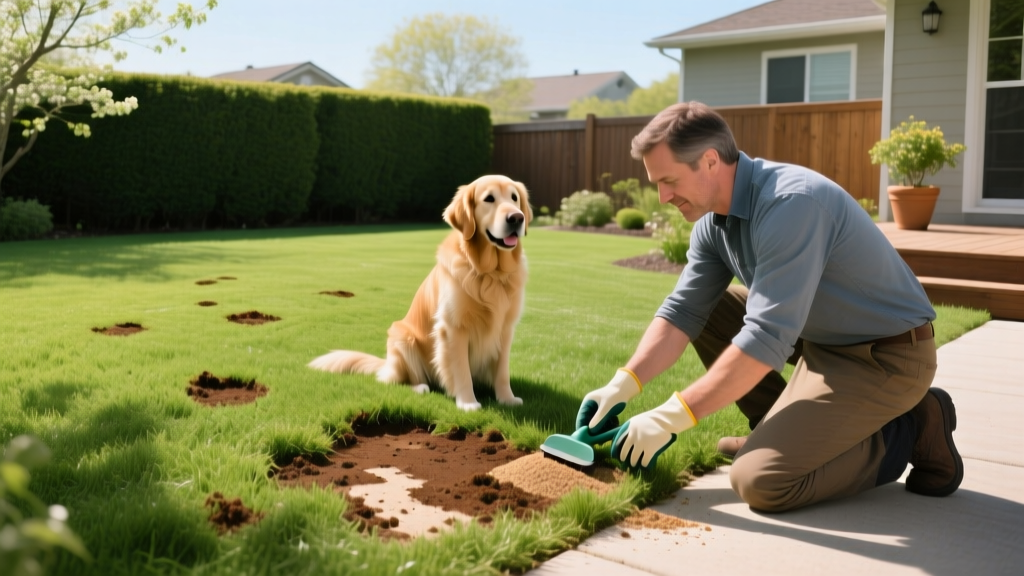
How to Fix Lawn Spots When Your Dog Is Killing Grass With Urine
The Biochemistry of Urine Burn: Why It Happens
When a dog is killing grass with urine, the damage is rarely a result of acidic pH, as is commonly believed. The primary culprit is nitrogen overload combined with osmotic stress from soluble salts. Dog urine contains high concentrations of urea, a nitrogen-rich compound produced during protein metabolism. When urea hits the soil, soil bacteria rapidly hydrolyze it into ammonia and then into nitrates. In a concentrated 6-to-8-inch radius, this sudden spike in available nitrogen acts like a massive overdose of synthetic fertilizer, causing reverse osmosis that pulls water out of the grass roots and desiccates the blades.
Female dogs typically cause more severe localized damage because they squat, depositing 10 to 15 ounces of urine in a single concentrated pool. Male dogs often mark vertically on trees or fences, though they still squat to empty their bladders, creating similar burn spots. The secondary issue is salt accumulation; repeated urination in the same area builds up sodium and potassium salts, which degrade soil structure and inhibit water infiltration.
⚠️ The pH Myth: Avoid Tomato Juice and Baking Soda
Do not attempt to alter your dog's urine pH using tomato juice, baking soda, or vitamin C supplements. According to veterinary toxicologists and the American Kennel Club (AKC), altering urine pH does not reduce the nitrogen content causing the burn. Worse, artificially acidifying or alkalinizing your dog's urine can disrupt their metabolic balance and trigger the formation of painful struvite or calcium oxalate bladder stones. Treat the lawn, not the dog.
Phase 1: Immediate Triage (The 0-12 Hour Window)
The most effective way to prevent a burn spot is immediate dilution. Once the grass blades turn yellow or brown, the tissue is dead and cannot be revived; dilution only works to save the surrounding crown and roots before the nitrogen toxicity spreads.
Step 1: The 1.5-Gallon Dilution Rule
Within 8 to 12 hours of your dog urinating, apply exactly 1 to 1.5 gallons of plain water directly to the spot. Use a watering can with a gentle rose attachment rather than a high-pressure hose nozzle. High-pressure water causes soil compaction and forces the nitrogen-laden urine to run off into surrounding healthy grass or storm drains. The goal is to push the urea past the root zone (about 4 to 6 inches deep) where it can be safely dispersed without burning the turf crowns.
Step 2: Surface Rinsing
If the urine has dried on the grass blades (common in hot, arid climates), the salts will crystallize on the leaf tissue. Gently spray the foliage with a fine mist to dissolve the crystals before they cause contact burn on the blades.
Phase 2: Soil Remediation and Reseeding (Weeks 1-4)
For spots that have already turned brown and died, dilution is no longer sufficient. You must physically remediate the soil chemistry and introduce new seed. According to turfgrass guidelines from the University of Minnesota Extension, repairing dog urine spots requires addressing both the dead organic matter and the underlying salt buildup.
Step 1: Dethatch and Core the Spot
Use a hand rake or a manual dethatching rake to vigorously scratch the dead brown grass down to the bare soil. Remove the dead thatch entirely. If the soil feels hard or crusty (a sign of sodium-induced soil dispersion), use a manual hand aerator or a digging fork to punch 4 to 6 holes into the spot, going 3 inches deep. This breaks up the crusted surface and allows amendments to penetrate.
Step 2: Gypsum Application for Salt Displacement
To neutralize the sodium salts left behind by repeated urination, apply agricultural gypsum (calcium sulfate dihydrate). Gypsum works via cation exchange: the calcium ions displace the toxic sodium ions on the soil colloids, allowing the sodium to be flushed out while the sulfate improves soil structure.
- Application Rate: 2 to 3 pounds of pelletized gypsum per 100 square feet of damaged area.
- Cost: A standard 40-pound bag of pelletized gypsum costs between $12 and $18 at most garden centers, which is enough to treat roughly 1,500 square feet of localized spots.
- Watering In: Immediately water the gypsum into the soil with 0.5 inches of irrigation to activate the cation exchange process.
Step 3: Selecting Urine-Tolerant Cultivars
Not all grasses react to nitrogen overload equally. When reseeding dead spots, avoid Kentucky Bluegrass and Bermudagrass, which are highly susceptible to urea burn. Instead, select cultivars with deep root systems and high nitrogen tolerance.
| Grass Species | Urine Tolerance | Recovery Speed | Best Climate Zone |
|---|---|---|---|
| Tall Fescue (e.g., 'Titan Ultra') | High | Moderate (10-14 days) | Cool-Season / Transition |
| Perennial Ryegrass (e.g., 'Manhattan V') | Moderate-High | Fast (5-7 days) | Cool-Season |
| Bermudagrass (e.g., 'TifTuf') | Low | Slow (via stolons) | Warm-Season |
| Kentucky Bluegrass | Very Low | Slow (via rhizomes) | Cool-Season |
Phase 3: Long-Term Environmental Controls
If your dog consistently uses the same corridor or corner of the yard, soil remediation will become a never-ending cycle of repair and destruction. Implementing physical and behavioral controls is the only permanent solution for high-traffic canine zones.
Designated Hardscape Potty Zones
Train your dog to use a specific area of the yard that is devoid of turfgrass. The most effective materials for a dog potty zone include:
- 3/8-Inch Pea Gravel: Provides excellent drainage, is large enough not to stick to paws, and allows urine to percolate into the subsoil without pooling.
- Cedar Mulch: Naturally repels insects and masks odors. Warning: Never use cocoa bean mulch, as it contains theobromine and is highly toxic to dogs if ingested.
- Artificial Turf with Antimicrobial Infill: Requires a specialized base of crushed granite for drainage and regular enzymatic cleaning to prevent ammonia buildup.
Dietary Hydration Strategies
While you should never use supplements to alter urine pH, you can safely encourage your dog to drink more water. A higher water intake naturally dilutes the urea concentration in their bladder. Adding a tablespoon of low-sodium chicken broth to their water bowl or switching to a wet-food diet (which contains roughly 75% moisture compared to dry kibble's 10%) will result in larger, less concentrated urine deposits that are far less likely to burn the lawn.
Frequently Asked Questions
Will commercial "lawn-saving" dog supplements work?
Most commercial supplements (such as those containing DL-Methionine or Yucca schidigera) claim to neutralize urine. DL-Methionine acidifies the urine, which does not stop nitrogen burn and risks bladder stones. Yucca extracts may slightly reduce the odor of the urine but do not alter the nitrogen load. The only supplements that work indirectly are those containing mild, safe minerals that simply make the dog thirstier, thereby diluting the urine through increased water consumption.
How long does it take for a gypsum-treated and reseeded spot to blend in?
If you use a fast-germinating Perennial Ryegrass, you will see green shoots in 5 to 7 days, with full establishment in 3 weeks. Tall Fescue takes 10 to 14 days to germinate and about 4 to 6 weeks to fully knit into the surrounding turf. Keep the reseeded spot consistently moist (watering lightly twice a day) until the new grass reaches a height of 2 inches.
Can I just apply extra nitrogen fertilizer to the whole lawn to make the burn spots less visible?
No. Applying broad-spectrum nitrogen fertilizer will cause the healthy, unaffected grass to grow darker and faster, which will actually increase the visual contrast between the dark green healthy grass and the brown, dead urine spots. Treat the spots individually rather than fertilizing the entire lawn to mask the damage.

