
Lawn Care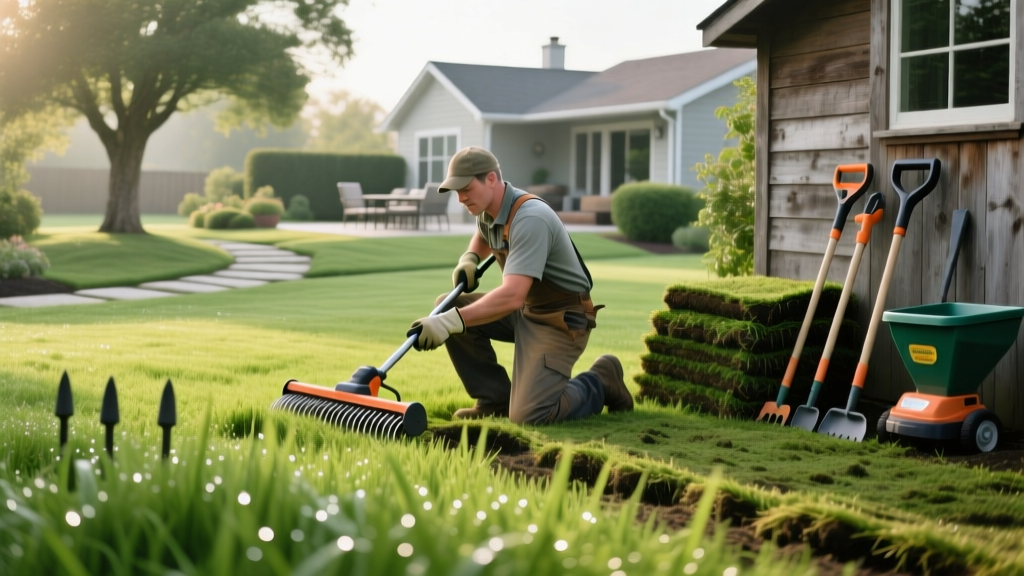
How to Fix a Matted Lawn: Step-by-Step Recovery Guide
Understanding the Anatomy of a Matted Lawn
A matted lawn occurs when grass blades become tangled, compressed, and woven together, effectively smothering the turf crown and blocking sunlight, air, and moisture from reaching the soil. This condition is rarely just a cosmetic issue; it is a structural failure of the turf ecosystem. Matting typically stems from three distinct environmental pressures: prolonged snow cover leading to snow mold, excessive thatch buildup exceeding 0.5 inches, or severe soil compaction from winter foot traffic and ice weight.
Attempting to fix a matted lawn by immediately applying fertilizer or aggressively raking with heavy metal tools will often tear the living root crowns, converting a recoverable dormant lawn into a dead one. Successful recovery requires a sequenced, multi-week protocol designed to gently separate the canopy, relieve subterranean compaction, and stimulate new vertical tillering.
Diagnostic Matrix: Identify Your Matting Cause
- Snow Mold Matting: Characterized by gray or pink crusty webbing binding flattened blades together. Usually appears immediately after spring snowmelt. Requires surface clearing and fungicide management, not deep dethatching.
- Thatch Asphyxiation: The lawn feels spongy underfoot. A soil core sample reveals a distinct brown, fibrous layer greater than 0.5 inches thick between the green canopy and the mineral soil.
- Winter Compaction: Grass is pressed flat, and water pools on the surface rather than percolating. The soil is hard to penetrate with a standard 6-inch screwdriver.
Step 1: Surface Fluffing and Debris Removal
Before introducing mechanical power tools, you must manually separate the matted canopy. This process, often called 'fluffing,' introduces air circulation to the turf crown, which halts fungal progression and dries out the thatch layer.
Use a flexible bamboo leaf rake or a specialized poly-tine rake. Avoid rigid metal thatching rakes at this stage, as they will catch on the tangled crowns and rip the grass out by the roots. Rake in a single, consistent direction, lifting upward with a gentle flicking motion. The goal is not to remove the dead grass yet, but simply to stand the matted blades upright. For lawns suffering from gray snow mold, this physical disruption of the fungal mycelium is the single most effective organic control method, as noted by University of Minnesota Extension turfgrass specialists.
Step 2: Core Aeration to Relieve Soil Asphyxiation
Matting is frequently compounded by compacted soil. If the top 2 inches of soil are compressed, the grass roots cannot anchor deeply, leading to weak, horizontal growth that easily mats down under weather pressure.
Rent a walk-behind core aerator (such as a Ryan Lawnaire or Toro ProCore) for the day. Set the machine to pull cores that are 2 to 3 inches deep and 2 to 4 inches apart. Run the aerator over the lawn in two perpendicular passes to ensure adequate hole density. Leave the extracted soil cores on the lawn; they will break down over the next two weeks, depositing beneficial soil microbes directly into the thatch layer to accelerate natural decomposition. Expect to pay between $85 and $110 for a half-day rental in 2026, depending on your local market.
Step 3: Mechanical Dethatching (The 0.5-Inch Rule)
Only proceed to mechanical dethatching if your thatch layer exceeds 0.5 inches. Thatch thinner than this is actually beneficial, acting as an insulating mulch that regulates soil temperature and retains moisture. Removing it unnecessarily exposes the soil to weed seeds and rapid moisture loss.
| Equipment Type | Best For | 2026 Avg Cost | Risk Level |
|---|---|---|---|
| Bamboo Leaf Rake | Light surface matting, snow mold | $15 - $25 | Low |
| Manual Thatch Rake | Small patches (<500 sq ft) | $30 - $50 | Medium |
| Electric Dethatcher (e.g., Sun Joe AJ801E) | Medium lawns (up to 5,000 sq ft) | $160 - $200 | Medium-High |
| Gas Power Raker (e.g., Billy Goat) | Severe matting, large lawns | $95/half-day rental | High (Scalping risk) |
When using a power dethatcher, set the blade depth so the tines barely graze the soil surface. According to Purdue University Turfgrass Science, aggressive power raking that penetrates the mineral soil will severely damage the turf crown and invite invasive weeds like crabgrass and Poa annua.
Step 4: Topdressing and Seed-to-Soil Contact
Once the matting is removed and the thatch layer is reduced, the lawn will likely look thin and patchy. This is the optimal window for topdressing and overseeding. Topdressing fills in minor depressions caused by winter heaving and provides a sterile, weed-free medium for new seed germination.
Use a topdressing mix consisting of 70% washed masonry sand and 30% finely screened compost. Apply at a rate of 0.25 inches across the entire lawn. Drag the mix into the aeration holes and the remaining thatch using a heavy drag mat or a piece of chain-link fence. This process, known as 'core harvesting,' physically breaks up the remaining matting while amending heavy clay soils.
Step 5: Post-Recovery Overseeding and Fertilization
Matting recovery is incomplete without introducing new, upright-growing tillers to replace the damaged canopy. Select a turf-type tall fescue or Kentucky bluegrass blend that matches your existing lawn. Apply seed at a rate of 5 to 8 lbs per 1,000 square feet for cool-season grasses, or 1 to 2 lbs per 1,000 square feet for warm-season grasses like Bermuda.
Immediately follow seeding with a starter fertilizer high in phosphorus (e.g., a 10-18-10 NPK ratio) to stimulate rapid root development. Water the lawn lightly two to three times a day for the first 14 days to keep the top 0.5 inches of soil consistently moist, ensuring the seed does not dry out and abort germination.
Failure Mode: The Dethatching Scalp
The most common DIY failure when fixing a matted lawn is setting the power rake blades too deep. If the tines penetrate the soil rather than just slicing the thatch layer, you will rip out the living root crowns, leaving bare dirt that will quickly be colonized by weeds. Fix: Test your equipment on a 10x10 foot hidden section first. Adjust the wheel height so the tines pull up yellow and brown debris without exposing the dark mineral soil beneath.
Timing Your Recovery Protocol
Executing these steps at the wrong time of year will stress the turf beyond recovery. For cool-season grasses (Fescue, Bluegrass, Ryegrass), the ideal window for aggressive matting recovery, aeration, and dethatching is early fall (September 1st to 15th), when soil temperatures are still warm but air temperatures are cooling. Spring recovery should be limited to gentle fluffing and surface clearing only, as spring dethatching opens the canopy right before the summer heat stress and peak crabgrass germination windows.
For warm-season grasses (Bermuda, Zoysia, Centipede), wait until late spring (May) when the grass has fully exited dormancy and is actively pushing new green growth. Attempting to dethatch a matted warm-season lawn while it is still partially dormant will result in severe, sometimes irreversible, turf loss.

