
Lawn Care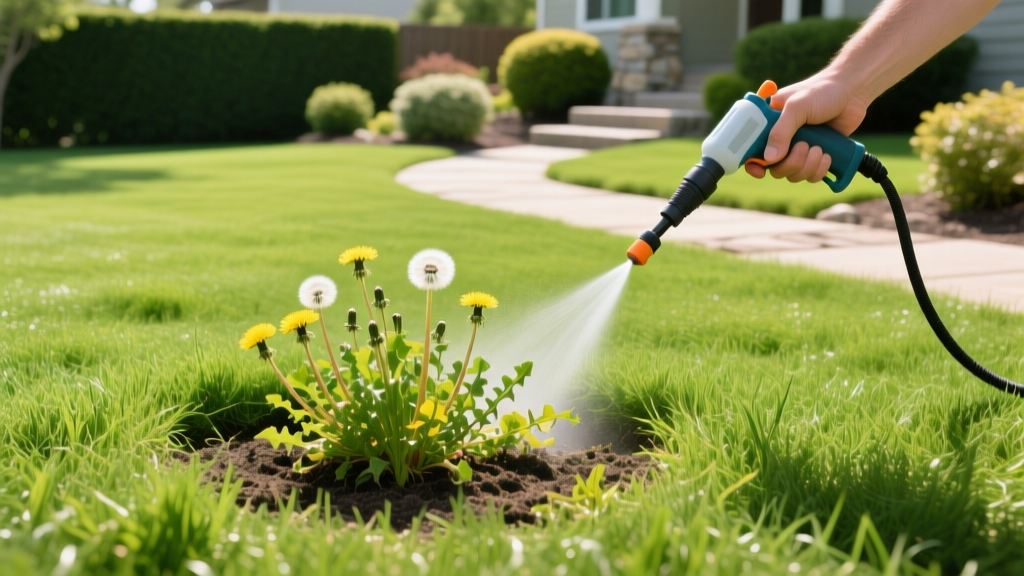
How to Fix a Weed Yard: Spot-Treatment Guide for Stubborn Species
A true 'weed yard' is not simply a lawn with a few stray dandelions; it is a compromised turf ecosystem where invasive species have crossed the 30% to 40% coverage threshold, actively outcompeting desirable grass for water, sunlight, and soil nutrients. When faced with this level of infestation, homeowners often panic and resort to broadcast spraying non-selective herbicides or attempting a complete, expensive lawn renovation. However, a strategic spot-treatment protocol can reclaim the turf without destroying the remaining desirable grass or wasting hundreds of dollars on chemicals and sod.
Diagnostic Matrix: Identifying the Primary Offenders
Before mixing any chemicals, you must accurately identify the weed species dominating your yard. Misidentification leads to herbicide failure, as grassy weeds, broadleaf weeds, and sedges require entirely different modes of action. Below is a diagnostic framework for the five most stubborn invaders found in severe weed yards.
| Weed Species | Growth Habit | Root / Rhizome Depth | Optimal Active Ingredient | Mix Rate (per 1 Gal Water) |
|---|---|---|---|---|
| Yellow Nutsedge | Perennial Sedge | Tubers 8-14 inches deep | Halosulfuron-methyl (e.g., SedgeHammer+) | 0.05 oz (1 water-soluble packet) |
| Crabgrass | Annual Grassy | Shallow, fibrous (2-4 inches) | Quinclorac (e.g., Quincept 347) | 0.36 fl oz |
| Dallisgrass | Perennial Grassy | Deep, thick rhizomes | Fluazifop-P-butyl (e.g., Fusilade II) | 0.25 fl oz |
| Broadleaf Plantain | Perennial Broadleaf | Thick, fleshy taproot | Triclopyr + 2,4-D Amine | 0.75 fl oz |
| Poa Annua | Annual/Winter Grassy | Shallow, fibrous | Mesotrione (e.g., Tenacity) | 1/2 tsp (0.33 oz) |
The Chemistry of Spot-Treatment: Auxins and Surfactants
Understanding why a chemical works is critical for troubleshooting failures in a heavily infested weed yard. Most broadleaf and grassy weed killers rely on synthetic auxins (like 2,4-D, Dicamba, and Quinclorac). These chemicals mimic the plant's natural growth hormone (Indole-3-acetic acid), but in unregulated, massive doses. This causes the weed to experience rapid, unsustainable cell division, resulting in epinasty (twisting of stems) and the eventual destruction of its vascular tissue, starving the roots.
CRITICAL WARNING: Amine vs. Ester Formulations
If you are spot-treating a weed yard during the summer months when temperatures exceed 85°F, you must use amine formulations of 2,4-D and Dicamba, not ester formulations. Esters have high vapor pressure and will volatilize (turn into a gas) in high heat, drifting onto and severely damaging nearby desirable broadleaf plants, shrubs, and even your good turf. Amines have low vapor pressure and remain safely on the target leaf tissue.
If you are spot-treating a weed yard during the summer months when temperatures exceed 85°F, you must use amine formulations of 2,4-D and Dicamba, not ester formulations. Esters have high vapor pressure and will volatilize (turn into a gas) in high heat, drifting onto and severely damaging nearby desirable broadleaf plants, shrubs, and even your good turf. Amines have low vapor pressure and remain safely on the target leaf tissue.
The Missing Link: Surfactant Selection
Herbicide failure in a weed yard is most frequently caused by omitting a surfactant. Weeds like nutsedge and mature dallisgrass have thick, waxy cuticles that cause water-based herbicide droplets to bead up and roll off. You must pair your active ingredient with the correct surfactant to break this surface tension:
- Non-Ionic Surfactant (NIS): Use for broadleaf weeds and standard grassy weeds. It reduces the surface tension of the water, allowing the chemical to spread evenly across the leaf.
- Methylated Seed Oil (MSO): Mandatory for Yellow Nutsedge and mature Dallisgrass. MSO actually penetrates and dissolves the waxy cuticle, carrying the halosulfuron or fluazifop directly into the plant's phloem for translocation down to the tubers and rhizomes.
Step-by-Step Spot-Treatment Protocol
Broadcast spraying a weed yard wastes chemical and stresses the surviving desirable grass. Follow this targeted protocol to eliminate weeds while preserving your turf canopy.
- Calibrate the Sprayer: Use a dedicated 1-gallon or 2-gallon handheld pump sprayer. Do not use a hose-end sprayer, as they lack the precision required for spot-treatment and will inevitably cause herbicide drift.
- Mow the Target Area: Mow the lawn 48 hours before application. This ensures the weeds have enough fresh, green leaf tissue to absorb the chemical, but prevents you from mowing off the herbicide before it has time to translocate. Do not mow for 48 hours after spraying.
- The 'Paint' Technique for High-Density Zones: In areas where the weed yard coverage exceeds 50% and desirable grass is sparse, switch from a spray nozzle to a sponge applicator or a weed wiper. This physically 'paints' the herbicide onto the taller weed leaves while completely bypassing the shorter, desirable grass below.
- Apply at the Correct Growth Stage: Herbicides are most effective when weeds are young and actively growing. Spot-treat crabgrass before it tillers (produces side shoots), and treat nutsedge when it is in the 3-to-5 leaf stage, before it begins producing underground nutlets.
Cost Analysis: Spot-Treatment vs. Full Renovation
Homeowners often assume a severe weed yard requires a total kill and reseed. Let us look at the actual 2026 material costs for a standard 5,000 square foot lawn to understand the financial advantage of targeted spot-treatment.
| Strategy | Materials Required | Estimated Cost (5,000 sq ft) | Time to Usable Lawn |
|---|---|---|---|
| Targeted Spot-Treatment | Quinclorac, Halosulfuron, NIS/MSO Surfactant | $45 - $75 | 3 - 6 weeks (weeds die, grass fills in) |
| Broadcast Kill & Reseed | Glyphosate, Topsoil, Premium Seed, Starter Fertilizer | $450 - $700 | 8 - 12 weeks |
| Total Sod Replacement | Glyphosate, Rototilling, Palletized Sod, Labor | $2,500 - $4,000+ | 2 - 4 weeks |
By utilizing spot-treatment and following up with a high-nitrogen fertilizer application (e.g., 24-0-6) to push the desirable grass into the empty spaces left by the dead weeds, you save thousands of dollars and months of establishment time. For more on selecting the right fertilizer to aid in turf recovery, consult the University of Minnesota Extension lawn care guidelines.
Edge Cases and Failure Modes
If you applied the correct chemical at the correct rate and the weeds in your yard are still thriving, you have likely encountered one of these specific environmental failure modes:
1. Drought-Stressed Weeds
Systemic herbicides rely on the plant's internal plumbing (the phloem) to move the chemical from the leaves down to the roots. When a weed yard is experiencing drought stress, the weeds close their stomata and shut down internal translocation to conserve water. If you spray during a drought, the herbicide will burn the top of the leaf but fail to reach the roots, resulting in rapid regrowth. The Fix: Irrigate the lawn deeply 24 hours before application to ensure the weeds are actively growing and translocating nutrients.
2. Incorrect Soil pH Lockout
While soil pH does not directly neutralize foliar herbicides, it dictates the health of your desirable turf. If your soil pH is below 5.5 or above 7.5, your desirable grass cannot uptake the nutrients required to outcompete the weeds. The weeds will die from the herbicide, but the grass will not fill in the void, leading to a secondary invasion of new weed seeds. According to NC State Turfgrass Science, maintaining a pH between 6.0 and 6.5 is critical for long-term cultural weed suppression.
3. The Rhizome Survival Trap
Perennial grassy weeds like Dallisgrass and Bermudagrass store massive amounts of energy in deep rhizomes. A single spot-treatment will often cause 'top-kill' (the visible leaves turn brown and die), but the rhizome survives and pushes up new shoots three weeks later. The Fix: You must plan for a sequential application. Apply your fluazifop or quinclorac, wait 21 days for the weed to push new growth from the rhizome, and apply a second, lighter rate to exhaust and kill the root system.
Frequently Asked Questions
Can I mix Tenacity and Quinclorac in the same sprayer for a broad-spectrum spot treatment?
Yes, you can tank-mix Mesotrione (Tenacity) and Quinclorac, and they are highly synergistic. Tenacity provides excellent pre-emergent and post-emergent control of Poa Annua and broadleaf weeds, while Quinclorac targets mature crabgrass. However, this mix will cause temporary whitening (bleaching) of your desirable turfgrass, particularly Kentucky Bluegrass and Bermudagrass. The turf will recover in 2-3 weeks, but be prepared for cosmetic disruption.
Yes, you can tank-mix Mesotrione (Tenacity) and Quinclorac, and they are highly synergistic. Tenacity provides excellent pre-emergent and post-emergent control of Poa Annua and broadleaf weeds, while Quinclorac targets mature crabgrass. However, this mix will cause temporary whitening (bleaching) of your desirable turfgrass, particularly Kentucky Bluegrass and Bermudagrass. The turf will recover in 2-3 weeks, but be prepared for cosmetic disruption.
How long after spot-treating my weed yard can I let my dogs back onto the grass?
The standard safety protocol for liquid herbicides is to keep pets and children off the treated area until the spray has completely dried. Under normal conditions (70°F and low humidity), this takes 2 to 4 hours. Once the liquid has evaporated and the chemical has absorbed into the leaf tissue, the risk of dermal transfer is negligible.
The standard safety protocol for liquid herbicides is to keep pets and children off the treated area until the spray has completely dried. Under normal conditions (70°F and low humidity), this takes 2 to 4 hours. Once the liquid has evaporated and the chemical has absorbed into the leaf tissue, the risk of dermal transfer is negligible.
Why is my weed yard full of Poa Annua in the spring, and how do I spot-treat it?
Poa Annua (annual bluegrass) is a cool-season weed that germinates in the fall, thrives in the spring, and dies naturally when summer heat arrives. Spot-treating it in the spring with post-emergents is largely a waste of time and money, as it is already seeding and preparing to die. The correct protocol is to ignore it in the spring, and instead apply a pre-emergent like Prodiamine in late summer (when soil temperatures drop below 70°F) to prevent the seeds from germinating in the fall.
Poa Annua (annual bluegrass) is a cool-season weed that germinates in the fall, thrives in the spring, and dies naturally when summer heat arrives. Spot-treating it in the spring with post-emergents is largely a waste of time and money, as it is already seeding and preparing to die. The correct protocol is to ignore it in the spring, and instead apply a pre-emergent like Prodiamine in late summer (when soil temperatures drop below 70°F) to prevent the seeds from germinating in the fall.

