
Lawn Care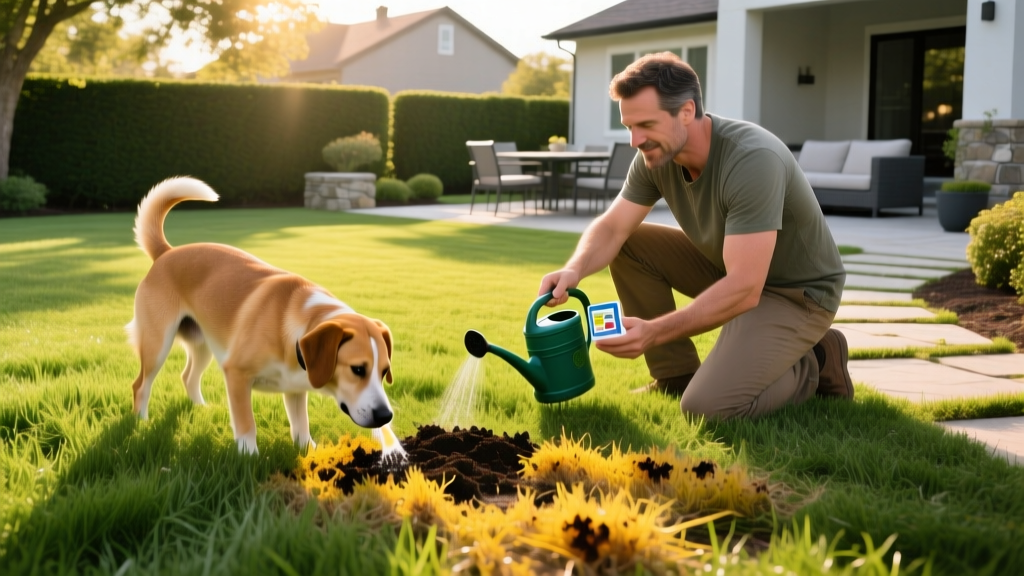
Fixing Dogs Urine Killing Grass: Step-by-Step Lawn Repair Guide
The Science: Why Dogs Urine Killing Grass Happens
Before applying any lawn maintenance procedures, it is critical to understand the underlying soil chemistry causing the damage. A pervasive myth in the landscaping industry is that dog urine is highly acidic and burns grass by altering the soil pH. In reality, canine urine typically has a pH between 6.0 and 6.5, which is well within the acceptable range for most turfgrasses. The true culprit behind dogs urine killing grass is nitrogen overload and salt accumulation.
Dog urine contains high concentrations of urea (a nitrogen compound) and dissolved salts. When a dog urinates, it deposits the equivalent of a heavy dose of fast-release synthetic fertilizer into a concentrated 6-inch diameter area. This triggers rapid urea hydrolysis, releasing ammonia and causing severe osmotic stress that dehydrates and kills the grass roots. According to turfgrass experts at NC State TurfFiles, this localized nitrogen toxicity creates the classic 'burn spot'—a dead brown center surrounded by a dark green ring of stimulated growth where the nitrogen concentration was low enough to act as a fertilizer rather than a toxin.
Myth vs. Fact: Soil pH Alterations
Myth: Adding tomato juice or baking soda to your dog's diet or lawn will neutralize the acid in urine.
Fact: The damage is caused by nitrogen salts, not acidity. Altering your dog's diet to change urine pH can lead to severe urinary tract issues and struvite crystal formation. Always consult a veterinarian before changing canine diets.
Phase 1: Immediate Triage and Soil Flushing
The most effective way to prevent dogs urine killing grass is immediate dilution. If you catch your dog in the act, or notice a fresh wet spot, you have a narrow window to flush the salts below the root zone before osmotic burn occurs.
- The 12-Hour Rule: You must dilute the spot within 12 hours of urination. After this window, the urea has already converted to ammonia and the root tissue is compromised.
- Volume Requirements: Use a garden hose to apply exactly 1.5 to 2 gallons of water directly to the spot. A light sprinkling is counterproductive, as it only moves the salts into the upper root zone without washing them past the 6-inch root profile.
- Application Technique: Apply the water slowly over 3 to 5 minutes to allow for deep percolation, preventing surface runoff that could spread the concentrated salts to adjacent healthy turf.
Phase 2: Soil Remediation and Salt Displacement
If the spot has already turned brown and the grass is dead, flushing alone will not repair the lawn. The soil profile is now saturated with sodium and excess nitrogen salts, creating a hostile environment for new seed germination. You must remediate the soil chemistry before reseeding.
| Amendment Type | Application Rate | Mechanism of Action | Best Use Case |
|---|---|---|---|
| Pelletized Gypsum (Calcium Sulfate) | 2 lbs per 100 sq ft | Calcium displaces sodium ions in the soil matrix, allowing salts to be flushed out. | Heavy clay soils with severe salt crusting. |
| Activated Biochar | 0.5 inches topdressed | Highly porous carbon structure adsorbs excess nitrogen and ammonia compounds. | Sandy soils requiring nitrogen buffering and moisture retention. |
| Composted Pine Bark | 1 inch topdressed | Introduces beneficial microbes that accelerate the breakdown of residual urea. | Established lawns needing organic matter replenishment. |
For standard residential repairs, pelletized gypsum is the most reliable choice. Rake out the dead thatch from the urine spot, apply the gypsum, and water it in heavily to initiate the cation exchange process. Wait 7 to 10 days before attempting to reseed.
Phase 3: Targeted Reseeding and Turf Recovery
Once the soil salts are displaced, you can reintroduce turfgrass. Selecting the correct seed cultivar is vital for rapid patch repair, as slow-germinating seeds will be washed away or outcompeted by weeds.
Cool-Season Grass Repair Protocol
For lawns consisting of Tall Fescue or Kentucky Bluegrass, use a Perennial Ryegrass (Lolium perenne) blend for spot repairs. Perennial ryegrass germinates in 5 to 7 days, providing rapid ground cover. While it may not perfectly match the texture of mature Kentucky Bluegrass, its speed prevents soil erosion and weed invasion in high-traffic pet areas.
- Scarify the bare soil with a steel rake to create a 1/8-inch furrowed seedbed.
- Sow the ryegrass seed at a rate of 6 to 8 pounds per 1,000 square feet (approx. 1 handful per 12-inch patch).
- Topdress with 1/4 inch of sterile peat moss or compost to retain moisture and hide the seed from birds.
- Water lightly 3 times a day (morning, noon, late afternoon) for 5 minutes per session to keep the top inch of soil constantly moist until germination occurs.
Warm-Season Grass Repair Protocol
Warm-season grasses like Bermudagrass, Zoysia, and Centipedegrass spread via stolons and rhizomes. If the urine spot is smaller than 12 inches in diameter and the surrounding grass is healthy, do not reseed. Instead, apply a 10-10-10 granular fertilizer to the dark green perimeter ring to stimulate lateral stolon growth. The surrounding turf will naturally creep into the bare spot and fill it within 3 to 4 weeks during the active summer growing season.
Phase 4: Preventative Lawn Maintenance and Diet
According to veterinary and behavioral experts at the American Kennel Club (AKC), managing dogs urine killing grass requires a combination of landscape design and canine hydration strategies.
- Hydration Amplification: The most effective way to reduce nitrogen concentration in urine is to increase your dog's water intake. Add 1/2 cup of water directly to your dog's dry kibble at each meal. This naturally dilutes the urine without requiring artificial supplements.
- Designated Potty Zones: Train your dog to use a specific area of the yard. Construct a 4x4 foot frame filled with 3 inches of pea gravel or cedar mulch. Pea gravel drains instantly and can be sanitized monthly with a 10% white vinegar solution, completely eliminating lawn burn issues.
- Avoid 'GrassSaver' Supplements: Many over-the-counter lawn defense supplements contain DL-Methionine, which lowers urine pH. As established, pH is not the issue, and artificially acidifying your dog's urine can cause dangerous calcium oxalate bladder stones. Stick to hydration and landscape management.
Troubleshooting: When Urine Spot Repairs Fail
If you have followed the flushing and reseeding protocols but the new seed turns yellow and dies within two weeks, you are likely dealing with one of the following edge cases:
Diagnostic Checklist for Failed Germination
- Residual Salt Crusting: If the soil surface looks white or chalky, the gypsum application was insufficient. You must physically remove the top 1 inch of soil and replace it with fresh topsoil before reseeding.
- Fungal Damping Off: Overwatering the seed in high-humidity conditions can cause Pythium blight, which rots the seedling at the soil line. Reduce watering frequency and ensure the patch receives at least 4 hours of direct sunlight.
- Pre-emergent Herbicide Interference: If you applied a crabgrass pre-emergent (like Prodiamine or Dithiopyr) to your lawn in early spring, it will prevent your new grass seed from germinating. You must wait 8 to 12 weeks after pre-emergent application before reseeding urine spots, or use activated charcoal to neutralize the herbicide in the specific patch.
Successfully managing dogs urine killing grass is not about finding a chemical neutralizer; it is about executing rapid soil flushing, displacing toxic salts with calcium sulfate, and utilizing fast-germinating cultivars for immediate turf recovery. By integrating these step-by-step procedures into your seasonal lawn maintenance program, you can maintain a dense, resilient lawn that withstands the realities of pet ownership.

