
Lawn Care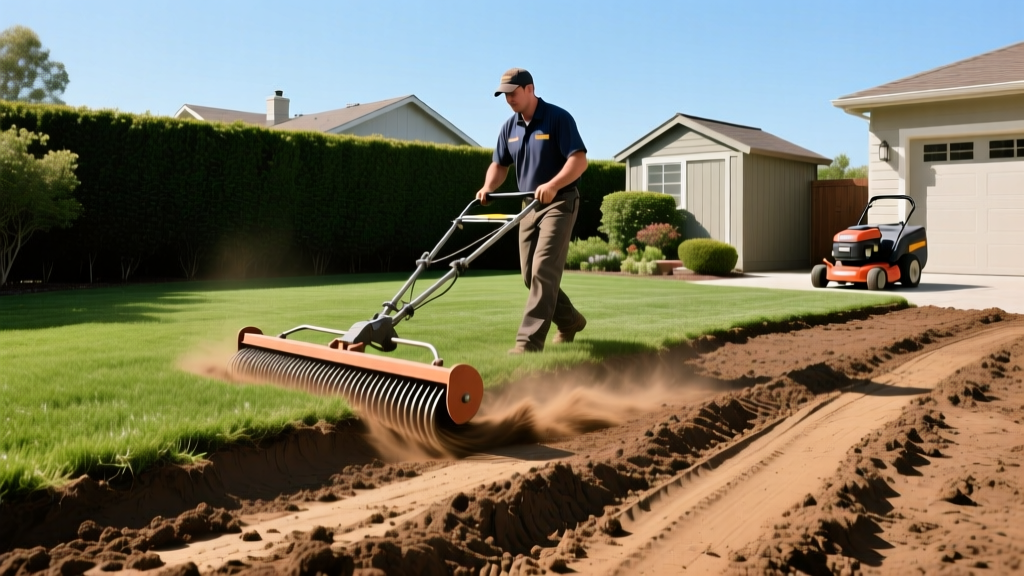
Fixing Lawn Washouts and Grading Errors With Tow-Behind Road Rakes
The Hidden Cost of Lawn-to-Road Transition Failures
When managing large properties, acreage, or estates, the transition zone between a manicured turfgrass lawn and a gravel road or driveway is a primary failure point. Standard landscaping equipment like push rakes or small tillers are entirely inadequate for the sheer volume of soil displacement caused by water runoff, vehicle tracking, and heavy equipment. This is where road rakes—specifically tow-behind grading rakes, drag mats, and PTO-driven landscape rakes—become essential diagnostic and corrective tools for lawn care professionals and serious homeowners.
Road rakes are not just for maintaining gravel driveways; they are critical for diagnosing and solving large-scale lawn grading errors, fixing severe edge washouts, and preparing expansive seedbeds. According to Penn State Extension's guidelines on surface water management, improper grading at hardscape-to-turf transitions is the leading cause of localized soil erosion and turf root rot. By utilizing the correct class of road rake, you can manipulate the top 2 to 4 inches of soil to re-establish proper drainage crowns without destroying the underlying subgrade.
Diagnostic Flowchart: Identifying Your Grading Failure
Before hooking up a road rake, you must diagnose the specific failure mode of your lawn's edge or seedbed. Misapplying a heavy scarifier to a simple leveling job will bring dormant weed seeds and subsoil clay to the surface, ruining your turf.
Symptom to Solution Matrix
- Symptom: Standing water pooling at the lawn edge immediately after rain.
Diagnosis: Loss of drainage crown; soil has slumped below the driveway grade.
Road Rake Solution: Use a Drag Mat Road Rake to pull adjacent topsoil laterally and rebuild the transition swale. - Symptom: Deep ruts and exposed river rock in a newly seeded acreage plot.
Diagnosis: Unscreened fill dirt or severe compaction preventing seed-to-soil contact.
Road Rake Solution: Use a PTO-Driven Tine Road Rake to de-stone the top 2 inches and create a fine tilth. - Symptom: Massive trenching where lawn meets a sloped gravel road.
Diagnosis: High-velocity runoff washout; topsoil completely stripped to subgrade.
Road Rake Solution: Use a Grader Road Rake (with scarifiers and blade) to cut into the compacted edge, pull material back, and re-crown the slope.
Comparing Road Rake Types for Lawn Renovation
The term 'road rake' encompasses several distinct pieces of tractor-pulled equipment. Choosing the wrong attachment will result in either ineffective leveling or catastrophic damage to your existing turf. Below is a comparison of the three primary road rake configurations used in advanced lawn care and landscaping.
| Road Rake Type | Mechanism & Action | Best Lawn/Grading Application | 2026 Avg. Price Range | Tractor HP Req. |
|---|---|---|---|---|
| Drag Mat (e.g., ABI Drag) | Weighted steel mesh or tines dragged passively. | Leveling topsoil, seedbed finishing, breaking up clay clods. | $800 - $1,800 | 15 - 30 HP |
| Tine Rake (e.g., Land Pride LR15) | PTO-driven rotating tines that aggressively sift soil. | De-stoning, breaking heavily compacted clay, windrowing debris. | $2,500 - $4,200 | 20 - 45 HP |
| Grader Rake (e.g., ABI Gravel Rascal) | Carbide scarifiers + grading blade + drag mat. | Fixing deep washouts, re-crowning slopes, heavy cut-and-fill. | $3,500 - $5,500 | 25 - 60 HP |
For pure lawn renovation and seedbed prep on acreage, the PTO-driven tine rake is unmatched for creating a perfect germination zone. However, for fixing structural grading issues and washouts along driveways, the multi-stage Grader Rake is the industry standard, as noted by USDA NRCS erosion control guidelines which emphasize the need for mechanical soil disruption and re-grading to halt concentrated water flow.
Step-by-Step: Fixing a Washed-Out Lawn Edge
When a gravel driveway sheds water onto an adjacent lawn, it often carves a trench into the topsoil. Simply dumping new dirt into the trench will fail; the new soil will wash away in the next storm. You must use a road rake to mechanically interlock the new soil with the existing subgrade and reshape the drainage profile.
Step 1: The Soil Moisture Ribbon Test
Never operate a road rake on saturated soil. Raking wet clay will smear the soil profile, creating a hardpan layer that prevents turf roots from penetrating and exacerbates future runoff. Grab a handful of soil from the washout zone and squeeze it into a ribbon. If the ribbon holds together smoothly and feels slick, the soil is too wet. Wait until the soil crumbles at a 1-inch to 2-inch ribbon length before engaging your equipment.
Step 2: Hitch Offset and Angle Calibration
To move soil laterally from the high side of the lawn back into the washed-out trench, do not pull the road rake straight behind the tractor. Offset your three-point hitch or tow-behind clevis by 12 to 18 inches to the right, and angle the rake blade 15 degrees. This 'cut-and-cast' technique forces the grader blade to slice into the healthy lawn edge and roll the soil precisely into the depression.
Step 3: Scarifier Depth Control
If using a multi-stage grader rake (like the ABI Gravel Rascal 400), set the front carbide scarifiers to penetrate exactly 1.5 inches deeper than the trench floor. This fractures the compacted subgrade at the bottom of the washout, allowing the grading blade to pull up firm, structural dirt rather than just loose topsoil. Warning: Setting scarifiers deeper than 4 inches in a lawn zone risks bringing up sterile subsoil and buried construction debris.
Step 4: The Drag Mat Finish
Once the trench is filled and slightly over-crowned (mounded 1 inch higher than the final desired grade to account for settling), lower the rear drag mat. Make two passes in a crisscross pattern at a slow ground speed (2 to 3 MPH). This pulverizes remaining clods and creates the fine, level seedbed required for planting turfgrass.
Expert Warning: Turfgrass Crown Damage
When working near established warm-season grasses like Bermuda or Zoysia, aggressive PTO tine rakes can destroy the stolons and rhizomes if set too low. Always raise the tine depth to skim only the top 0.5 inches of soil when renovating edges near living turf. For cool-season fescue, you can be slightly more aggressive, but avoid tearing the root crowns during the heat of summer.
Calibration and Maintenance for Precision Grading
A road rake is only as effective as its calibration. The most common mistake property owners make is leaving the grading blade in a static, locked position. For lawn care applications, the blade must be set to a 'float' or slight upward angle (1 to 2 degrees) during the finishing passes. A downward-angled blade will dig trenches; a perfectly flat blade will skip over hard spots; a slightly upward-angled blade acts as a screed, shaving off high spots and depositing them into low spots.
Inspect the drag mat tines or mesh before every season. If the tines are bent backward from hitting immovable rocks, they will no longer fracture soil clods. Use a torch and a bending bar to restore the tines to a 45-degree forward rake angle. For PTO-driven landscape rakes, check the slip clutch annually. If the clutch seizes, hitting a buried tree root or large limestone rock will instantly snap your tractor's PTO shaft or destroy the rake's gearbox.
Frequently Asked Questions
Can I use a road rake to level an existing, living lawn?
No. Road rakes are designed for bare soil, seedbed preparation, and hardscape transitions. Pulling a steel drag mat or scarifier over a living lawn will rip the turf out by the roots and destroy the thatch layer. For leveling living lawns, use a lawn leveling drag mat made of flexible chainlink or specialized turf mats, and apply a sand-soil topdressing mix instead.
What is the difference between a landscape rake and a road rake?
While often used interchangeably, a traditional 'landscape rake' usually refers to a wide, passive aluminum or steel tine rake (often 5 to 7 feet wide) used for clearing debris and light leveling. A 'road rake' or 'grader rake' implies a heavier, multi-stage implement with scarifying teeth, a cutting blade, and a finishing mat designed to handle the severe compaction and washouts associated with gravel roads and heavy equipment transitions.
How fast should I drive my tractor when prepping a lawn seedbed?
Speed dictates the finish. When using a PTO tine road rake to break up clay and de-stone, maintain 3 to 4 MPH with the PTO at 540 RPM. When making the final leveling pass with the drag mat to prepare for seed, drop your ground speed to 1.5 to 2 MPH. Faster speeds during the finishing pass will cause the mat to bounce, creating a wavy, uneven seedbed that leads to patchy grass germination and localized water pooling.

