
Lawn Care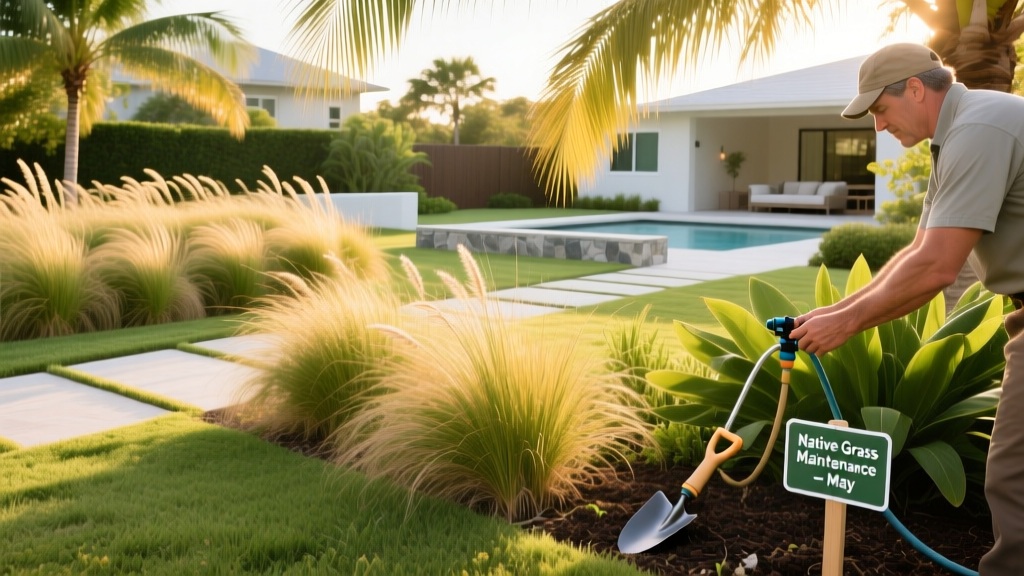
Florida Native Grasses: Seasonal Care Calendar & Timing Guide
The Botanical Reality of Florida Native Turf
Homeowners searching for 'florida native grasses' often encounter a botanical reality check: true native turfgrasses suitable for high-traffic, traditional lawns are virtually nonexistent in the state. While introduced warm-season grasses like Bahiagrass and Centipedegrass dominate the commercial sod market, true natives like Seashore Paspalum (Paspalum vaginatum) and native ecotypes of St. Augustinegrass offer unparalleled salt tolerance, drought resilience, and regional adaptation. Additionally, native ornamental bunchgrasses like Muhly grass (Muhlenbergia capillaris) and Fakahatchee grass serve as exceptional, low-maintenance groundcovers for non-traffic zones.
This seasonal calendar dictates the exact timing for establishment, fertilization, mowing, and dormancy management for Florida's native and naturally adapted warm-season grasses. As of 2026, aligning your lawn care schedule with local estuary protection ordinances and precise soil temperature thresholds is critical for maintaining a healthy, ecologically responsible landscape.
The Native Turf Reality Check: True native Florida turfgrasses are largely limited to coastal and wetland species. For traditional lawns, horticulturists recommend native ecotypes of St. Augustine (like 'Bitter Blue' or 'Seville') or Seashore Paspalum, alongside highly adapted naturalized species like Bahia. The calendar below applies to these warm-season, regionally adapted grasses.
Spring (March - May): Green-Up and Establishment
Spring in Florida is defined not by the calendar date, but by soil temperature. Warm-season native and adapted grasses remain dormant until the soil temperature consistently reaches 65°F at a 2-inch depth. Applying nitrogen fertilizer before this threshold is a critical failure mode that leads to nutrient leaching and invites brown patch fungus (Rhizoctonia solani).
Fertilizer Blackouts and First Applications
Many Central and South Florida counties enforce strict summer fertilizer blackouts starting June 1st to protect waterways. Therefore, your primary spring feeding must occur between April 15th and May 15th. According to the Florida-Friendly Landscaping Program, use a 15-0-15 or 16-4-8 fertilizer with at least 50% slow-release nitrogen (such as sulfur-coated urea or methylene urea). Apply at a rate of 1 lb of actual nitrogen per 1,000 square feet. For Seashore Paspalum, which is highly sensitive to excess phosphorus, strictly use a 0-phosphorus blend unless a soil test indicates a severe deficiency.
Pre-Emergent Weed Control
If you missed the late-winter window for pre-emergent herbicides, early March is your final opportunity to stop tropical signalgrass and crabgrass. Apply prodiamine at a rate of 0.83 oz per 1,000 sq ft. Do not use pre-emergents if you plan to sow Bahia or Centipede seeds, as these products will inhibit turfgrass germination for up to 12 weeks.
Summer (June - August): Peak Growth and Stress Management
Summer is the peak growing season, but it also brings intense heat, heavy rainfall, and severe pest pressure. Maintenance shifts from promoting growth to managing stress and protecting the turf canopy.
Precision Mowing Heights
Mowing height directly impacts root depth and drought tolerance. Follow these specific measurements for Florida's adapted grasses:
- Seashore Paspalum: 1.0 to 2.0 inches. Requires a reel mower for a clean cut; rotary mowers will scalp the turf and cause severe browning.
- Native St. Augustine Ecotypes: 3.5 to 4.0 inches. Taller shading protects the soil from evaporation and outcompetes weeds.
- Bahiagrass (Naturalized): 3.0 to 4.0 inches. Mow frequently enough to never remove more than one-third of the leaf blade, preventing stemmy, unsightly seed heads.
Watering and Pest Pressure
Despite frequent afternoon thunderstorms, Florida's sandy soil drains rapidly. Water deeply but infrequently, applying exactly 3/4 inch of water per session to encourage deep root growth. Use a standard tuna can placed in the sprinkler zone to measure output. Summer is also peak season for chinch bugs in St. Augustine and mole crickets in Bahia. Inspect the turf margins for yellowing halos (chinch bugs) or spongy, tunneling soil (mole crickets). Treat localized infestations with bifenthrin or imidacloprid, respectively, rather than broadcasting chemicals across the entire lawn.
Fall (September - November): Pre-Dormancy Hardening
As daylight hours shorten and temperatures drop below 80°F, turfgrass growth slows. The goal in fall is to harden the grass for winter, not to push new, tender leaf growth that will be damaged by the first cold snap.
The Potassium Shift
Cease all nitrogen applications by late September. Instead, apply a potassium-heavy fertilizer, such as potassium sulfate (0-0-50), at a rate of 1.5 lbs per 1,000 sq ft. According to research from the UF/IFAS Warm-Season Turfgrass Guide, potassium increases cellular osmotic pressure, acting as a natural antifreeze that significantly improves the turf's tolerance to freezing temperatures and winter desiccation.
Managing Native Ornamental Grasses
If your landscape includes native ornamental bunchgrasses like Muhly or Fakahatchee, fall is their showcase season. Muhly grass produces its signature pink-purple inflorescences in October. Do not cut these grasses back in the fall; leave the foliage and seed heads intact to provide winter cover for native birds and beneficial insects. Wait until late February to shear them back to 6 inches above the crown.
Winter (December - February): Dormancy and Weed Defense
Florida's warm-season grasses enter dormancy, turning brown or straw-colored. This is a natural physiological response, not a sign of death. Do not water dormant turf, and do not apply fertilizer.
Winter Weed Eradication
While your native and adapted turf sleeps, cool-season weeds like annual bluegrass (Poa annua), henbit, and chickweed thrive. Because the turf is dormant, you can safely use non-selective herbicides like glyphosate for spot-treating heavy weed patches, provided the ambient temperature is above 60°F and the warm-season grass is fully brown. For broadleaf weeds in dormant St. Augustine, a liquid application of atrazine is highly effective and safe for the dormant turf crown.
Regional Timing Matrix: Panhandle vs. Central vs. South
Florida spans multiple USDA Hardiness Zones (8a through 11a). A calendar that works in Miami will fail in Tallahassee. Use this matrix to adjust your seasonal timing.
| Maintenance Task | Panhandle (Zone 8/9a) | Central FL (Zone 9b) | South FL (Zone 10/11) |
|---|---|---|---|
| Spring Green-Up | Late April - May | Mid March - April | Year-round (slows in Jan) |
| First Nitrogen Application | Mid April | Early April | Mid March |
| Pre-Emergent Window | Late Feb - Early March | Mid Feb | Early Feb & Late Oct |
| Dormancy Onset | Late November | Late December | Rare / Frost events only |
Sourcing True Native Florida Grasses: Costs and Availability
Sourcing true native grasses requires looking beyond big-box garden centers. The Florida Native Plant Society maintains a directory of specialized nurseries that propagate local ecotypes. When budgeting for a native or highly adapted landscape in 2026, expect the following material costs:
- Seashore Paspalum Sod: Highly specialized and salt-tolerant. Costs between $0.45 and $0.65 per square foot (approx. $225 to $325 per 500 sq ft pallet). Best for coastal properties and areas irrigated with reclaimed or brackish water.
- Native St. Augustine Ecotypes (Plugs/Sod): Varieties like 'Bitter Blue' or 'Palmetto' range from $0.25 to $0.40 per square foot. They offer superior shade tolerance compared to commercial 'Floratam'.
- Native Ornamental Bunchgrasses: Muhly grass, Fakahatchee, and Elliott's lovegrass are typically sold in 1-gallon or 3-gallon containers at native plant sales. Expect to pay $4.00 to $8.00 per plant. Space them 24 to 36 inches apart for a meadow-style groundcover that requires zero mowing and minimal irrigation once established.
By aligning your maintenance schedule with the biological rhythms of these regionally specific grasses, you eliminate wasted inputs, reduce chemical reliance, and cultivate a landscape that thrives in Florida's unique subtropical environment.

