
Lawn Care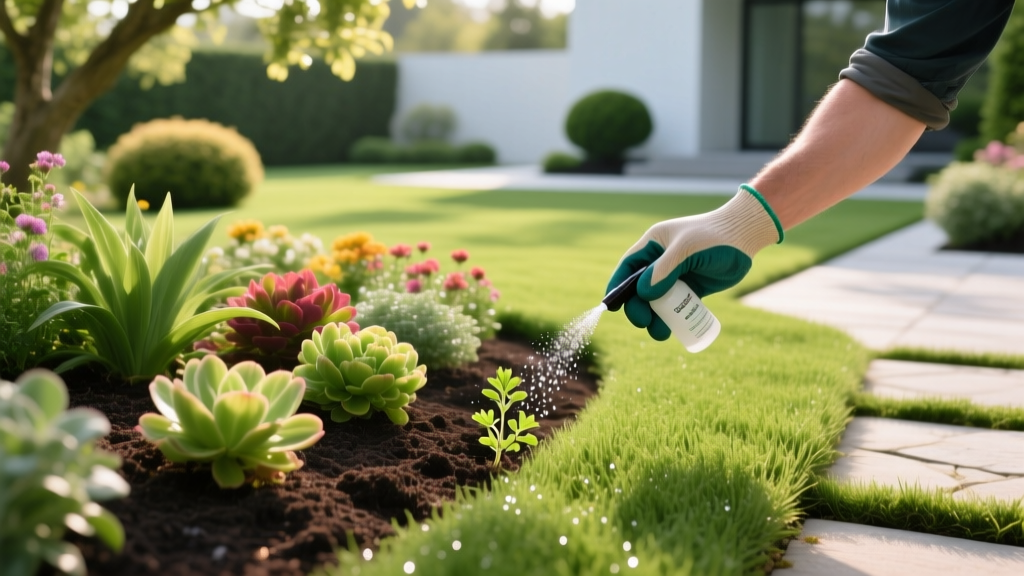
How to Keep Weeds Out of the Flower Bed: Spot-Treatment Guide
The Flower Bed Weed Control Paradox
Learning how to keep weeds out of the flower bed requires a shift from broadcast lawn applications to surgical, species-specific interventions. Unlike turfgrass, where broad-spectrum herbicides can be safely applied to monocultures, ornamental beds contain diverse plant families with varying sensitivities to chemical controls. A broadcast spray of a non-selective herbicide will obliterate your prized hydrangeas just as quickly as it kills the invasive bindweed choking them. Furthermore, the dense root zones of established perennials make mechanical cultivation (tilling or deep hoeing) destructive. To maintain a pristine landscape, you must deploy a layered strategy combining pre-emergent chemistry, highly targeted post-emergent spot-treatments, and precise physical barriers.
The Flower Bed Weed Identification Matrix
Effective spot-treatment begins with accurate identification. Applying a grass-selective herbicide to a broadleaf weed is a waste of chemical and money. Use this matrix to identify the primary invaders and their specific vulnerabilities.
| Weed Species | Classification | Primary Invasion Window | Spot-Treatment Vulnerability |
|---|---|---|---|
| Yellow Nutsedge (Cyperus esculentus) | Sedge | Early Summer (soil temps > 60°F) | Halosulfuron-methyl (SedgeHammer) applied at the 3-5 leaf stage before tuber formation. |
| Prostrate Spurge (Euphorbia maculata) | Broadleaf Annual | Mid-Summer | Hand-pulling when young; Isoxaben pre-emergent prevents seed germination. |
| Field Bindweed (Convolvulus arvensis) | Broadleaf Perennial | Spring through Fall | Wick-application of 2% Glyphosate during early flowering stage to translocate to deep rhizomes. |
| Crabgrass (Digitaria sanguinalis) | Grassy Annual | Spring (soil temps 55-60°F) | Fluazifop-p-butyl (Grass-B-Gon) post-emergent; safe around broadleaf ornamentals. |
Pre-Emergent Protocols for Ornamental Beds
The most cost-effective way to manage flower bed weeds is to prevent them from germinating. As of 2026, professional-grade granular pre-emergents remain the standard for ornamental beds because they eliminate the foliar drift risks associated with liquid sprays.
Isoxaben for Broadleaf Prevention
Isoxaben (sold under trade names like Gallery) inhibits cellulose biosynthesis, stopping broadleaf weed seeds from developing roots. It is exceptionally safe for use around over 200 species of established ornamentals, including hostas, daylilies, and woody shrubs. Apply at a rate of 0.5 to 1.0 lbs of active ingredient per acre. For a standard 500-square-foot home flower bed, this translates to roughly 1.5 ounces of the 75% DF granular formulation. Water in with 0.25 inches of irrigation within 48 hours to activate the chemical barrier in the top inch of soil.
Prodiamine for Grassy Weed Prevention
Prodiamine (Barricade) inhibits microtubule formation and is highly effective against crabgrass and annual bluegrass. While safe for most established woody ornamentals, it can stunt the growth of newly transplanted perennials and should be avoided in beds containing unestablished bulbs. A typical homeowner application costs approximately $35 to $50 for enough granular product to treat 5,000 square feet, making it highly economical for large perimeter beds.
WARNING: Tree Root Zones
Never apply pre-emergent herbicides containing pendimethalin or prodiamine within the drip line of young, shallow-rooted trees (such as maples or dogwoods). These chemicals can inhibit the formation of new feeder roots, leading to long-term canopy decline and transplant shock.
Never apply pre-emergent herbicides containing pendimethalin or prodiamine within the drip line of young, shallow-rooted trees (such as maples or dogwoods). These chemicals can inhibit the formation of new feeder roots, leading to long-term canopy decline and transplant shock.
Post-Emergent Spot-Treatment Techniques
When weeds bypass the pre-emergent barrier or are introduced via contaminated mulch or bird droppings, spot-treatment is required. The goal is to deliver the active ingredient exclusively to the weed tissue.
The Wick and Paintbrush Method
For perennial nightmares like field bindweed or Japanese stiltgrass growing directly through the crown of a desirable perennial, spraying is too risky. Instead, use the wick method. Mix a 2% solution of glyphosate (approximately 2.5 ounces of 41% concentrate per gallon of water) and add a non-ionic surfactant to break the leaf surface tension. Dip a foam paintbrush or a commercial wick applicator into the solution, wiping off excess to prevent dripping, and physically paint the leaves of the target weed. According to the UC Statewide Integrated Pest Management Program, this targeted translocation method allows the herbicide to travel down to the weed's deep rhizomes without risking soil residual damage to adjacent ornamentals.
Grass-Selective Herbicides in Broadleaf Beds
If your flower bed is overrun by annual grasses or bermudagrass encroaching from the lawn, utilize grass-selective herbicides containing Fluazifop-p-butyl or Sethoxydim. Products like Bonide Grass Beater or Ortho Grass B Gon can be sprayed directly over broadleaf ornamentals (like roses, lilies, and ferns) without causing phytotoxicity. These chemicals target the acetyl-CoA carboxylase enzyme, which is present in grasses but absent in broadleaf plants. Expect to see grassy weeds yellow and die within 7 to 14 days.
Physical Barriers: Mulch and Fabric Realities
Chemical controls must be supported by physical suppression. However, improper mulching is a leading cause of ornamental rot and weed resurgence.
- The 3-Inch Rule: Maintain exactly 2 to 3 inches of double-shredded hardwood bark. Less than 2 inches allows light penetration, triggering weed seed germination. More than 3 inches creates anaerobic soil conditions, suffocating ornamental roots and promoting sour mulch syndrome.
- Landscape Fabric Limitations: Woven geotextile fabrics are highly effective for the first 24 months. However, by year three, wind-blown soil and decomposing organic matter accumulate on top of the fabric, creating a perfect seedbed for weeds whose roots will penetrate the fabric, making removal nearly impossible without tearing the textile. Use fabric only under inorganic mulches (river rock, gravel) or in high-traffic pathways, not in active perennial beds.
- The Cardboard Smother Method: For new bed installations, bypass fabric entirely. Lay down overlapping layers of plain, unglued corrugated cardboard directly over the existing turf or weeds. Wet the cardboard thoroughly, then apply 3 inches of compost followed by 2 inches of mulch. The cardboard will suppress existing vegetation for 6 to 8 months before biodegrading, improving soil structure while blocking initial weed flushes.
Seasonal Maintenance Calendar
Consistent timing is critical for breaking the weed life cycle. Follow this seasonal framework to maintain a weed-free ornamental landscape.
- Early Spring (Soil Temps 50°F - 55°F): Apply granular pre-emergent (Prodiamine/Isoxaben mix) before forsythia blooms drop. Cultivate the top 1 inch of mulch to disrupt early weed seedlings.
- Mid-Spring: Inspect beds for perennial weed emergence. Spot-treat emerging bindweed or thistle with the wick method before they establish deep taproots.
- Early Summer: Monitor for nutsedge. Apply Halosulfuron-methyl directly to nutsedge shoots when they reach the 3-leaf stage. Pulling nutsedge by hand is counterproductive, as it breaks the rhizome and stimulates dormant tubers to sprout multiple new shoots.
- Late Summer: Refresh mulch layers that have thinned due to decomposition. Hand-pull escaped summer annuals (like spurge and pigweed) before they drop seed, which can remain viable in the soil seed bank for up to 40 years.
- Late Fall: Clear spent annual ornamentals and debris. Apply a winter pre-emergent if winter annual weeds (like henbit and chickweed) are a historical problem in your region.
For further reading on sustainable weed management and soil health, consult resources from the University of Minnesota Extension, which provides excellent regional data on organic mulch decomposition rates and their impact on soil nitrogen tie-up. By combining precise chemistry with intelligent cultural practices, you can protect your ornamental investments and maintain immaculate landscape beds year-round.

