
Lawn Care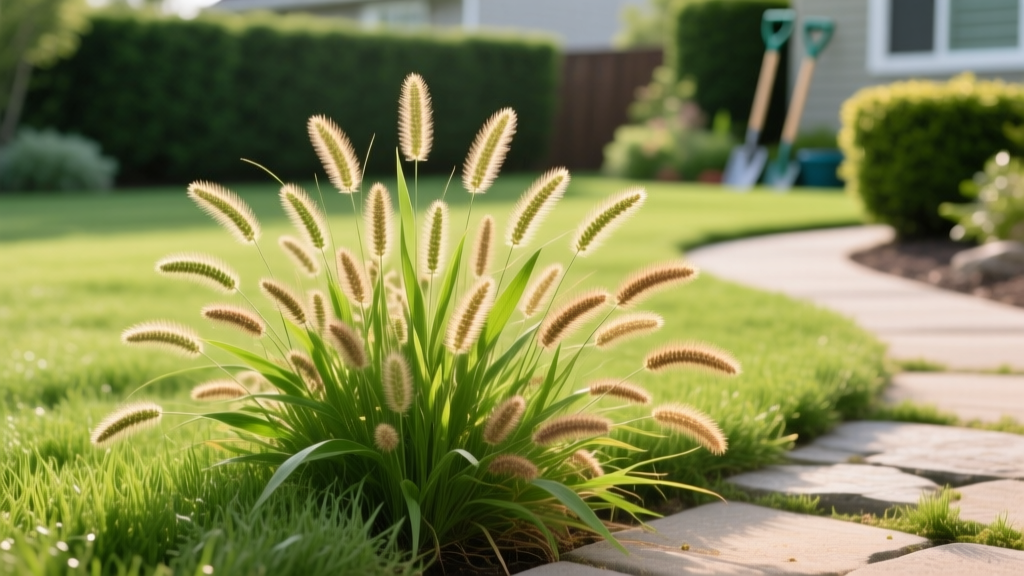
How to Get Rid of Foxtail Grass: The Complete Eradication Playbook
Foxtail grass (Setaria species) is a highly aggressive summer annual weed that compromises lawn density, steals vital soil nitrogen, and poses a severe physical hazard to pets. Unlike broadleaf weeds, foxtail is a grassy weed, meaning it shares the same biological family as your desirable turf. This makes selective eradication exceptionally challenging once the plant matures. According to the University of California Statewide Integrated Pest Management Program, foxtail thrives in compacted soils and thin turf canopies, rapidly colonizing bare spots before desirable grasses can recover.
This playbook provides a precise, step-by-step chemical and cultural framework to eliminate foxtail from cool-season and warm-season lawns, including exact active ingredient selection, mixing rates, and application timing.
Identify Your Enemy: The 3 Foxtail Varieties
Before selecting an herbicide, you must confirm the weed is actually foxtail. Misidentifying it as crabgrass or quackgrass will lead to chemical failure. Foxtail is characterized by its dense, bristly, spike-like seed heads (panicles) that resemble the tail of a fox.
| Variety | Scientific Name | Key Identification Traits | Typical Height |
|---|---|---|---|
| Yellow Foxtail | Setaria pumila | Flat stems, distinct long twisted hairs on the upper leaf surface near the base. | 1 to 3 feet |
| Green Foxtail | Setaria viridis | No hairs on leaves, rough leaf margins, smaller and more compact seed head. | 1 to 2 feet |
| Giant Foxtail | Setaria faberi | Large, nodding seed head, distinct fine hairs on the upper leaf surface, thick stems. | 2 to 4 feet |
For a detailed botanical breakdown of regional variations, Penn State Extension provides excellent diagnostic resources for northeastern and mid-Atlantic turf managers.
The Pre-Emergent Shield: Spring Defense
The most cost-effective and reliable way to get rid of foxtail grass is to prevent it from germinating. Foxtail is a summer annual; it germinates in spring, grows through summer, and dies in autumn after dropping thousands of seeds. Pre-emergent herbicides create a chemical barrier in the top 1-2 inches of soil, killing the seedling as it sprouts.
Pro Turf Tip: The Soil Temperature Trigger
Do not rely on calendar dates. Apply your pre-emergent when the soil temperature at a 2-inch depth reaches 50°F to 55°F for three consecutive days. While crabgrass triggers at 55°F, foxtail often waits until soils hit 60°F. Applying at the 50°F mark safely covers both weeds.
Do not rely on calendar dates. Apply your pre-emergent when the soil temperature at a 2-inch depth reaches 50°F to 55°F for three consecutive days. While crabgrass triggers at 55°F, foxtail often waits until soils hit 60°F. Applying at the 50°F mark safely covers both weeds.
Top Pre-Emergent Active Ingredients for Foxtail
- Prodiamine (e.g., Barricade 65 WDG): Provides the longest residual control (up to 6 months). Ideal for early spring applications. Rate: 0.4 oz to 1.15 oz per 1,000 sq ft depending on desired residual length.
- Dithiopyr (e.g., Dimension 2EW): Offers early post-emergent control, meaning it will kill foxtail that has already sprouted up to the 1-tiller stage. Excellent if you miss the early spring window. Rate: 0.5 oz per 1,000 sq ft.
Warning: Do not apply pre-emergents if you plan to overseed your lawn in the spring. These chemicals cannot distinguish between foxtail seeds and your expensive turfgrass seeds.
Post-Emergent Strike: Killing Active Foxtail
If foxtail has already emerged and is actively growing, pre-emergents are useless. You must switch to a selective post-emergent herbicide. The chemical choice depends heavily on your turf type and the foxtail's growth stage.
The Quinclorac Standard (Cool-Season Lawns)
For Kentucky Bluegrass, Tall Fescue, and Perennial Ryegrass, Quinclorac (found in professional products like Drive XLR8) is the gold standard. It mimics plant hormones, causing rapid, uncontrolled growth that tears the foxtail's vascular system apart.
- Timing: Apply when foxtail is young (1 to 3-leaf stage). Mature foxtail with thick stems requires multiple applications spaced 21 days apart.
- Surfactant Requirement: Quinclorac requires a high-quality Methylated Seed Oil (MSO) or Crop Oil Concentrate (COC) at 1% v/v (approx. 1.3 oz per gallon of water) to penetrate the waxy leaf cuticle.
- Antagonism Warning: Never mix Quinclorac with broadleaf herbicides like 2,4-D or Dicamba when targeting mature foxtail. The broadleaf chemicals cause rapid leaf burn on the foxtail, shutting down its vascular system before the Quinclorac can translocate to the roots, resulting in a failed kill.
The Fenoxaprop Alternative (Warm-Season & Fine Fescues)
Quinclorac can cause severe phytotoxicity (yellowing and stunting) on warm-season grasses like St. Augustine and Centipede, as well as Fine Fescues. For these lawns, use Fenoxaprop-p-ethyl (e.g., Acclaim Extra). It is a slow-acting ACCase inhibitor that stops cell division in the foxtail. Expect to see purpling of the foxtail leaves within 7 days, with complete death taking up to 21 days.
Cultural Controls: Starving the Foxtail
Chemicals provide the knockout blow, but cultural practices prevent the weed from returning. Foxtail is an opportunistic pioneer species; it requires high light penetration to the soil surface to germinate.
- Raise the Mowing Deck: Maintain Tall Fescue and Kentucky Bluegrass at 3.0 to 3.5 inches. This shades the soil, dropping the soil temperature and blocking the UV light foxtail seeds need to trigger germination.
- Correct Soil Compaction: Foxtail tolerates compacted, poorly drained soils far better than desirable turfgrasses. Core aerate your lawn in the fall to relieve compaction and promote deep turf root growth.
- Strategic Nitrogen Timing: Avoid heavy nitrogen applications in late spring (May/June). This feeds the rapidly growing foxtail. Shift your heavy fertilization to the autumn months when cool-season turf is actively storing carbohydrates for winter.
Foxtail Eradication Cost Breakdown (2026 Estimates)
Understanding the financial commitment helps you budget for a full-season eradication program. Prices below reflect 2026 retail averages for professional-grade DIY products.
| Product / Chemical | Purpose | Avg. Cost (2026) | Coverage | Cost per 1,000 sq ft |
|---|---|---|---|---|
| Prodiamine 65 WDG | Pre-emergent | $55.00 / 5 oz bottle | ~12,000 sq ft | $0.045 |
| Dimension 2EW | Pre/Early Post | $70.00 / pint | ~16,000 sq ft | $0.043 |
| Drive XLR8 (Quinclorac) | Post-emergent | $78.00 / half-gallon | ~24,000 sq ft | $0.032 |
| MSO Surfactant | Adjuvant | $25.00 / quart | ~32,000 sq ft | $0.008 |
Note: For a standard 5,000 sq ft urban lawn, a complete pre- and post-emergent chemical program will cost roughly $15 to $25 for the entire season when using concentrated professional generics.
Frequently Asked Questions
Can I compost pulled foxtail grass?
No. Foxtail produces thousands of barbed seeds. Unless your compost pile consistently reaches and maintains internal temperatures above 140°F for several days, the seeds will survive the composting process and be redistributed across your garden beds when you use the compost. Bag pulled foxtail and send it to the landfill.
Why is foxtail dangerous to my dog?
The seed heads (awns) of foxtail are equipped with backward-pointing microscopic barbs. When a dog runs through infested turf, these awns embed into their paws, ears, and nostrils. Because of the barbs, they only move deeper into the tissue, often causing severe infections, abscesses, and requiring veterinary surgery for removal. Eradicating foxtail before it produces seed heads in mid-summer is critical for pet safety.
Will vinegar kill foxtail?
Horticultural vinegar (20% acetic acid) will burn the foliage of foxtail, but it is a non-selective contact herbicide. It will instantly kill your desirable lawn grass alongside the weed, and it has zero residual root activity. Because foxtail has a deep, fibrous root system, it will simply regrow from the crown within two weeks. Stick to selective systemic herbicides like Quinclorac for permanent results.

