
Lawn Care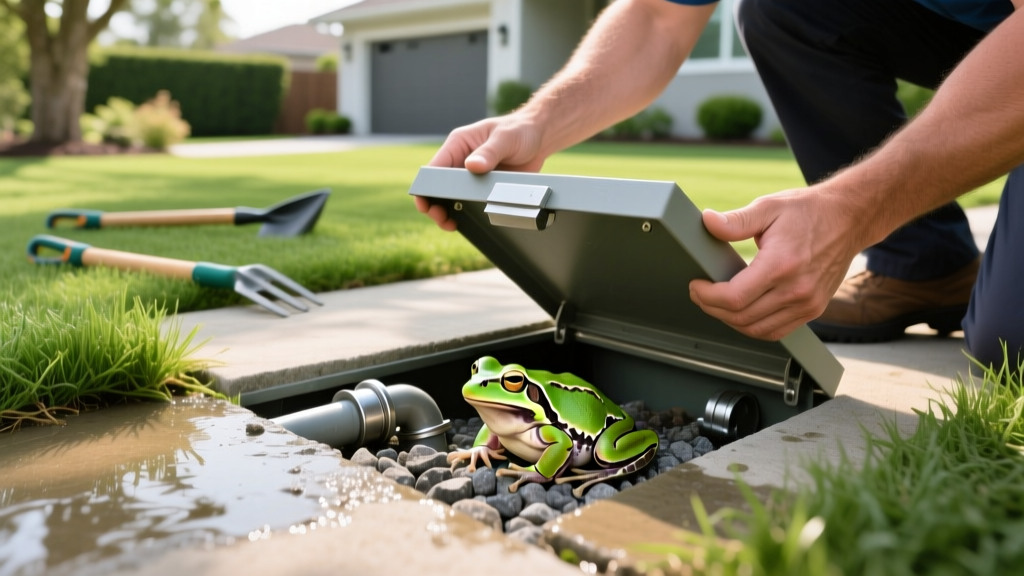
Frogs in Irrigation Box: How to Safely Remove and Prevent Them
The Microclimate Problem: Why Amphibians Invade Valve Boxes
If you have ever popped the lid off your underground sprinkler manifold only to find a resident toad or tree frog staring back at you, you are not alone. Finding frogs in irrigation box enclosures is one of the most common nuisance wildlife issues in residential lawn care. Standard 12-inch to 14-inch polyethylene valve boxes (like the NDS 1214 or Orbit 57040) create an irresistible microclimate for amphibians. These boxes maintain a constant temperature between 65°F and 80°F, retain high humidity from minor valve weeping, and offer a dark sanctuary from predators.
Furthermore, the constant moisture attracts a steady supply of insects—slugs, earwigs, and mosquitoes—providing a reliable food source. According to the National Wildlife Federation, amphibians are highly opportunistic and will colonize any artificial structure that mimics the damp, sheltered conditions of a natural forest floor or riparian bank.
Expert Insight: While frogs are beneficial for natural pest control in your garden, their presence inside a high-density electrical and hydraulic zone poses specific mechanical risks to your irrigation infrastructure that must be managed.
The Real Risks to Your Irrigation Infrastructure
Many homeowners assume a frog in the valve box is harmless. While a single small tree frog might not cause immediate damage, a breeding pair of toads or a large bullfrog can create severe operational failures in your sprinkler system.
- Wire Insulation Damage: Amphibians have sharp, abrasive teeth pads and claws. Larger toads frequently chew on 14 AWG or 18 AWG solid copper valve wires, stripping the PVC insulation and causing short circuits in your 24VAC system.
- Bufotoxin Corrosion: Many toad species secrete bufotoxin, a milky, highly acidic substance, when stressed. If this secretion coats your standard wire splice connectors, it will rapidly corrode the copper, leading to intermittent solenoid failures and controller error codes.
- Manifold Clogging: Small hatchlings can easily slip through the weep holes of anti-siphon valves or inline valve exhaust ports, lodging themselves inside the diaphragm chamber and preventing the valve from sealing.
- Controller Burnout: A shorted 24VAC wire caused by chewed insulation can blow the internal transformer or fuse in your smart irrigation controller (such as a Rachio 3 or Hunter Hydrawise), resulting in a $150 to $250 replacement cost.
Step-by-Step: How to Safely Remove Amphibians
Never use your bare hands to extract wildlife from an irrigation box. Amphibians carry salmonella, and stressed toads will secrete toxins that can cause severe irritation to human mucous membranes. Follow this safe extraction protocol:
- Power Down the Controller: Turn off your irrigation controller or flip the breaker to the sprinkler system to eliminate any risk of electrical shock from exposed 24VAC wiring.
- Remove the Lid Slowly: Pry the valve box lid using a flathead screwdriver. Sudden light exposure will cause the amphibian to panic and wedge itself under the PVC manifold pipes.
- Use a Long-Handled Grabber: Utilize a 30-inch mechanical reacher grabber tool or a specialized snake hook. Gently grasp the frog behind the front legs to avoid crushing its ribs.
- Relocate Nearby: Move the amphibian no more than 50 feet away to a shaded, damp area like a mulch bed or near a downspout. Relocating wildlife more than a mile away is often illegal and reduces their survival rate, as noted by local wildlife management guidelines.
- Inspect the Wiring: Once the box is empty, use a flashlight to inspect all wire splices for chew marks or acidic residue before closing the lid.
Proven Methods to Frog-Proof Your Irrigation Box
Exclusion is the only permanent solution. The Irrigation Association recommends maintaining clear, unobstructed access to valve boxes while ensuring the internal environment remains dry and secure. Below is a comparison matrix of the most effective exclusion strategies used by professional landscapers.
| Exclusion Method | Estimated Cost | Effectiveness | Pros & Cons |
|---|---|---|---|
| 1/4-inch Galvanized Hardware Cloth | $12 - $18 | High (95%) | Pros: Blocks all entry points; allows drainage. Cons: Requires cutting and fitting to box shape. |
| Copper Foil Tape (2-inch wide) | $20 - $25 | Medium (75%) | Pros: Easy to apply; deters slugs/snails too. Cons: Oxidizes over time; loses efficacy in wet soil. |
| Silicone-Filled Gel Caps (DBRY/SGL) | $15 / 50-pack | High (Wire Protection) | Pros: Waterproofs and protects wires from acid/chewing. Cons: Does not keep frogs out of the box itself. |
| Valve Box Lid Weatherstripping | $8 - $12 | Low (40%) | Pros: Keeps surface debris out. Cons: Frogs enter from below through dirt gaps. |
The Ultimate Exclusion Setup
For high-traffic amphibian zones (such as properties bordering ponds or wooded areas), combine the hardware cloth with silicone gel caps. Cut a piece of 1/4-inch hardware cloth to fit snugly just beneath the lip of the valve box lid. This allows you to lift the lid for maintenance while preventing animals from dropping in. Simultaneously, replace all standard twist-on wire connectors with 3M DBR/Y-6 silicone-filled gel caps. Even if a toad manages to enter and secrete bufotoxin, the silicone gel completely encapsulates the copper splice, preventing corrosion and short circuits.
Critical Warning: What NOT to Do
Never use mothballs, bleach, or chemical repellents inside your valve box. Mothballs contain naphthalene, which is highly toxic to amphibians, pets, and children, and using them outdoors is a violation of federal environmental regulations. Furthermore, sealing the valve box completely with expanding foam or concrete will trap groundwater inside, leading to catastrophic solenoid failure and manifold freezing during winter months.
Never use mothballs, bleach, or chemical repellents inside your valve box. Mothballs contain naphthalene, which is highly toxic to amphibians, pets, and children, and using them outdoors is a violation of federal environmental regulations. Furthermore, sealing the valve box completely with expanding foam or concrete will trap groundwater inside, leading to catastrophic solenoid failure and manifold freezing during winter months.
Seasonal Maintenance Checklist for Valve Boxes
Keeping frogs out requires ongoing vigilance, particularly during the spring breeding season and autumn overwintering periods. Integrate these tasks into your seasonal lawn care program:
- Early Spring (March-April): Inspect the perimeter of the valve box. Soil settling over winter often creates 1-inch gaps between the plastic box wall and the surrounding earth. Pack these gaps tightly with crushed gravel or coarse sand, which amphibians dislike burrowing through.
- Mid-Summer (July-August): Check the copper foil tape for oxidation. If the copper has turned dark brown or green, clean it with a white vinegar solution to restore the mild electrical charge that deters pests, or replace the tape.
- Late Autumn (October-November): Clear all decaying leaf litter and mulch away from the valve box lid. A 12-inch clearance zone removes the surface habitat that attracts the insects frogs feed on.
Frequently Asked Questions
Can frogs survive inside a closed irrigation box during winter?
Yes. Many toad and frog species produce natural antifreeze compounds (glucose and glycerol) in their blood, allowing them to survive freezing temperatures. They will use the deep, insulated environment of a valve box to overwinter, emerging in early spring when the ground thaws.
Will a smart irrigation controller detect a frog-related short circuit?
Advanced smart controllers like the Rachio 3 or Hunter Pro-C2 have built-in fault detection. If a frog chews through a valve wire and the 24VAC line shorts to the ground or another zone wire, the controller will display a 'Master Valve Fault' or 'Short Circuit' error and automatically shut down the affected zone to protect the internal transformer.
Is it legal to relocate frogs from my property?
Most common garden frogs and toads are not protected and can be relocated short distances (under 100 yards) on your own property. However, if you live in an area with protected species (such as the Western Toad in certain states), you must consult your local Department of Natural Resources before moving them. Always prioritize exclusion over relocation.

