
Lawn Care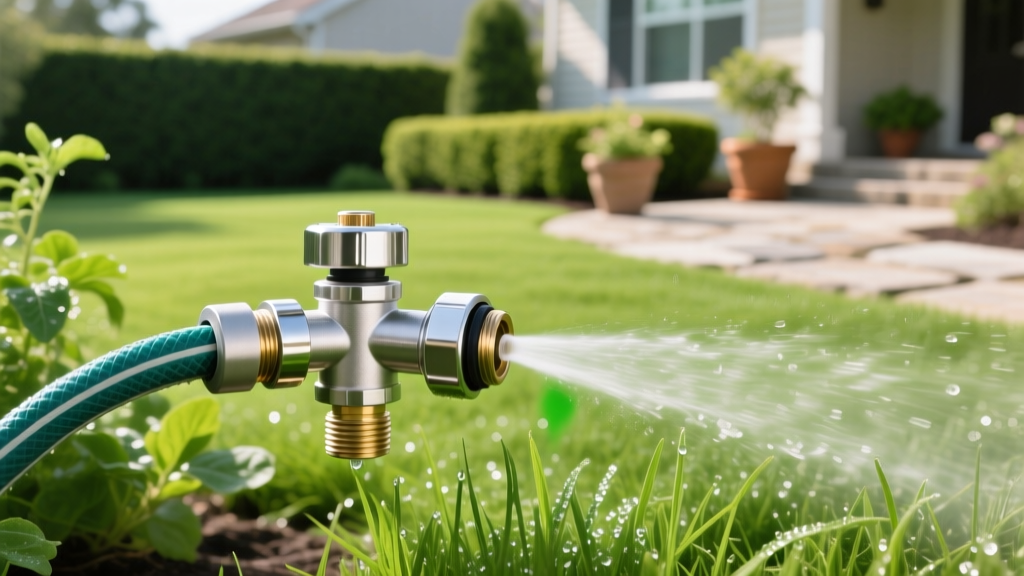
Garden Hose Backflow Preventer: Safe DIY Weed and Pest Spraying Guide
The Hidden Siphoning Hazard in Liquid Lawn Chemicals
When executing a DIY pest and weed removal playbook, homeowners frequently rely on hose-end sprayers to distribute liquid herbicides (like 2,4-D amine or Trimec) and broad-spectrum insecticides (like Bifenthrin). While these sprayers offer excellent coverage for large lawns, they introduce a severe, often ignored risk: backsiphonage. If your outdoor spigot lacks a properly functioning garden hose backflow preventer, a sudden drop in municipal water pressure can turn your garden hose into a giant straw, siphoning concentrated, toxic lawn chemicals directly back into your home’s potable drinking water supply.
According to the EPA's Safe Pest Control guidelines, preventing water source contamination is a foundational requirement of outdoor chemical application. Yet, cross-connection control is routinely bypassed by DIYers who screw hose-end sprayers directly into unprotected sillcocks. This guide details the exact hardware, installation protocols, and maintenance routines required to safely integrate backflow prevention into your lawn chemical application workflow.
The Physics of Back-Siphonage During Chemical Application
Back-siphonage occurs when the pressure in your home's water supply drops below atmospheric pressure, creating a vacuum. In a lawn care scenario, this typically happens when:
- A municipal water main breaks in your neighborhood.
- A nearby fire hydrant is opened for emergency use or routine flushing.
- A high-volume water demand occurs inside your home (e.g., flushing multiple toilets while filling a bathtub).
If your hose-end sprayer is submerged in a chemical mixture or if the sprayer's internal check valve fails, the negative pressure will pull the agrochemical solution up the hose, through the spigot, and into your home's copper or PEX plumbing. A standard garden hose backflow preventer interrupts this vacuum by opening an atmospheric vent, breaking the siphon effect and dumping the contaminated water onto the ground rather than allowing it into the house.
Choosing the Right Backflow Preventer for Agrochemicals
Not all vacuum breakers are built to withstand the harsh surfactants and solvents found in commercial-grade weed and pest control products. Below is a comparison of the most common options available in 2026 for residential hose connections.
| Device Type | Material & Model Example | Max Pressure | Chemical Resistance | Est. Cost (2026) |
|---|---|---|---|---|
| Hose Connection Vacuum Breaker (HCVB) | Lead-Free Brass (e.g., Watts LF288A, Woodford 288) | 125 PSI | Excellent (Brass body, Buna-N or EPDM seals) | $28 - $45 |
| HCVB (Budget) | ABS Plastic (e.g., Orbit 101, generic brands) | 80 PSI | Poor (Surfactants degrade plastic and cheap O-rings) | $8 - $14 |
| Pressure Vacuum Breaker (PVB) | Brass/Bronze (Inline installation) | 150 PSI | Superior (Designed for continuous pressure & chemicals) | $110 - $180 |
| Integrated Sprayer Valve | Plastic (Built into cheap sprayers) | 60 PSI | Fails frequently; not code-compliant | $0 (Included) |
Expert Recommendation: Always select a lead-free brass HCVB (Hose Connection Vacuum Breaker) for hose-end sprayers. Plastic models become brittle under UV exposure and their internal rubber diaphragms rapidly deteriorate when exposed to the adjuvants and penetrating surfactants used in modern systemic herbicides.
Step-by-Step Installation for Herbicide & Pesticide Hookups
Proper installation ensures the vacuum breaker operates at the correct pressure threshold without leaking at the threads. Follow this exact sequence:
- Shut Off the Water Supply: Close the indoor shut-off valve for the outdoor sillcock, then open the outdoor spigot to drain residual water and relieve pressure.
- Prepare the Threads: Wrap the male threads of the spigot with PTFE (Teflon) thread seal tape. Apply exactly 3 wraps in a clockwise direction. Do not use liquid pipe dope, as the petroleum distillates in many pipe dopes will swell and destroy the rubber O-ring inside the backflow preventer's female coupling.
- Thread the HCVB: Screw the brass garden hose backflow preventer onto the spigot by hand until snug, then use channel-lock pliers to tighten it an additional quarter-turn. Ensure the arrow on the device body points away from the spigot (toward the hose).
- Attach the Sprayer: Connect your hose-end sprayer (e.g., Ortho Dial N Spray or Chapin Wet/Dry) to the female GHT (Garden Hose Thread) outlet on the HCVB. Use a secondary rubber hose washer inside the sprayer coupling to prevent weeping.
- Pressure Test: Turn the indoor water supply back on. Open the outdoor spigot fully. Check both the spigot-to-HCVB connection and the HCVB atmospheric vent for leaks. A small drip from the vent when the downstream sprayer is closed is normal; it indicates the vacuum breaker is seating correctly.
CRITICAL WARNING: The Continuous Pressure Rule
Standard HCVBs are designed for non-continuous pressure applications. Never leave the outdoor spigot turned on while the hose-end sprayer's trigger or dial is in the closed position for extended periods. Trapping high municipal water pressure (often 60-90 PSI) inside the HCVB for hours will cause the internal diaphragm to fatigue, extrude, and ultimately fail, rendering the device useless. Always turn off the spigot immediately after finishing a chemical application pass.
Chemical Degradation and O-Ring Maintenance
Lawn care chemicals are aggressive. Products containing ester-based formulations (common in cold-weather broadleaf weed killers) or high concentrations of non-ionic surfactants can cause standard Buna-N (Nitrile) rubber O-rings inside the backflow preventer to swell, soften, and lose their sealing capability.
As part of your annual pest and weed removal playbook maintenance, you must inspect the HCVB diaphragm and O-rings every spring. If you notice the rubber feels mushy, sticky, or shows visible cracking, replace the internal kit. Manufacturers like Watts and Woodford sell replacement kits (typically part numbers like Watts #0008001) for under $10. Upgrading to EPDM or Viton seals, if available for your specific model, will drastically increase resistance to agrochemical degradation.
Winterization: Preventing Diaphragm Rupture
A frozen backflow preventer is a compromised backflow preventer. Water trapped inside the expansion chamber of the HCVB will freeze, expand, and either crack the brass casing or permanently deform the rubber atmospheric vent diaphragm. If the diaphragm is deformed, it will not seal properly when water pressure returns, resulting in a constant leak from the vent hole during normal use.
"Proper winterization of outdoor cross-connection control devices is mandatory to prevent mechanical failure and subsequent contamination events. Simply shutting off the water is insufficient if residual water remains in the vacuum breaker cavity." — University of Minnesota Extension, Water Quality Guidelines
Winterization Protocol: In late autumn, after your final winterizer fertilizer or late-season weed control application, unscrew the garden hose backflow preventer from the spigot. Shake out any residual water, allow it to air dry completely, and store it indoors in a climate-controlled garage or basement until the following spring.
Frequently Asked Questions
Can I use a backflow preventer with a fertilizer injector system?
Yes, but an HCVB is insufficient for fertilizer injectors (like Mazzei or Dosatron systems) that remain under continuous pressure. For inline injection systems, you must install a Pressure Vacuum Breaker (PVB) or a Reduced Pressure Zone (RPZ) assembly, which are rated for continuous pressure and provide a higher level of protection against toxic chemical backflow.
Why is my backflow preventer spitting water when I turn on the sprayer?
A brief spit of water from the atmospheric vent when you first open the sprayer valve is normal; it is the vent closing as water pressure builds. However, if it continuously leaks while you are actively spraying, the internal rubber diaphragm is likely fouled with mineral scale (calcium carbonate) or damaged by chemical exposure. Disassemble the unit, clean the seat with white vinegar, and replace the diaphragm if the leaking persists.
Do I need a backflow preventer if I only use organic, OMRI-listed pest controls?
While OMRI-listed products (like Neem oil, Spinosad, or insecticidal soaps) are less toxic to humans than synthetic pyrethroids, they are still not safe for human consumption and can harbor bacterial growth in stagnant water. Furthermore, municipal water codes and local cross-connection control programs do not differentiate between organic and synthetic chemicals; a physical air gap or approved vacuum breaker is legally required on any hose connection where a siphoning hazard exists.

