
Lawn Care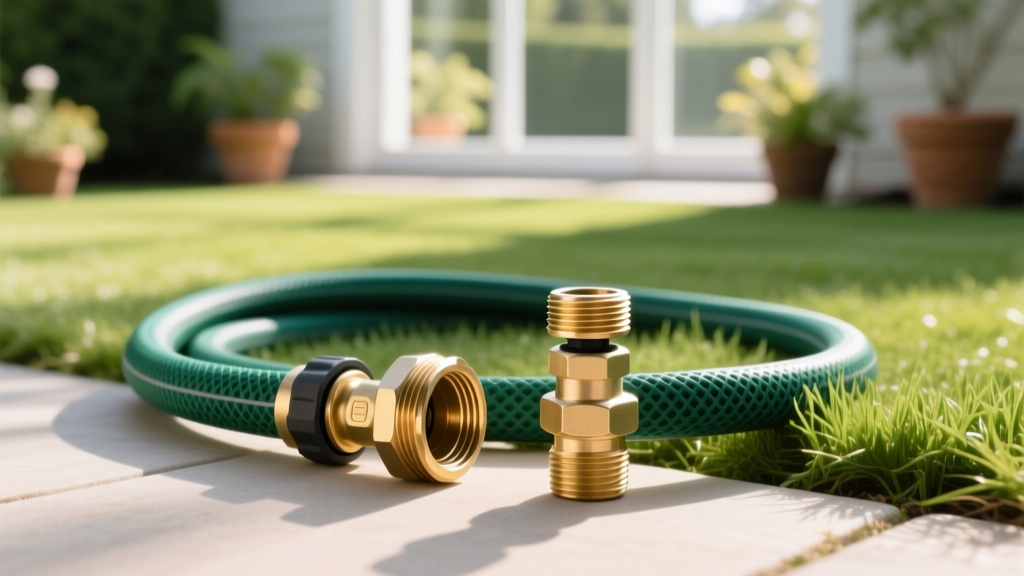
What Thread Is a Garden Hose? GHT vs NPT Fittings Explained
The Direct Answer: What Thread Is a Garden Hose?
The standard thread on a garden hose is officially designated as Garden Hose Thread (GHT), also known in engineering standards as National Hose (NH) thread. For the standard 3/4-inch garden hose found on nearly all residential properties, the specific measurements are 3/4" GHT. This fitting features a major outside diameter of 1.0625 inches and exactly 11.5 threads per inch (TPI).
Unlike household plumbing pipes, GHT is a straight (non-tapered) thread. It does not create a watertight seal through the metal threads themselves. Instead, the seal is achieved entirely by compressing a rubber or silicone O-ring washer against the flat face of the male fitting. Understanding this fundamental mechanical difference is the key to preventing stripped spigots, cross-threaded adapters, and chronic leaks in your lawn irrigation setup.
Quick Reference: Standard 3/4" GHT Specifications
- Designation: 3/4" GHT (or 3/4" NH)
- Major Diameter (Male): 1.0625 inches (26.99 mm)
- Threads Per Inch (TPI): 11.5
- Thread Form: Straight (Parallel)
- Sealing Method: Compression washer (not thread sealant)
GHT vs. NPT: The Costly Mistake Homeowners Make
The most common error in DIY lawn care and irrigation installation is attempting to connect a garden hose directly to a National Pipe Taper (NPT) fitting. NPT is the standard for household plumbing, sprinkler system manifolds, and air compressors. While a 3/4" GHT male fitting and a 3/4" NPT female fitting look remarkably similar to the naked eye, forcing them together will permanently destroy both components.
The Physics of the Thread Mismatch
According to the Engineering Toolbox standards for American pipe threads, a 3/4" NPT fitting has a major diameter of 1.050 inches and features 14 TPI. Furthermore, NPT threads are tapered—they grow narrower toward the end of the fitting to create a metal-to-metal wedge seal.
| Feature | 3/4" GHT (Garden Hose) | 3/4" NPT (Plumbing Pipe) |
|---|---|---|
| Thread Geometry | Straight (Parallel) | Tapered (Wedge) |
| Threads Per Inch | 11.5 TPI | 14 TPI |
| Major Diameter | 1.0625" | 1.050" |
| Sealing Mechanism | Rubber/Silicone Washer | Thread Wedge + PTFE Tape |
| Primary Application | Hoses, Spigots, Spray Nozzles | PVC/Metal Pipes, Manifolds, Valves |
Because the TPI differs (11.5 vs 14), the threads will never align. If you apply torque, the harder metal (usually brass or steel) will act as a cutting die, stripping the softer metal and creating a cross-threaded, leaking mess. To connect a hose to an NPT irrigation manifold, you must use a dedicated GHT x NPT adapter.
How to Measure and Identify Mystery Fittings
When sorting through a bin of old irrigation parts, visual inspection is rarely enough. To accurately identify hose and pipe threads, use a digital caliper and a thread pitch gauge.
- Measure the Major Diameter: Close the caliper jaws on the outside of the male threads. A reading of ~1.06" indicates GHT. A reading of ~1.05" indicates NPT. (Note: Both are colloquially referred to as "3/4-inch" fittings, which refers to the nominal pipe/hose inner diameter, not the actual thread width).
- Check the Taper: Measure the diameter at the base of the threads, then measure again at the very tip. If the tip is noticeably narrower, it is an NPT tapered fitting. If the width remains identical, it is a straight GHT fitting.
- Count the TPI: Use a thread pitch gauge. If the 11.5 blade seats perfectly flush without rocking, it is GHT. If the 14 blade fits, it is NPT.
Material Selection: Brass vs. Aluminum vs. Plastic
The longevity of your hose connections depends heavily on the metallurgy of the fittings. As detailed in Irrigation Tutorials' comprehensive guide to hoses and fittings, material degradation is the primary cause of spigot failure and thread stripping over time.
Solid Brass (The Gold Standard)
Machined from lead-free brass alloys (typically C36000 or C87850 for potable water safety), solid brass fittings resist UV degradation, freezing expansion, and corrosion. They cost between $4 and $9 per fitting but will outlast the hose itself. Always look for the stamp "CR" (Corrosion Resistant) or "Lead-Free" on the collar.
Cast Aluminum and Zinc Alloys (Pot Metal)
Often found in big-box stores for $2 to $3, these fittings are lightweight and prone to galvanic corrosion when left attached to brass spigots in wet environments. Within two to three seasons, the aluminum will oxidize into a white, chalky powder, seizing the fitting to the hose bibb. Zinc alloy fittings are even worse; they become brittle and will snap under the torque of a wrench during winterization.
Reinforced Nylon / ABS Plastic
High-quality UV-stabilized nylon fittings (like those from Milton or Dramm) are excellent for lightweight applications and will not corrode. However, they are vulnerable to crushing if driven over by lawn tractors and can shatter if water freezes inside them during unexpected late-spring frosts.
Warning: The Teflon Tape Trap
Never wrap PTFE (Teflon) tape around the male threads of a Garden Hose Thread (GHT) fitting. Because GHT relies on a rubber washer compressing against a flat surface to create a seal, adding tape to the threads only prevents the collar from threading down far enough to compress the washer. This guarantees a leak. PTFE tape is strictly for tapered NPT plumbing connections.
Never wrap PTFE (Teflon) tape around the male threads of a Garden Hose Thread (GHT) fitting. Because GHT relies on a rubber washer compressing against a flat surface to create a seal, adding tape to the threads only prevents the collar from threading down far enough to compress the washer. This guarantees a leak. PTFE tape is strictly for tapered NPT plumbing connections.
Troubleshooting Spigot Leaks and Stripped Threads
If water is spraying from the base of the hose collar when connected to your home's exterior spigot (hose bibb), the issue is almost never the threads themselves. Follow this diagnostic sequence:
- Step 1: Inspect the Washer. 90% of connection leaks are caused by a flattened, cracked, or missing rubber washer inside the female hose collar. Pry it out with a flathead screwdriver and replace it with a standard 3/4" hose washer (usually 5/8" inner diameter, 1" outer diameter).
- Step 2: Check the Vacuum Breaker. If the leak is originating from just behind the spigot handle or the top of the spigot, the anti-siphon vacuum breaker has likely failed. These plastic or brass devices contain internal rubber check valves that degrade annually. Unscrew it with channel-lock pliers and replace it with a solid brass 3/4" vacuum breaker.
- Step 3: Assess Spigot Thread Damage. If the male threads on the house spigot are visibly gouged or flattened from past cross-threading attempts with NPT fittings, the spigot must be replaced. Do not attempt to salvage stripped brass spigot threads with epoxy or excessive tape; the water pressure (typically 40-80 PSI) will easily blow past the makeshift seal.
Modern Quick-Connect Systems and Thread Compatibility
For homeowners managing multiple irrigation zones, sprinklers, and wash-down wands, modern quick-connect systems save significant time. These systems utilize a base adapter that threads onto the standard 3/4" GHT spigot or hose end, allowing tools to snap in and out with a spring-loaded collar mechanism.
When purchasing quick-connects, ensure the internal flow diameter is at least 5/8" to match standard commercial hoses. Many cheap plastic quick-connects bottleneck the water flow to 3/8", which will severely reduce the pressure required to operate impact sprinklers or pressure washer surface cleaners. Look for anodized aluminum or solid brass quick-connect sets with integrated rubber O-rings to maintain full GHT flow rates while eliminating the wear and tear of constantly threading and unthreading metal collars.

