
Lawn Care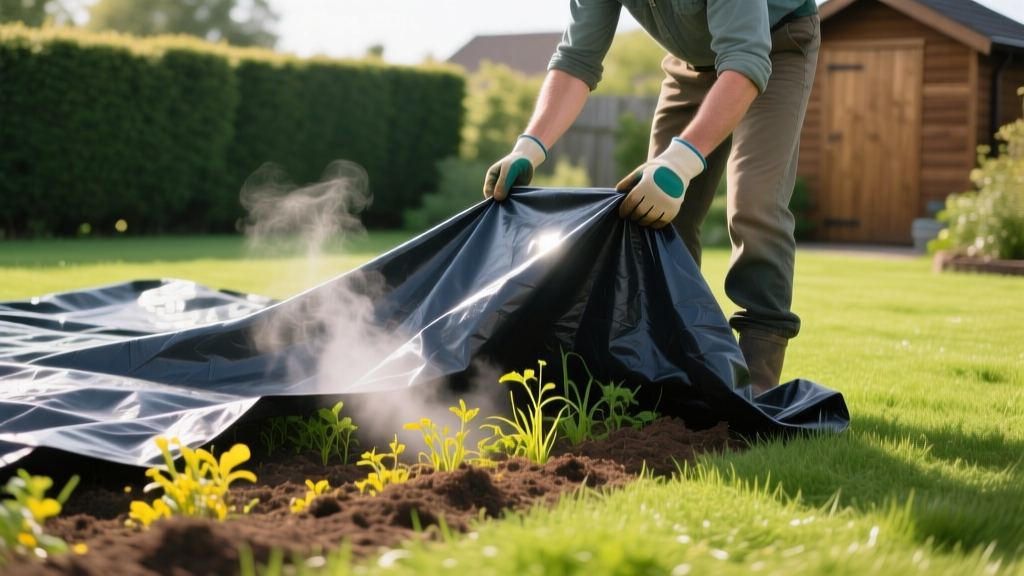
Using a Garden Tarp for Weeds: Solarization & Smothering Guide
Eradicating deep-rooted perennial weeds requires more than surface-level herbicides. When dealing with aggressive rhizomatous grasses or tuber-producing sedges, physical and thermal eradication using a garden tarp for weeds is the most effective chemical-free strategy. This technique leverages either solarization (thermal death) or smothering (light deprivation) to exhaust weed energy reserves and destroy subterranean propagules. However, the success of this method hinges entirely on selecting the correct tarp material, understanding soil thermodynamics, and executing a flawless perimeter seal.
The Thermodynamics of Weed Eradication: Solarization vs. Smothering
Homeowners frequently conflate solarization and smothering, leading to critical material misapplications. The two processes rely on entirely different physical mechanisms to kill weeds.
Thermal Solarization (Clear Tarps)
Solarization uses clear polyethylene to trap short-wave solar radiation, which heats the soil and re-radiates as long-wave infrared energy that cannot escape the plastic. According to the University of California Statewide Integrated Pest Management Program, properly executed solarization can raise soil temperatures at a 2-inch depth to 110°F–131°F, effectively cooking weed seeds, rhizomes, and soil-borne pathogens.
Light Deprivation / Smothering (Black Tarps)
Black tarps block 100% of photosynthetically active radiation (PAR). While the surface of a black tarp gets incredibly hot, it does not transfer that heat efficiently into the soil profile. Instead, it starves the weeds of light, forcing them to exhaust their root carbohydrate reserves. This process takes significantly longer—often an entire growing season—but is necessary for shade-tolerant or deeply rooted species where solarization fails.
Material Selection Matrix: Choosing Your Tarp
Buying the wrong plastic is the most common failure point. A standard blue woven hardware store tarp will degrade in UV light within three weeks and tear under wind load. Below is a comparison of professional-grade materials for 2026 lawn renovation projects.
| Material Type | Thickness | Primary Mechanism | Avg. Cost (20x50 ft) | Best Target Weeds |
|---|---|---|---|---|
| Clear Polyethylene | 4 to 6-mil | Thermal Solarization | $75 - $110 | Crabgrass, Annual Bluegrass, Purslane |
| Black/White Silage Tarp | 5 to 6-mil | Light Deprivation | $90 - $130 | Bermudagrass, Bindweed, Japanese Knotweed |
| Woven Geotextile | 3 to 4 oz/yd | Physical Barrier | $120 - $160 | Not recommended for eradication (permeable) |
Species-Specific Tarping Protocols
Different weed species possess varying levels of thermal tolerance and carbohydrate storage. Tailor your tarping duration to the specific biological profile of the infestation.
- Hybrid Bermudagrass (Cynodon dactylon): Highly aggressive rhizomes. Requires smothering with a black silage tarp for a minimum of 8 to 12 weeks during peak summer. Solarization alone is rarely sufficient to kill deep nodes.
- Purple Nutsedge (Cyperus rotundus): Produces deep tubers (nutlets) that can survive 120°F soil temperatures. Requires a two-pronged approach: 4 weeks of clear tarp solarization to kill shallow tubers, followed by 6 weeks of black tarp smothering to starve deeper chains.
- Field Bindweed (Convolvulus arvensis): Taproots can extend 10+ feet deep. Tarping is only partially effective; requires a full 6-month light deprivation protocol using 6-mil black tarp, often combined with targeted systemic herbicide application prior to covering.
The 5-Step Field Application Method
Proper installation prevents wind damage and edge-escaping weeds. Follow this exact protocol for a 1,000 sq. ft. treatment area.
- Scalp and Clear: Mow the target area to the lowest possible deck height (approx. 0.5 inches). Rake away all clippings and debris. Sharp debris will puncture the polyethylene under wind pressure.
- Hydrate the Soil Profile: Water the area deeply, applying at least 0.75 inches of water. Moist soil conducts heat 4x faster than dry soil due to water's high specific heat capacity. This ensures the thermal energy penetrates to a 6-inch depth.
- Deploy the Tarp: Unroll the tarp during the hottest part of the day when the plastic is most pliable. Ensure a minimum 6-inch overlap if using multiple sheets.
- Anchor the Perimeter: Dig a 4-inch deep trench around the entire perimeter. Bury the edges of the tarp in the trench and backfill with soil. This prevents wind from getting underneath and stops rhizomes from escaping the treatment zone.
- Secure the Field: Drive 10-inch galvanized steel sod staples through the tarp and into the soil every 18 inches in a grid pattern. Place sandbags on all corners and seams.
Edge Cases and Failure Troubleshooting
⚠️ Warning: The 'Greenhouse Effect' Trap
If using clear polyethylene for solarization, ensure the tarp is pulled taut and sits directly on the soil surface. If the tarp balloons up even 2 inches off the ground, the trapped air acts as an insulator, dropping the soil surface temperature by up to 20°F and allowing weed seeds to survive. Use a heavy garden roller to press the plastic firmly against the soil bed before anchoring.
Troubleshooting Wind Tear: If high winds are forecasted, do not rely solely on sod staples. Apply 2-inch wide UV-resistant poly repair tape over every staple puncture point to prevent micro-tears from propagating across the sheet.
Post-Solarization Soil Microbiome Restoration
A critical step often omitted in Penn State Extension guidelines is the biological reality of solarization: temperatures above 120°F do not just kill weed seeds; they also decimate beneficial soil microbes, mycorrhizal fungi, and nitrogen-fixing bacteria. Leaving the soil bare and biologically dead after removing the tarp invites immediate reinvasion by wind-blown pioneer weed species.
The Restoration Protocol:
- Immediately after removing the tarp, apply a high-quality mycorrhizal inoculant (such as MycoApply or a comparable endo/ecto-mycorrhizal blend) at a rate of 2 lbs per 1,000 sq. ft.
- Top-dress the area with 1/4 inch of premium, actively aerated compost tea or vermicompost to reintroduce diverse bacterial populations.
- Overseed within 48 hours with a competitive, region-appropriate turfgrass blend (e.g., Tall Fescue for cool-season zones, Zoysia for warm-season) to establish a dense canopy that shades out late-germinating weed seeds.
By understanding the specific thermal and biological requirements of your target weed species, a garden tarp for weeds transitions from a simple physical barrier to a highly calibrated eradication tool, ensuring your subsequent lawn renovation starts with a clean, biologically primed slate.

