
Lawn Care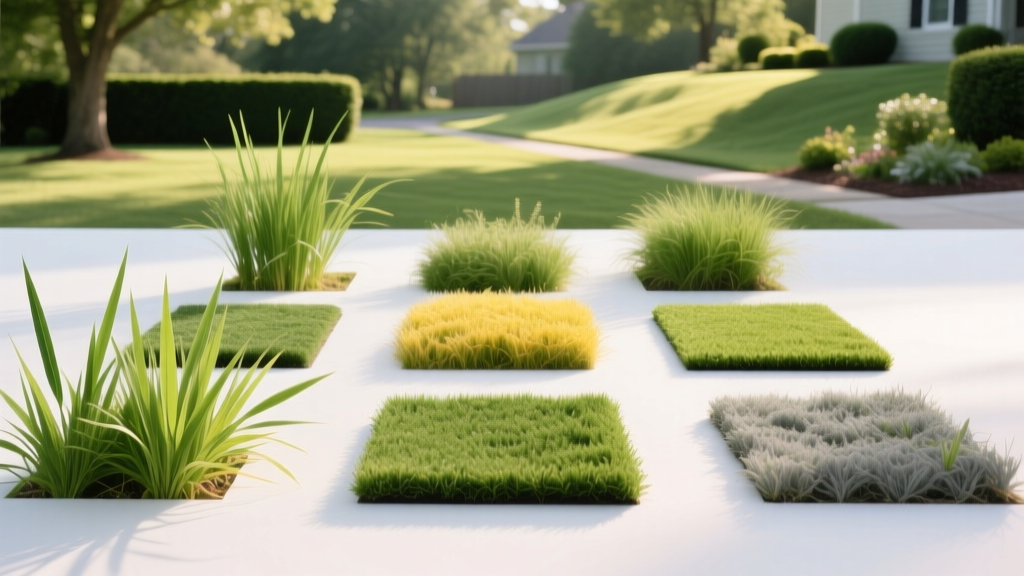
Types of Grass in Georgia: Visual Identification Guide
Decoding Georgia's Turfgrass Regions
Georgia spans USDA Plant Hardiness Zones 7a through 9a, creating a complex transition zone where both warm-season and cool-season grasses can survive, though rarely without trade-offs. The state's geography dictates turfgrass selection: the mountainous north and piedmont plateau experience freezing winters and moderate summers, while the coastal plain endures high humidity, sandy soils, and mild winters. Selecting the wrong cultivar for your specific microclimate results in chronic disease pressure, summer dormancy, or winter kill.
Accurate identification of existing grass or selecting the right seed and sod requires understanding leaf vernation (how the new leaf emerges), ligule structures, and regional adaptability. According to the University of Georgia Turfgrass Program, matching the grass species to your soil type and sunlight exposure is the single most critical factor in long-term lawn viability.
Warm-Season Grass Identification & Profiles
Warm-season grasses thrive when soil temperatures exceed 65°F. They dominate the southern two-thirds of Georgia and peak in vibrancy from late May through September, entering winter dormancy and turning brown after the first hard frost.
Bermudagrass (Cynodon dactylon)
Bermudagrass is the most traffic-tolerant turf in Georgia, commonly used on sports fields and high-use residential lawns. Modern vegetative cultivars like TifTuf and TifWay 419 offer superior drought resistance and density compared to common seeded varieties.
- Identification: Folded vernation. The leaf blade is narrow (1/8 to 1/4 inch), flat, and features a distinct fringe-like ligule. Stems root aggressively at nodes (stolons and rhizomes).
- Maintenance: Requires full sun (minimum 8 hours). Mow at 1.0 to 1.5 inches using a reel mower for best results. Demands high nitrogen (3 to 5 lbs per 1,000 sq. ft. annually).
- Cost: TifTuf sod typically ranges from $0.45 to $0.65 per square foot installed.
Zoysiagrass (Zoysia spp.)
Zoysiagrass provides a dense, carpet-like lawn with excellent shade tolerance for a warm-season grass. Cultivars like Zeon (Z. matrella) and Geo (Z. japonica) are highly prized in the Atlanta metro area for their fine texture and deep green color.
- Identification: Rolled vernation. Leaf blades are stiff, often hairy on the upper surface, and range from fine (1/16 inch) to medium (1/4 inch) width.
- Maintenance: Mow at 1.5 to 2.5 inches. Prone to thatch accumulation; vertical mowing (dethatching) is required when thatch exceeds 0.5 inches, ideally in late spring. Requires 2 to 3 lbs of nitrogen annually.
- Cost: Premium Zeon Zoysia sod costs between $0.60 and $0.85 per square foot.
Centipedegrass (Eremochloa ophiuroides)
Known as the 'lazy man's grass,' Centipedegrass is slow-growing and requires minimal fertilization. TifBlair is the premier patented variety in Georgia, offering improved cold tolerance and deeper rooting.
- Identification: Folded vernation with a distinct, prominent collar. The leaf blade is apple-green, flat, and roughly 1/4 to 3/8 inch wide, ending in a blunt, boat-shaped tip.
- Maintenance: Mow at 1.5 to 2.0 inches. Requires highly acidic soil (pH 5.0 to 6.0). Over-fertilizing leads to 'Centipede Decline,' a physiological collapse of the root system.
- Cost: TifBlair sod averages $0.40 to $0.55 per square foot.
St. Augustinegrass (Stenotaphrum secundatum)
St. Augustine is the most shade-tolerant warm-season grass but is highly susceptible to cold damage, restricting its reliable use to Georgia's coastal plain and deep southern counties.
- Identification: Folded vernation. Broad, flat leaf blades (1/4 to 1/2 inch) with a boat-shaped tip and a smooth texture. Thick, spongy stolons.
- Maintenance: Mow high at 2.5 to 3.5 inches. Highly susceptible to chinch bugs and gray leaf spot in humid coastal summers.
Comparative Turfgrass Matrix
The following matrix synthesizes data from NC State Turffiles and UGA Extension to help homeowners cross-reference environmental requirements against grass species.
| Grass Species | Sun Requirement | Ideal Mowing Height | Annual Nitrogen (lbs/1k sq ft) | Best GA Region |
|---|---|---|---|---|
| Bermudagrass | Full Sun (8+ hrs) | 1.0" - 1.5" | 3.0 - 5.0 | Statewide (Piedmont/Coastal) |
| Zoysiagrass | Sun to Part Shade | 1.5" - 2.5" | 2.0 - 3.0 | Piedmont & Coastal |
| Centipedegrass | Sun to Light Shade | 1.5" - 2.0" | 1.0 - 2.0 | Coastal Plain & South Piedmont |
| St. Augustine | Part to Full Shade | 2.5" - 3.5" | 2.0 - 4.0 | Deep South / Coastal Only |
| Tall Fescue | Sun to Heavy Shade | 3.0" - 4.0" | 2.0 - 4.0 | North GA Mountains & Piedmont |
Cool-Season Grass: Tall Fescue (Festuca arundinacea)
In the northern third of Georgia and the shaded lots of the Atlanta metro, Tall Fescue is the dominant choice. Unlike older 'Kentucky 31' forage varieties, modern turf-type and dwarf turf-type fescues (such as Titan Ultra and RTF - Rhizomatous Tall Fescue) feature darker color, finer blades, and deeper root systems capable of surviving Georgia's summer heat.
- Identification: Rolled vernation. The leaf blade is broad (1/4 inch), prominently ribbed on the upper surface, and has a reddish-purple tint at the base of the sheath when pulled from the soil.
- Maintenance: Mow at 3.0 to 4.0 inches. Never scalp fescue; taller blades shade the soil, conserving moisture and suppressing crabgrass. Requires 2 to 4 lbs of nitrogen, applied primarily in the fall (September and November) and late winter (February). Avoid heavy spring nitrogen, which promotes brown patch disease (Rhizoctonia solani).
- Overseeding Protocol: Fescue lawns in Georgia require annual core aeration and overseeding in early September at a rate of 5 to 8 lbs of seed per 1,000 sq. ft. to repair summer thermal damage.
⚠️ Critical Warning: Centipede Decline & Iron Chlorosis
Centipedegrass naturally thrives in acidic soils. If your soil pH rises above 6.5, the grass loses its ability to uptake iron, resulting in severe yellowing (chlorosis) and eventual death. Never apply lime to a Centipede lawn without a current soil test from the UGA Soil, Plant, and Water Laboratory confirming the pH has dropped below 5.0. If iron deficiency occurs, apply chelated iron or ferrous sulfate at 2 oz per 1,000 sq. ft. rather than altering the soil pH.
Soil Diagnostics and Regional Adjustments
Identifying your grass type is only half the battle; understanding your soil chemistry dictates survival. Georgia's native red clay (Piedmont) is heavily compacted and naturally acidic, while the Coastal Plain features deep, fast-draining sands that leach nutrients rapidly.
- Extract a Core Sample: Use a soil probe to pull 6 to 8 cores from the root zone (top 4 inches) across different areas of the lawn.
- Target pH Levels: Centipedegrass requires a pH of 5.0–6.0. Bermudagrass, Zoysiagrass, and Tall Fescue require a pH of 6.0–6.5. St. Augustine tolerates up to 7.5.
- Amendment Timing: Apply pelletized lime based strictly on soil test recommendations. Lime takes 3 to 6 months to react in the soil profile; apply it in the fall for warm-season grasses to prepare for spring green-up.
Frequently Asked Questions
Can I mix Tall Fescue and Bermudagrass in the same Georgia lawn?
No. They have opposing chemical and maintenance requirements. Fescue requires high mowing (3-4 inches) and fall fertilization, while Bermuda requires low mowing (1-1.5 inches) and summer fertilization. Attempting to grow both results in one species eventually outcompeting and killing the other, leaving a patchy, uneven turf.
Why does my Fescue lawn die every August in Atlanta?
Tall Fescue is a cool-season grass pushed to its absolute thermal limit in the Piedmont region. Summer brown-out is caused by a combination of heat stress, drought, and brown patch fungus. To mitigate this, raise your mowing height to 4 inches by June, water deeply but infrequently (1 inch per week, applied in a single morning session), and avoid nitrogen fertilization after May 1st.
Is Zoysiagrass suitable for heavy shade under Georgia pine trees?
While Zoysia is the most shade-tolerant warm-season grass, it still requires at least 4 to 5 hours of filtered sunlight. Under dense, unpruned pine canopies, even Zeon Zoysia will thin out and succumb to moss. For heavy, full-day shade, Tall Fescue or a shade-tolerant groundcover like Liriope or Mondo grass is the only viable alternative.

