
Lawn Care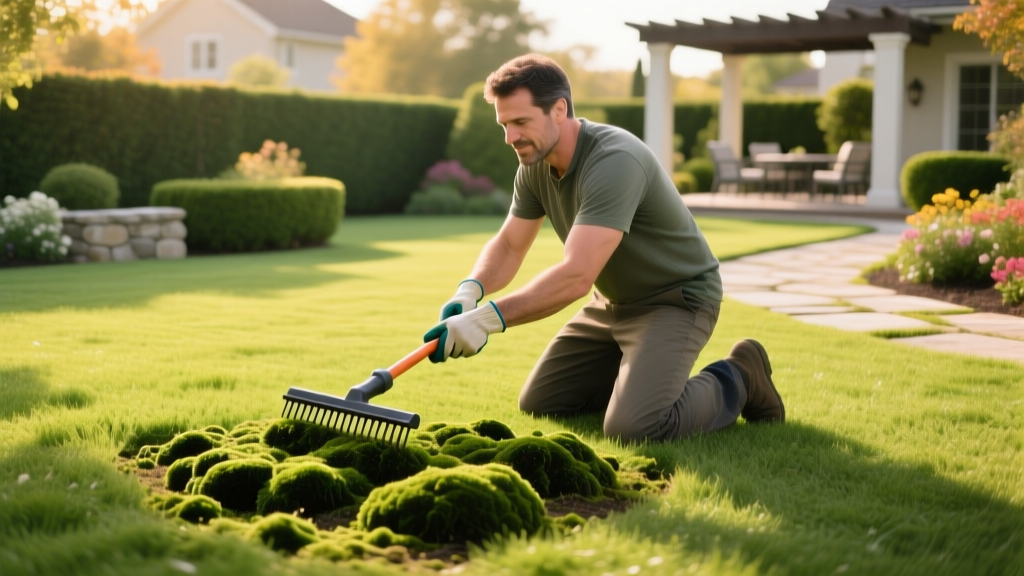
How to Get Rid of Moss From Grass: The Eradication Playbook
The Moss Eradication Playbook: Why Your Lawn is Losing
Moss (Bryophyta) is not a weed; it is an opportunistic pioneer species. When homeowners ask how to get rid of moss from grass, they are usually treating the symptom rather than the disease. Moss thrives in environments where turfgrass is fundamentally stressed—specifically in areas with low soil pH, heavy compaction, poor drainage, and dense shade. According to Penn State Extension, simply applying a moss killer without correcting the underlying environmental imbalance guarantees the moss will return within six to eight months.
This playbook treats moss removal as a three-phase military operation: Eradication (killing the existing moss), Correction (fixing the soil environment), and Reclamation (re-establishing competitive turfgrass).
Diagnostic Matrix: Moss vs. Turfgrass Requirements
Before deploying chemical controls, identify which environmental factor is tipping the scales in favor of moss. Use this diagnostic matrix to pinpoint your lawn's specific failure points.
| Environmental Factor | Moss Preference | Turfgrass Requirement | Corrective Action |
|---|---|---|---|
| Soil pH | Acidic (5.0 - 5.5) | Slightly Acidic (6.2 - 6.8) | Apply pelletized lime based on soil test |
| Soil Compaction | Tolerates hardpan clay | Requires porous, oxygenated soil | Core aeration (pulling 2-3" plugs) |
| Moisture | Constant surface moisture | Deep, infrequent watering | Regrade low spots; install French drains |
| Sunlight | Thrives in deep shade | Needs 4-6 hours direct sunlight | Prune lower tree canopies to 8 feet |
Phase 1: Chemical and Mechanical Eradication
The first objective is to kill the existing moss mat so it can be physically removed. Do not attempt to rake live moss; it will tear out healthy grass roots and leave behind fragments that regenerate.
Selecting the Right Moss Killer
There are two primary active ingredients used in commercial moss control, each with distinct behavioral profiles:
- Ferrous Sulfate Monohydrate (Iron): The gold standard for lawn moss. Products like Lilly Miller Moss Out! For Lawns or Bayer BioAdvanced Moss & Algae Killer rely on iron to desiccate moss, turning it black within 24 to 48 hours. Application rate for granular forms is typically 3 to 5 lbs per 1,000 square feet. Expect to pay between $18 and $25 for a 10-pound bag in 2026.
- Potassium Salts of Fatty Acids (Soap-based): Products like Bonide Moss & Algae Killer use insecticidal soaps to destroy moss cell walls. These are non-staining and safer for use near hardscapes, but they are strictly contact killers and lack the residual soil benefits of iron. Apply at 2.5 fl oz per gallon of water.
WARNING: Hardscape Staining
Ferrous sulfate will permanently stain concrete, brick, and natural stone with rust-colored spots. Always sweep granular iron off driveways and walkways immediately after application. If using liquid iron, mask off hardscape edges with cardboard before spraying.
Ferrous sulfate will permanently stain concrete, brick, and natural stone with rust-colored spots. Always sweep granular iron off driveways and walkways immediately after application. If using liquid iron, mask off hardscape edges with cardboard before spraying.
Mechanical Removal (Scarification)
Once the moss has turned completely black and brittle (usually 48 to 72 hours post-application), use a heavy-duty spring-tine thatch rake or a motorized dethatcher (scarifier) to rip the dead moss mat out of the soil profile. Set the dethatcher blades to penetrate 1/4 inch into the soil surface to ensure you remove the moss rhizoids.
Phase 2: Environmental Correction
As noted by the University of Minnesota Extension, moss is a direct indicator of poor soil health. If you skip this phase, your eradication efforts were a waste of time and money.
Alleviating Compaction via Core Aeration
Moss loves compacted soil because its shallow rhizoids can penetrate hardpan that grass roots cannot. Rent a walk-behind core aerator (typically $80 to $120 per day) and make two passes over the affected area in perpendicular directions. The machine must pull actual soil cores 2 to 3 inches deep and 3/4 inches wide. Leave the plugs on the lawn to break down naturally; they deposit beneficial microbes back into the thatch layer.
Correcting Soil pH with Lime
Moss dominates in acidic soils (pH below 5.8). You must raise the pH to the 6.2–6.8 range to unlock nitrogen and phosphorus for your turfgrass.
The Calculation: A standard soil test will dictate your exact lime requirement. As a general rule, applying 40 lbs of pelletized calcitic lime per 1,000 square feet will raise the soil pH by approximately 0.5 points over a 6-month period. For soils deficient in magnesium, substitute dolomitic lime. Apply lime immediately after aeration so the pellets fall into the aeration holes and reach the root zone faster.
Phase 3: Turfgrass Reclamation and Overseeding
Bare soil left behind after moss removal is a vacuum waiting to be filled. If you do not plant grass seed immediately, weed seeds and moss spores will colonize the space within weeks.
Selecting Shade-Tolerant Cultivars
If moss was present due to shade, do not overseed with Kentucky Bluegrass or standard Tall Fescue; they will fail. Instead, use a blend of fine fescues, which are scientifically proven to outcompete moss in low-light environments. Look for specific, patented cultivars on the seed tag:
- Chewings Fescue: Cultivars like 'Shoreline' or 'Navigator' offer aggressive lateral spread and high shade tolerance.
- Hard Fescue: Cultivars like 'Eclipse' or 'Aurora Gold' require minimal nitrogen and thrive in dry shade under tree canopies.
Apply seed at a rate of 5 to 6 lbs per 1,000 square feet. Top-dress the seeded area with 1/4 inch of peat moss or compost to retain moisture, and water lightly twice daily for 14 days until germination occurs.
Cost and Timeline Breakdown (5,000 Sq Ft Lawn)
Here is a realistic financial and temporal investment required to execute this playbook on a standard 5,000 square foot lawn in the 2026 market.
Estimated Project Costs
- Ferrous Sulfate Moss Killer (15 lbs): $25 - $35
- Core Aerator Rental (Half-day): $60 - $85
- Pelletized Lime (two 40lb bags): $20 - $28
- Fine Fescue Shade Blend Seed (25 lbs): $75 - $110
- Peat Moss Top-Dressing (3 bales): $35 - $45
- Total Estimated Cost: $215 - $303
Project Timeline
Day 1: Apply moss killer. Day 3: Rake dead moss. Day 4: Aerate and apply lime. Day 5: Overseed and top-dress. Days 5-19: Daily watering. Day 21: First mow of new grass.
Frequently Asked Questions
Does baking soda or dish soap effectively kill lawn moss?
While baking soda (sodium bicarbonate) and dish soap will desiccate moss temporarily, they are not recommended. Baking soda introduces toxic levels of sodium into the soil profile, which destroys soil structure and inhibits grass root growth. Dish soap strips the natural waxy cuticle off your remaining turfgrass, making it highly susceptible to drought stress and fungal pathogens. Stick to EPA-registered ferrous sulfate or potassium salt products.
Will ferrous sulfate moss killers harm my pets?
Ferrous sulfate has a relatively low mammalian toxicity profile, but it can cause gastrointestinal upset if ingested in large quantities. Keep dogs and cats off the lawn while the granular product is being applied and while it is wet. Once the iron has been watered in and the grass blades are completely dry (usually 4 to 6 hours), it is safe for pets to re-enter the area.
Can I just mow the moss really short to get rid of it?
No. Moss does not have a vascular system or a crown like turfgrass; it grows from the tips and spreads via spores and rhizoids at the soil surface. Scalping your lawn to 1 inch will severely damage your turfgrass, reducing its photosynthetic capacity and actually accelerating the moss invasion by opening the canopy to more surface moisture retention.

