
Lawn Care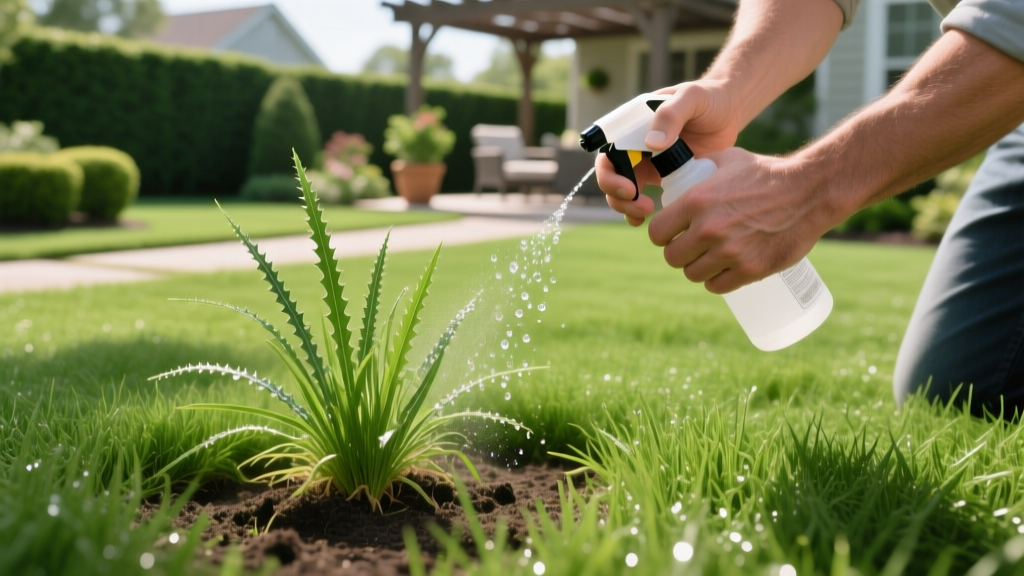
Getting Rid of Crabgrass: Post-Emergent Spot Treatment Guide
The Biology of Crabgrass: Why Spot Treatment Requires Precision
Crabgrass (Digitaria sanguinalis) is an opportunistic summer annual weed that exploits thin turf, compacted soil, and high-heat stress. Unlike perennial weeds with deep taproots, crabgrass relies entirely on a massive seed bank, producing up to 150,000 seeds per plant in a single season. When getting rid of crabgrass, homeowners often fail because they treat it like a broadleaf weed. Crabgrass is a grassy weed, meaning it shares a similar biological makeup with your desirable turf. This narrow margin of selectivity demands precise chemical selection and exact application timing.
The 55°F Soil Temperature Trigger: Crabgrass seeds do not germinate based on air temperature. Germination begins only when soil temperatures at a 1-inch depth reach 55°F to 60°F for three to five consecutive days. Tracking this metric via a soil thermometer or local university extension data is the foundational step in any seasonal control program.
Post-Emergent Spot Treatment Protocol
Once crabgrass breaches the soil surface, pre-emergent barriers are no longer viable for that specific plant. You must transition to a post-emergent spot-treatment strategy. The efficacy of this treatment is entirely dependent on the growth stage of the weed.
- Identify the Tiller Stage: Count the leaves and secondary stems (tillers). Seedlings with 1 to 2 leaves are highly susceptible to single applications. Plants with 3 to 4 tillers require split applications spaced 14 to 21 days apart. Mature plants with seed heads are practically immune to selective herbicides and must be manually pulled or treated with non-selective glyphosate (which will also kill surrounding turf).
- Calibrate for Spot Spraying: Do not broadcast spray the entire lawn if the infestation is isolated. Use a 1-gallon or 2-gallon pump sprayer. To ensure accurate dosing, calibrate your sprayer by measuring how much water it takes to cover a 100-square-foot area, then mix the herbicide proportionally based on the label's per-1,000-square-foot rate.
- Add the Correct Surfactant: Crabgrass leaves are protected by a waxy cuticle that repels water-based sprays. You must add a Non-Ionic Surfactant (NIS) at a rate of 0.25% v/v (roughly 1/2 teaspoon per gallon of water) or a Methylated Seed Oil (MSO) for better penetration during high-heat conditions.
- Apply During Optimal Conditions: Spray between 6:00 AM and 10:00 AM when the weed is actively transpiring but before the heat of the day causes rapid evaporation. Avoid application if temperatures exceed 85°F, as this increases the risk of phytotoxicity (chemical burn) to your desirable turf.
Herbicide Comparison Matrix for Targeted Control
Selecting the correct active ingredient is critical. Using the wrong chemistry will either fail to kill the crabgrass or severely damage your specific turfgrass species. Below is a comparison of the three most effective post-emergent active ingredients available to homeowners and professionals in 2026.
| Active Ingredient | Brand Example | Safe For Turf Types | Efficacy & Notes | Est. Cost (2026) |
|---|---|---|---|---|
| Quinclorac | Drive XLR8 | Kentucky Bluegrass, Bermuda, Fescue, Zoysia. (Unsafe for St. Augustine) | Excellent on mature crabgrass. Requires MSO surfactant. Can cause temporary yellowing in some fescues. | $85 / quart |
| Fenoxaprop-p-ethyl | Acclaim Extra | Cool-season grasses only (KBG, Fescue, Ryegrass). (Fatal to Bermuda/Zoysia) | Highly selective. Best for early seedling stages (1-2 leaf). Slower visual burndown (7-14 days). | $110 / quart |
| Mesotrione | Tenacity | Kentucky Bluegrass, Fescue, St. Augustine, Centipede. (Unsafe for Bermuda) | Bleaches weed white before killing. Excellent for St. Augustine lawns. Requires NIS surfactant. Multiple apps needed. | $65 / 8 oz |
Common Spot-Treatment Failure Modes
Even with the correct chemical, homeowners frequently encounter control failures. Understanding these edge cases prevents wasted time and chemical runoff.
1. Applying Herbicide Past the First Tiller Stage
The most common reason for failure is waiting too long. Once crabgrass develops secondary stems (tillers), its vascular system becomes complex enough to compartmentalize and survive the herbicide dose. If you attempt to treat a 5-tiller crabgrass plant with a single dose of Mesotrione, the weed will bleach, stall, and eventually recover. For plants beyond the 2-tiller stage, you must switch to Quinclorac (if your turf allows) or commit to a 3-application rotation spaced 14 days apart.
2. Omitting the Surfactant or Using Dish Soap
Household dish soaps are not adequate substitutes for agricultural surfactants. Dish soaps often contain degreasers and sodium salts that can cause severe phytotoxicity to your desirable lawn when exposed to UV light. Always use a dedicated NIS or MSO. The surfactant reduces the surface tension of the water droplet, allowing it to spread across the waxy crabgrass leaf rather than beading up and rolling onto the soil.
3. Mowing Immediately Before or After Application
Herbicides require adequate leaf surface area to be absorbed and translocated to the root zone. Mowing the lawn 24 hours before application removes the target tissue. Mowing within 48 hours after application physically removes the herbicide before it has fully translocated. Adjust your mowing schedule to leave the crabgrass undisturbed for a 72-hour window surrounding your spray date.
Securing the Perimeter: Pre-Emergent Follow-Up
Successfully getting rid of crabgrass via spot treatment only solves the immediate visual problem. The seeds dropped by the mature plants you treated will remain viable in the soil for up to three years. To break the life cycle, you must establish a pre-emergent barrier the following spring.
According to the University of California Statewide IPM Program, pre-emergent herbicides must be applied and watered into the top 1 to 2 inches of soil before crabgrass seeds germinate. Products containing Prodiamine or Dithiopyr create a chemical barrier at the soil surface that inhibits cell division in germinating seeds, effectively stopping the weed before it breaches the surface.
For lawns with a history of severe crabgrass pressure, a split-application pre-emergent strategy is recommended. Apply half the annual rate of Prodiamine in early spring (when soil hits 50°F) and the second half 60 days later. This extends the chemical barrier through the late-summer flush of crabgrass germination that often catches homeowners off guard.
Frequently Asked Questions
Can I pull crabgrass by hand instead of spraying?
Yes, but only if the plant is young or if it has already dropped its seeds. If you pull a mature crabgrass plant with developed seed heads, the physical agitation will scatter thousands of seeds directly into the bare soil patch left behind, guaranteeing a worse infestation next year. If pulling mature plants, place a bag over the plant before uprooting it to catch the seeds.
Will vinegar or boiling water kill crabgrass?
Horticultural vinegar (20% acetic acid) and boiling water are non-selective contact burn-downs. They will desiccate the top growth of the crabgrass, but they will not translocate to kill the root system, leading to rapid regrowth. Furthermore, they will instantly kill any desirable turfgrass they touch, leaving a bare patch that crabgrass will quickly recolonize. Stick to selective systemic herbicides for lawn integration.
Why is my crabgrass turning purple?
Crabgrass often develops a purple or reddish tint at the base of the stems and on the lower leaves as it matures and begins to produce seed heads in late summer. It can also turn purple due to phosphorus deficiency or environmental stress. This color change is a visual indicator that the plant has transitioned into its reproductive phase, meaning post-emergent herbicides will be significantly less effective.

