
Lawn Care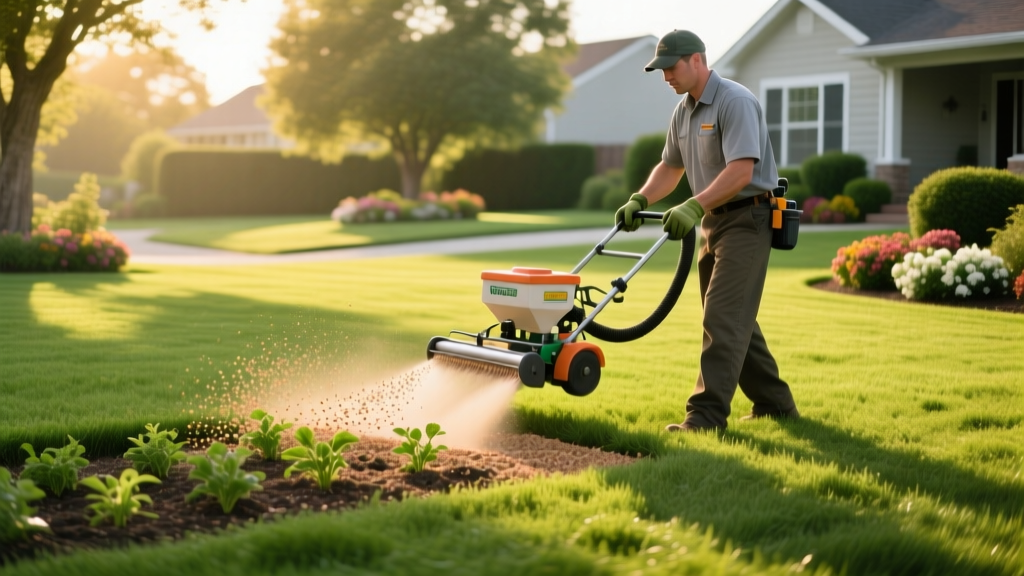
Granular Weed Preventer: Targeted Application for Weed Zones
The "Spot Treatment" Misconception with Granular Preventers
A frequent and costly error in residential lawn care is attempting to use a granular weed preventer as a spot treatment for visible weeds. When a homeowner spots a mature dandelion or a patch of crabgrass, the instinct is to grab a handful of pre-emergent granules and dump them directly onto the offending plant. This approach fundamentally misunderstands pre-emergent chemistry and wastes both product and money.
⚠️ Critical Misconception: Granular weed preventers (pre-emergents) do not kill existing weeds. They only inhibit cell division in germinating seeds. Dumping granules on a mature weed will not kill it, and the localized overdose can damage the surrounding desirable turfgrass roots.
However, the concept of "targeted application" is highly effective when redefined. Instead of spot-treating *visible* weeds, professional turf managers use granular preventers to target *high-risk micro-zones* based on historical weed pressure, soil compaction, and sunlight exposure. By mapping your lawn's specific weed species to their preferred microclimates, you can apply granular preventers strategically, saving money and reducing chemical load compared to blanket applications.
How the Chemical Barrier Actually Works
To understand targeted zone application, you must understand the mechanics of the active ingredient. Granular preventers rely on carriers (like clay or sand) coated with an active ingredient such as prodiamine, pendimethalin, or dithiopyr. When watered into the soil, the chemical dissolves and binds to the organic matter and soil particles in the top 0.5 to 1.0 inch of the soil profile.
This creates a horizontal "chemical barrier." When a weed seed germinates and its primary root (radicle) or shoot (coleoptile) passes through this barrier, the herbicide inhibits mitosis (cell division), killing the seedling before it breaks the soil surface. If you apply a granular preventer to a dry "spot" without mechanical incorporation (watering in 0.5 inches), the barrier never forms, and UV degradation will destroy the active ingredient within 14 days.
Targeted Zone Applications by Weed Species
Different weed species thrive in specific microclimates. According to University of Minnesota Extension turfgrass specialists, identifying these zones allows you to apply granular preventers only where they are biologically necessary.
| Weed Species | Germination Trigger | High-Risk Lawn Zones | Recommended Active Ingredient |
|---|---|---|---|
| Crabgrass | 53°F - 55°F (2-inch soil depth) | South-facing slopes, driveway edges, thin turf | Prodiamine or Pendimethalin |
| Poa Annua (Annual Bluegrass) | Below 70°F (late summer/early fall) | Compacted soil, heavy shade, high-traffic paths | Dithiopyr or Prodiamine |
| Henbit / Chickweed | Cool, moist fall conditions | Northern exposures, moist landscape bed edges | Isoxaben or Pendimethalin |
Crabgrass (Digitaria sanguinalis) Zone Strategy
Crabgrass requires high light intensity and warm soil to germinate. You rarely see thick crabgrass in dense, 3-inch tall shade. Therefore, your targeted zones for a spring granular preventer application should be the perimeter of the lawn (within 3 feet of driveways and sidewalks where concrete radiates heat), south-facing slopes, and any areas where the turf canopy was thinned by grubs or disease the previous fall. Skip the heavily shaded backyard areas entirely to save product.
Poa Annua Zone Strategy
Annual bluegrass is the opposite. It thrives in compacted, wet, and shaded soils. NC State University Turfgrass Pathology notes that Poa annua germinates in late summer when soil temperatures drop below 70°F. Target your late-summer granular preventer application to the shady side of your house, the areas under large tree canopies where the soil stays damp, and the high-traffic paths where soil compaction prevents desirable turf from establishing.
Product Breakdown: Granular Preventers for Targeted Zones
Selecting the right commercial-grade or prosumer granular product dictates your success rate and cost per square foot.
- Prodiamine 65 WDG (Generic Barricade): While technically a water-dispersible granule meant for liquid spray, many pros use it for targeted liquid spot-spraying. For true granular broadcast in zones, look for Prodiamine 0.48% Granular. Cost: ~$45 for a 40lb bag. Excellent for long-residual crabgrass control (up to 6 months).
- Dimension 270G (0.21% Dithiopyr): Cost: ~$65 for a 50lb bag. This is the gold standard for targeted Poa annua zones because dithiopyr offers early post-emergent control. If a few Poa annua seeds germinate slightly early before you apply, Dimension will still kill them at the 1-leaf stage.
- Scotts Halts (Pendimethalin): Cost: ~$25 for a 10lb bag (covers 5,000 sq ft). A highly accessible big-box store option. Excellent for targeting Henbit and Chickweed in fall zones, but has a shorter soil half-life than prodiamine, requiring strict timing.
Calibration and Application Rates for Micro-Zones
When treating a 500 sq ft micro-zone instead of a 10,000 sq ft whole lawn, standard spreader settings will fail you. You must calibrate by weight, not by volume or dial setting.
- Calculate the Exact Weight Needed: If your Dimension 270G bag rate is 2.0 lbs per 1,000 sq ft, a 500 sq ft driveway edge zone requires exactly 1.0 lb of product.
- Use a Kitchen Scale: Place an empty bucket on a digital kitchen scale and tare it to zero. Pour your granules until you hit exactly 1.0 lb (16 oz).
- Set the Spreader to a Medium Opening: Do not rely on the manufacturer's numbered dial for micro-zones. Open the spreader to a medium setting (usually halfway) to ensure a steady flow without clumping.
- The "Split Application" Walk: Walk the 500 sq ft zone in two perpendicular passes (North-South, then East-West) using half the product (0.5 lb) on each pass. This prevents striping and ensures uniform barrier overlap.
- The 0.5-Inch Watering Rule: Immediately water the zone with exactly 0.5 inches of irrigation. Place a standard 6-oz tuna can in the center of the zone. When the can fills to 0.5 inches, the barrier is properly incorporated into the topsoil.
Frequently Asked Questions
Can I mix a granular weed preventer with a liquid post-emergent spot treatment?
Yes, this is a highly effective "clean-up and lock-down" strategy for high-risk zones. First, spray a liquid post-emergent (like a 3-way herbicide containing 2,4-D, MCPP, and Dicamba) to kill the existing visible broadleaf weeds. Wait 48 hours for the liquid to translocate into the roots, then apply your granular weed preventer and water it in to stop the next generation of seeds from germinating in that exact spot.
Will applying a granular preventer to a localized zone stop weeds from blowing in from my neighbor's yard?
No. Pre-emergents only stop seeds from germinating *in the soil where the barrier is applied*. If your neighbor has mature crabgrass that drops seeds into your untreated lawn, those seeds will germinate. Targeted zone applications are only effective for weeds that historically germinate from the seed bank already present in your specific soil profile.
How deep does the granular preventer need to be watered into the soil?
The chemical barrier must form in the top 0.5 to 1.0 inch of soil, which is the exact depth where 95% of annual weed seeds reside and germinate. Watering in more than 0.5 inches at a single time can push the active ingredient (especially highly soluble ones like pendimethalin) too deep into the soil profile, rendering it useless against surface-germinating weed seeds.

