
Lawn Care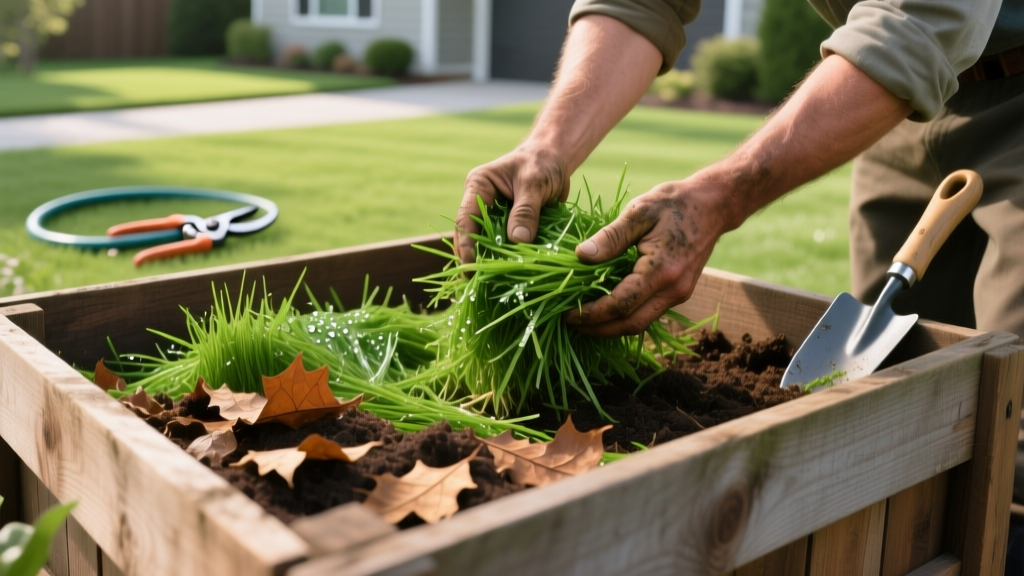
Adding Grass Clippings in Compost: C:N Ratios, Layering, and Pitfalls
The Biochemistry of Grass Clippings
Fresh grass clippings are approximately 80% water and contain up to 4% nitrogen by dry weight. While this makes them an exceptional 'green' nitrogen source for microbial activity, their high moisture and low structural integrity create severe aeration deficits when piled. Dumping a full mower bag directly into a compost bin compresses the material, expelling oxygen and triggering anaerobic decomposition. This anaerobic shift produces methane, hydrogen sulfide (the characteristic rotten egg odor), and volatile organic compounds that stall the composting process and attract pests.
To successfully integrate grass clippings in compost, you must manipulate the moisture content and balance the carbon-to-nitrogen (C:N) ratio. The ideal C:N ratio for rapid thermophilic composting is 25:1 to 30:1. Because fresh grass clippings sit at a narrow 15:1 to 20:1 ratio, they require aggressive amendment with high-carbon 'browns' to prevent nitrogen off-gassing as ammonia.
Carbon-to-Nitrogen (C:N) Balancing Matrix
Achieving the 30:1 target ratio requires calculating the volume of brown amendments needed to offset the nitrogen density of your grass. Use the matrix below to select your carbon source based on availability and decomposition speed.
| Carbon Source (Brown) | Approximate C:N Ratio | Decomposition Speed | Mixing Ratio (Brown:Grass by Volume) |
|---|---|---|---|
| Dry Autumn Leaves | 40:1 - 60:1 | Moderate (3-6 months) | 2:1 |
| Wheat or Oat Straw | 70:1 - 100:1 | Slow (6-12 months) | 1.5:1 |
| Pine Needles | 60:1 - 80:1 | Very Slow (12+ months) | 1:1 (Requires shredding) |
| Shredded Cardboard | 300:1 - 350:1 | Moderate (4-8 months) | 0.5:1 (Must be wetted) |
| Coarse Wood Chips | 400:1+ | Very Slow (1-2 years) | Not recommended for hot piles |
The 48-Hour Pre-Composting Protocol
Never transfer grass clippings directly from the mower bag to the compost bin. Implement this 48-hour protocol to reduce moisture and prevent matting:
- Surface Drying: Spread the clippings in a thin layer (maximum 2 inches thick) on a driveway or tarp in direct sunlight for 24 to 48 hours. This reduces moisture content from 80% to roughly 50%.
- Base Layering: Start your compost bin with a 6-inch base of coarse twigs or wood chips to ensure passive air flow from beneath.
- The Lasagna Method: Add a 2-inch layer of dried grass clippings, followed immediately by a 4-inch layer of your chosen brown carbon source.
- Hydration Check: Water each brown layer lightly as you build. The target moisture content is 40-60%. Squeeze a handful of the mixed material; it should feel like a wrung-out sponge, yielding only one or two drops of water.
- Core Aeration: Insert a perforated PVC aeration tube or use a winged compost tool to punch vertical air channels every 12 inches across the pile.
Critical Failure Modes and Troubleshooting
Even with precise layering, environmental variables can disrupt the thermophilic phase (130°F–150°F). Use this diagnostic matrix to correct active pile failures.
| Symptom | Underlying Cause | Corrective Action |
|---|---|---|
| Strong ammonia odor | C:N ratio is too low (excess nitrogen); microbes are off-gassing unneeded N. | Turn the pile and mix in 30% more high-carbon browns (shredded cardboard or dry leaves). |
| Rotten egg / sulfur smell | Anaerobic conditions due to compaction or excess moisture. | Turn immediately, break up grass mats, and incorporate dry straw to absorb excess water. |
| Pile fails to heat past 90°F | Insufficient nitrogen, pile is too dry, or volume is under 27 cubic feet. | Add fresh grass clippings or blood meal, water thoroughly, and ensure minimum 3x3x3 ft dimensions. |
| White fungal mats (Actinomycetes) | Normal secondary decomposition; indicates high carbon/low moisture. | No action required unless heating stalls; add water if pile is dusty. |
The Herbicide Carryover Threat
WARNING: Persistent Broadleaf Herbicides
If your lawn was treated with pyridine carboxylic acid herbicides (specifically clopyralid, aminopyralid, or picloram), do not compost the clippings. These chemicals bind tightly to organic matter and survive the 150°F thermophilic composting phase. They can persist in finished compost for 12 to 24 months, causing severe stunting, cupped leaves, and germination failure in sensitive garden crops like tomatoes, peas, and beans. Always verify the active ingredients on your lawn care product labels before adding clippings to your bin.
The Bean Bioassay Test
If you are unsure about herbicide exposure, conduct a bioassay before applying the finished compost to your garden:
- Mix one part finished compost with one part sterile commercial potting soil.
- Plant 5 sensitive seeds (e.g., bush beans or peas) in the mixture, and 5 in pure potting soil as a control.
- Grow for 14 to 21 days under standard light and watering conditions.
- Evaluation: If the compost-grown seedlings exhibit twisted stems, cupped leaves, or stunted root systems compared to the control, the compost contains persistent herbicide residues and must be discarded or used only on turfgrass.
Equipment Specifications for Active Management
Managing high-nitrogen grass clippings requires precise monitoring. Vague guesses lead to anaerobic sludge. Invest in these specific tools for reliable data:
- Temperature Monitoring: The REOTEMP 20-Inch Backyard Compost Thermometer (approx. $34.99) features a heavy-duty stainless steel stem that reaches the thermal core of a standard 3x3 bin. The hermetically sealed dial prevents fogging from high-humidity compost gases.
- Aeration: A Winged Compost Aerator (approx. $28.00) features folding lateral wings that pull upward through the pile, lifting and mixing matted grass clippings without requiring you to empty the entire bin with a pitchfork.
- Moisture Meter: The Luster Leaf Rapitest Soil Moisture Meter (approx. $14.99) can be inserted into the compost core to verify the 40-60% moisture threshold, eliminating the guesswork of the 'squeeze test'.

