
Lawn Care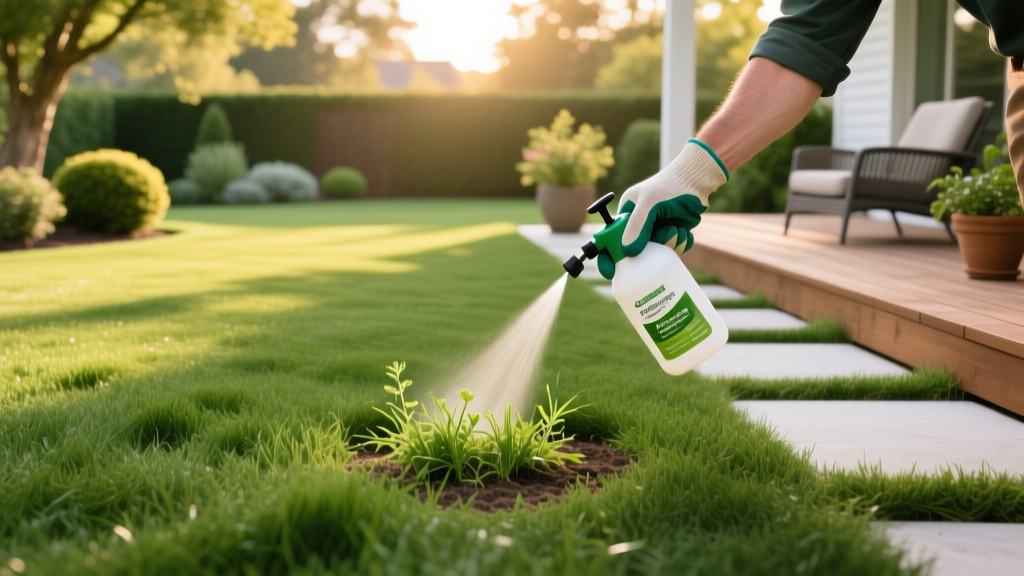
Grass Feed Weed Control: Spot-Treatment Strategies
When homeowners look for a comprehensive grass feed weed solution, they are almost universally directed toward broadcast "weed and feed" bags. These products combine synthetic nitrogen fertilizers with broadleaf herbicides like 2,4-D and Dicamba. While convenient, broadcast applications are fundamentally flawed for modern, ecologically responsible lawn care. They apply herbicides to 100% of your turf, even if weeds only cover 5% of the canopy, leading to herbicide resistance, soil microbiome disruption, and unnecessary chemical runoff.
Professional turfgrass managers use a "split-application" protocol. By separating the grass feeding process from the weed control process, you can deliver precise nutrition to your turf while executing targeted spot-treatments on specific weed species. This guide details the exact active ingredients, mixing ratios, and application timelines required to master grass feed weed control through spot-treatment.
⚠️ The Herbicide Waste Problem: According to turfgrass researchers, broadcast weed-and-feed products result in up to 95% of the active herbicide ingredient landing on desirable grass or bare soil rather than the target weed. This excess chemical load stresses cool-season grasses during summer heat and contributes to groundwater contamination.
Identifying Your Target: Weed Species and Active Ingredients
Effective spot-treatment requires matching the weed's biological classification to the correct active ingredient. A single "all-purpose" herbicide will fail against complex perennials or grassy weeds. Refer to the University of Minnesota Extension's weed management guidelines to confirm that accurate identification is the prerequisite for chemical control.
| Weed Species | Classification | Target Active Ingredient | Commercial Product Example | Estimated Cost |
|---|---|---|---|---|
| Dandelion & Plantain | Broadleaf (Perennial) | 2,4-D + Dicamba + MCPP | Ortho WeedClear / Trimec Classic | $15 - $25 / gal |
| Crabgrass | Grassy Weed (Annual) | Quinclorac | Drive XLR8 / BioAdvanced Lawn Weed | $40 - $60 / 16oz |
| Yellow Nutsedge | Sedge (Perennial) | Sulfentrazone / Halosulfuron | SedgeHammer+ / Certainty | $25 - $80 / packet |
| Wild Violet | Broadleaf (Perennial) | Triclopyr + 2,4-D | SpeedZone Southern / Cold Snap | $90 - $120 / gal |
The Split-Application Protocol: Feeding vs. Treating
To achieve the dual goals of a grass feed weed program without the drawbacks of combination products, you must separate the agronomic inputs. Apply fertilizer based on soil test results and turf growth cycles, and apply herbicides only when weeds are actively growing and vulnerable.
Step 1: Targeted Grass Feeding (The "Feed")
Abandon high-nitrogen, fast-release synthetic fertilizers that push rapid, weak top-growth. Instead, utilize a slow-release nitrogen source combined with essential micronutrients. For cool-season grasses (Kentucky Bluegrass, Fescue), apply a 16-4-8 or 15-0-15 N-P-K ratio fertilizer in early fall and late spring.
- Application Rate: Apply exactly 0.75 to 1.0 lbs of actual nitrogen per 1,000 square feet per application.
- Organic Alternative: Milorganite (6-4-0) provides slow-release nitrogen and iron, promoting deep greening without the burn risk associated with synthetic urea. Apply at 32 lbs per 2,500 sq ft.
- Soil Amendment: If your soil pH is below 6.0, apply pelletized lime at 20 lbs per 1,000 sq ft to unlock nutrient availability before feeding.
Step 2: Precision Spot-Treatment (The "Weed")
Once the lawn is adequately fed and actively growing, target the weeds. Use a 1-gallon or 2-gallon handheld pump sprayer rather than a hose-end sprayer. Hose-end sprayers lack the precision required for spot-treatment and frequently over-apply herbicide, causing phytotoxicity (chemical burn) to surrounding desirable grass.
Calibration, Mixing Rates, and Adjuvants
The most common failure point in DIY grass feed weed spot-treatment is improper mixing. Herbicides must be mixed at specific volumes per gallon of water to ensure the lethal dose reaches the weed's vascular system without scorching the turf canopy.
Standard Mixing Matrix for 1-Gallon Pump Sprayers
- Base Herbicide: Add 1.5 fluid ounces of a 3-way broadleaf herbicide (e.g., Trimec Classic) to the tank.
- Water Volume: Fill the tank halfway with clean water (0.5 gallons), agitate, then fill to the 1-gallon mark. This ensures proper suspension of the emulsion.
- Non-Ionic Surfactant (NIS): Add 0.25% v/v (roughly 0.5 teaspoons) of a high-quality non-ionic surfactant. Surfactants break the surface tension of the water droplet, allowing the herbicide to spread across the waxy cuticle of the weed leaf rather than beading up and rolling off onto the soil.
- Marking Dye: Add 2-3 drops of blue turf marking dye. This is a critical professional step; it shows you exactly where you have sprayed, preventing double-application and chemical burn.
💡 Pro Tip: The "Mist, Don't Drench" Rule
Adjust your pump sprayer nozzle to a fine fan or cone mist. You only need to lightly coat the leaves of the weed until they are visibly wet. Drenching the weed to the point of runoff wastes chemical, increases soil contamination, and drastically raises the risk of damaging the root zone of your desirable turf.
Adjust your pump sprayer nozzle to a fine fan or cone mist. You only need to lightly coat the leaves of the weed until they are visibly wet. Drenching the weed to the point of runoff wastes chemical, increases soil contamination, and drastically raises the risk of damaging the root zone of your desirable turf.
Advanced Spot-Treatment Techniques for Deep-Rooted Perennials
Weeds like wild violets, ground ivy (creeping Charlie), and mature dandelions possess complex rhizome networks or deep taproots. Standard foliar spraying often results in "top-kill" where the leaves die back, but the root system survives and regenerates within 14 days.
To achieve total systemic kill, employ the double-application method recommended by NC State University TurfFiles:
- Application 1: Spray the foliage using the standard mixing matrix above. Wait 10 to 14 days. The weed will appear stunted or partially dead as the herbicide translocates to the roots.
- Application 2: Apply a second, lighter spot-treatment to any remaining green tissue. This second dose overwhelms the plant's recovery mechanisms, ensuring the root system is entirely eradicated.
Environmental Conditions and Application Timing
Herbicide efficacy is heavily dependent on environmental stress factors. Applying a grass feed weed treatment during the wrong weather conditions will render the active ingredients useless or damage your lawn.
| Condition | Ideal Parameters | Risk of Poor Timing |
|---|---|---|
| Temperature | 65°F to 80°F (18°C - 26°C) | Above 85°F causes rapid herbicide volatilization (vapor drift), which can damage nearby ornamental shrubs and trees. |
| Soil Moisture | Moderately moist (not drought-stressed) | Weeds in drought conditions close their stomata to conserve water, preventing the herbicide from entering the plant's vascular system. |
| Rainfast Period | Dry for at least 24 hours post-application | Rain within 4 hours washes the herbicide off the leaf surface before translocation can occur, requiring a full re-application. |
| Wind Speed | Under 5 MPH | Wind causes spray drift, depositing broadleaf killers onto desirable broadleaf plants, flower beds, or neighboring properties. |
Post-Treatment Lawn Recovery and Overseeding
After executing your grass feed weed spot-treatment, proper lawn recovery protocols must be followed to ensure the bare spots left by dead weeds are filled by desirable turf rather than new weed seeds.
Mowing and Watering Timelines
Do not mow the lawn for at least 48 hours before or 48 hours after herbicide application. Mowing immediately prior reduces the leaf surface area available to absorb the chemical. Mowing immediately after physically removes the herbicide before it has time to translocate to the roots. Maintain standard irrigation practices, but avoid heavy watering that causes soil runoff.
Overseeding Restrictions
If your grass feed weed control program involves 2,4-D or Triclopyr, you must wait a minimum of 14 to 21 days before overseeding or laying new sod. These herbicides leave a residual effect in the top layer of the soil that will inhibit the germination of desirable grass seeds. Quinclorac (used for crabgrass) has an even longer residual effect and can prevent certain grass seed varieties from germinating for up to 6 months. Always read the specific product label for reseeding intervals, as outlined by Purdue University's Turfgrass Science program.
By abandoning broadcast combination products and adopting this targeted split-application protocol, you will drastically reduce your chemical footprint, save money on wasted inputs, and cultivate a thicker, more resilient turfgrass canopy that naturally outcompetes future weed invasions.

