
Lawn Care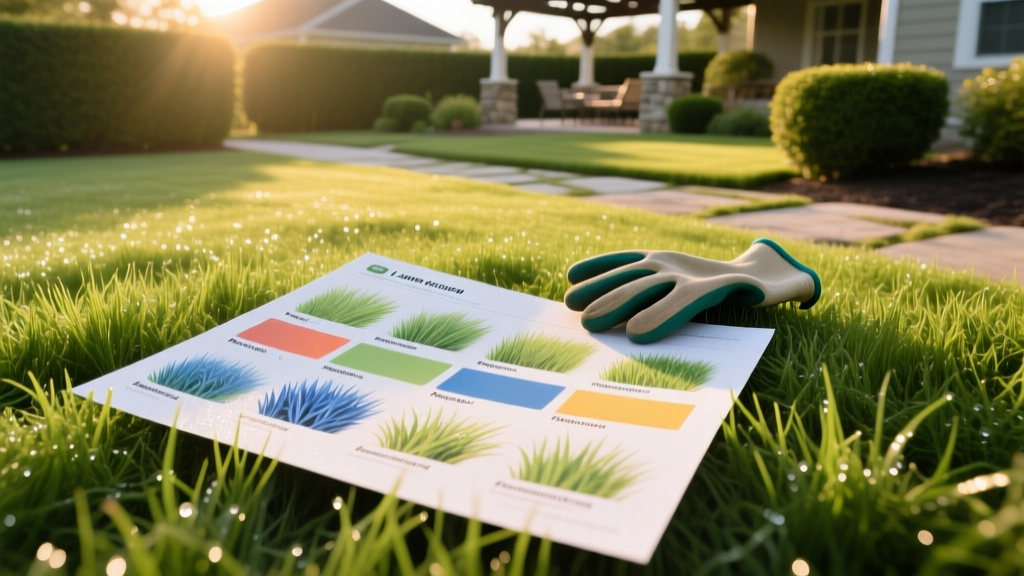
How to Use a Grass Identification Chart for Step-by-Step Care
The Botanical Baseline: Why Turf ID Dictates Maintenance
Applying a generic lawn care schedule is the fastest way to degrade a turfgrass ecosystem. A grass identification chart is not merely a botanical reference; it is the foundational blueprint for your entire maintenance program. Misidentifying your turf leads to catastrophic maintenance errors, such as scalping a cool-season lawn during peak summer heat stress or applying high-nitrogen fertilizer to a warm-season lawn right before winter dormancy, which invites devastating fungal pathogens like Spring Dead Spot (Ophiosphaerella korrae).
Before purchasing seed, fertilizer, or herbicides, you must accurately classify your turf. According to turf researchers at the University of Minnesota Extension, cool-season and warm-season grasses have fundamentally different photosynthetic pathways (C3 vs. C4), meaning their nutrient uptake, mowing tolerances, and aeration requirements occur in entirely opposite seasons.
Decoding the Grass Identification Chart
To use a grass identification chart effectively, you must move beyond simple color and texture. Professional turfgrass managers rely on morphological markers located at the collar region of the grass shoot (where the leaf blade meets the stem). When consulting your chart, you will need to examine four specific anatomical features:
- Vernation: How the youngest, unexpanded leaves are folded in the shoot. They are either rolled (cylindrical) or folded (V-shaped).
- Ligule: A membranous or hairy appendage located on the inner surface of the collar. It prevents water and debris from entering the leaf sheath.
- Auricle: Claw-like or blunt appendages that extend from the collar and clasp the stem. Some species lack these entirely.
- Leaf Tip Shape: The apex of the blade, which can be boat-shaped (tapered and pinched) or sharply pointed.
Morphological Markers for the Big Five Turfgrasses
Use this quick-reference matrix to cross-check your physical lawn samples against a standard grass identification chart.
| Grass Species | Vernation | Ligule | Auricle | Leaf Tip Shape |
|---|---|---|---|---|
| Kentucky Bluegrass (KBG) | Rolled | Membranous (short) | Absent | Boat-shaped |
| Tall Fescue | Rolled | Membranous (short) | Short, blunt | Pointed |
| Perennial Ryegrass | Folded | Membranous | Claw-like | Pointed |
| Bermudagrass | Folded | Hairy fringe | Absent | Pointed |
| Zoysia | Folded | Hairy fringe | Absent | Pointed (stiff) |
Step-by-Step Maintenance Procedures Based on Chart Results
Once your grass identification chart confirms your turf species, execute the following step-by-step protocols. Data from Texas A&M AgriLife Extension confirms that aligning maintenance tasks with the specific biological growth cycles of your identified grass reduces water usage by up to 30% and drastically lowers fertilizer runoff.
Step 1: Mowing Calibration
Mowing height directly dictates root depth. The universal rule is to never remove more than one-third of the leaf blade in a single pass, but the baseline height varies wildly by species.
- Kentucky Bluegrass: Maintain at 2.5 to 3.5 inches. Increase to 4 inches during July/August heat stress to shade the soil and conserve moisture.
- Tall Fescue: Maintain at 3.0 to 4.0 inches year-round. Its bunch-type growth habit requires taller blades to maintain canopy density and suppress crabgrass.
- Bermudagrass: Maintain at 1.0 to 2.0 inches. Common Bermuda can be mowed at 2 inches with a rotary mower, but hybrid varieties (like Tifway 419) require a reel mower at 0.5 to 1.5 inches for optimal density.
- Zoysia: Maintain at 1.5 to 2.5 inches. Zoysia produces heavy thatch; mowing too high accelerates thatch accumulation, while mowing too low causes scalping due to its stiff, upright growth.
Step 2: Precision Fertilization Windows
The timing of nitrogen application is the most critical variable in lawn care. Applying nitrogen during the wrong season forces top-growth at the expense of root reserves.
Pro Tip: The Nitrogen Window
For Cool-Season Grasses (KBG, Fescue, Ryegrass): Apply 70% of your annual nitrogen in the fall (September and October) and 30% in late spring (May). Avoid heavy summer feeding, which promotes Brown Patch fungus.
For Warm-Season Grasses (Bermuda, Zoysia, St. Augustine): Apply 100% of your nitrogen between late spring green-up (May) and six weeks before your area's first historical frost (usually August/early September).
For Cool-Season Grasses (KBG, Fescue, Ryegrass): Apply 70% of your annual nitrogen in the fall (September and October) and 30% in late spring (May). Avoid heavy summer feeding, which promotes Brown Patch fungus.
For Warm-Season Grasses (Bermuda, Zoysia, St. Augustine): Apply 100% of your nitrogen between late spring green-up (May) and six weeks before your area's first historical frost (usually August/early September).
Step 3: Aeration and Overseeding Protocols
Core aeration relieves soil compaction and creates micro-environments for seed-to-soil contact, but the timing must match the grass's peak vegetative growth phase.
- Cool-Season Protocol: Core aerate in early fall (late August to mid-September). Immediately overseed with a matching KBG or Tall Fescue blend at a rate of 3 to 5 lbs per 1,000 sq ft. The warm soil and cool air provide ideal germination conditions.
- Warm-Season Protocol: Core aerate in late spring or early summer (May to June) when the grass is actively growing and can rapidly heal the physical disruption. Overseeding is rarely done for Zoysia or St. Augustine; instead, use the aeration holes to top-dress with compost or plant Bermuda sprigs.
Transition Zone Warning: If your lawn is located in the Transition Zone (e.g., Kansas, Missouri, Virginia, North Carolina), you likely have a complex mix of Tall Fescue and invasive Bermudagrass. Applying high-nitrogen fall fertilizer to encourage the Fescue will simultaneously delay Bermuda dormancy, increasing winter-kill risk. For mixed lawns, prioritize the dominant species and use selective herbicides like Fluazifop (Fusilade) to suppress the encroaching warm-season grasses during the cool-season grass's active growth periods.
Troubleshooting Chart Misidentifications
Even with a detailed grass identification chart, homeowners frequently misidentify turf, especially when the lawn is stressed, dormant, or suffering from disease. Here is how to diagnose a misidentification based on the lawn's reaction to your maintenance steps:
Symptom: The Lawn Turns Brown Immediately After Fall Fertilization
Cause: You likely identified a dormant warm-season grass (like Zoysia or Bermuda) as a dormant cool-season grass (like KBG) and applied a winterizer fertilizer. The sudden nitrogen spike forced the warm-season grass to break dormancy just as freezing temperatures arrived, killing the new tissue.
Fix: Halt all fertilization. Wait for spring green-up, confirm the species using the collar-region markers on your chart, and switch to a warm-season maintenance schedule.
Symptom: The Lawn Thins Out and Develops Bare Patches When Mowed Below 2 Inches
Cause: You attempted to maintain a Tall Fescue or Kentucky Bluegrass lawn at Bermudagrass heights. Cool-season grasses lack the aggressive lateral stolon growth required to recover from severe scalping. The exposed soil quickly dries out and invites weed infiltration.
Fix: Raise your mower deck immediately to 3 inches. Apply a light dose of nitrogen (0.5 lbs per 1,000 sq ft) to encourage lateral leaf expansion, and overseed the bare patches in the early fall.
Expert Resources for Advanced Identification
If your physical samples do not clearly match a standard grass identification chart, you may be dealing with a fine fescue blend, a specific hybrid cultivar, or a weedy grass like Quackgrass or Poa trivialis. For advanced morphological identification and localized cultivar recommendations, consult the Penn State Extension turfgrass diagnostic resources or submit a physical plug sample to your local university cooperative extension office for laboratory analysis.

