
Lawn Care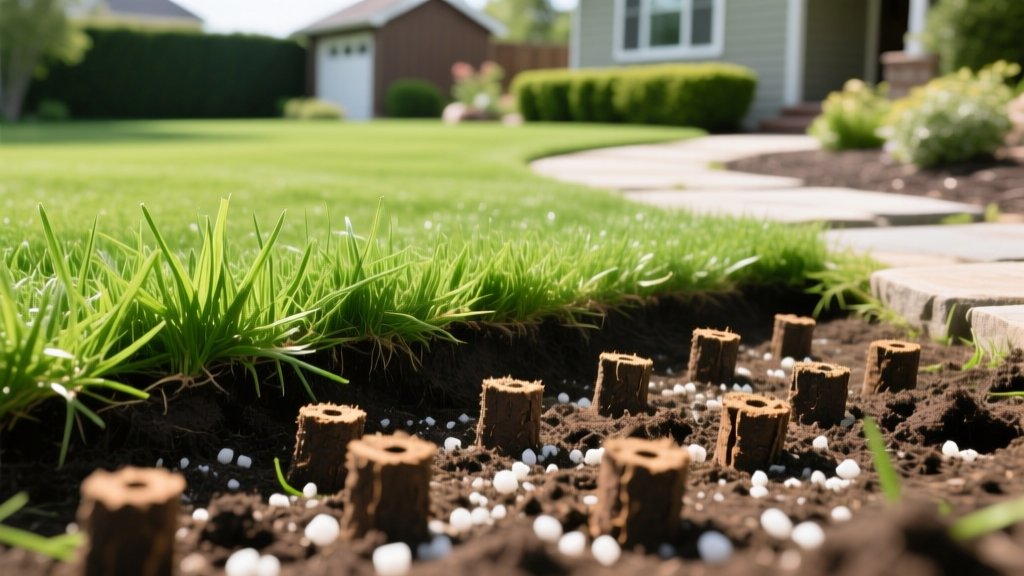
Is Grass Ore Useless? The Truth About Lawn Aeration Cores
If you have found yourself typing is grass ore useless into search engines after a weekend of yard work, do not worry—you are not alone. This highly common phonetic typo actually refers to grass cores (the cylindrical soil plugs extracted from your lawn during core aeration). When a mechanical aerator punches into the soil, it leaves behind hundreds of small, muddy dirt clods scattered across your turf. To the untrained eye, these plugs look like messy debris that should be raked up and bagged immediately.
However, modern turfgrass science tells a completely different story. Far from being useless, these grass cores are a biological goldmine. In this guide, we will break down the exact anatomy of an aeration plug, the soil microbiology that makes leaving them on your lawn the superior choice, and the specific scenarios where you actually should remove them.
The Anatomy of an Aeration Core
To understand the value of the plug, you must understand how it is created. Professional and rental aerators (such as the Billy Goat AET-360 or Ryan Ren-O-Thin) utilize 5/8-inch hollow tines that penetrate 2 to 3 inches into the soil profile. As the machine rolls forward, the hollow tine extracts a perfect cylinder of soil, thatch, and grassroots, depositing it on the surface.
According to the University of Minnesota Extension, proper core aeration requires 15 to 20 holes per square foot to effectively alleviate soil compaction. This means a standard 5,000-square-foot lawn will yield roughly 75,000 to 100,000 individual grass cores. Each core contains a concentrated cross-section of your lawn's subsoil, including native clay, loam, organic matter, and millions of dormant soil microbes.
The Biological Goldmine: Why Leaving Plugs Works
The primary reason turfgrass managers strongly advise against removing grass cores is their role in thatch degradation. Thatch is a tightly intermingled layer of living and dead stems and roots that accumulates between the green vegetation and the soil surface. When thatch exceeds 0.5 inches, it blocks water and fertilizer penetration.
Grass cores are packed with Actinomycetes and specialized fungi that naturally break down lignin and cellulose—the primary components of thatch. When left on the lawn, natural rainfall and your irrigation system slowly dissolve these soil plugs. As the cores melt away, they deposit those thatch-eating microbes directly into the thatch layer, inoculating it and accelerating decomposition.
Microbial Breakdown Timeline:
Under optimal conditions (soil temperatures between 55°F and 65°F with consistent moisture), grass cores will completely dissolve and filter back into the turf canopy within 14 to 21 days. In heavy clay soils or during dry spells, this process can take up to 4 weeks.
Under optimal conditions (soil temperatures between 55°F and 65°F with consistent moisture), grass cores will completely dissolve and filter back into the turf canopy within 14 to 21 days. In heavy clay soils or during dry spells, this process can take up to 4 weeks.
Leave or Remove? A Decision Matrix for Homeowners
While the default recommendation from institutions like Clemson University Extension is to leave the plugs on the lawn, there are edge cases where removal is justified. Use the matrix below to determine the correct protocol for your specific property.
| Scenario | Action | Reasoning |
|---|---|---|
| Standard Residential Lawn | Leave on Lawn | Maximizes microbial thatch breakdown and returns valuable topsoil to the surface. |
| Heavy Weed Infestation | Leave on Lawn | Weed seeds in the plugs will not survive the exposure to UV light and surface drying. |
| Strict HOA Aesthetic Rules | Drag / Disperse | Do not remove. Instead, use a drag mat to pulverize them so they are invisible to the naked eye. |
| Sports Field / High Traffic | Remove or Sweep | Dried cores on high-traffic turf can create a slipping hazard and alter ball roll on athletic fields. |
| Extreme Clay / Heavy Soil | Leave on Lawn | The cores will dry out, crumble, and act as a micro-topdressing to improve surface drainage. |
4 Steps to Accelerate Core Breakdown
If you want the aesthetic benefits of a clean lawn without sacrificing the biological benefits of the grass cores, you need to mechanically break them apart. Do not run your rotary lawn mower over the plugs; this will severely dull your mower blades and can throw hidden rocks across your yard. Instead, follow this professional protocol:
- Deep Water the Lawn: Within 24 hours of aeration, apply 0.5 inches of water. Moisture is the primary catalyst for dissolving the soil structure of the plugs.
- Deploy a Drag Mat: Attach a weighted chain-link drag mat or a specialized Parterre turf drag mat to the back of a utility vehicle or riding mower. Drive over the lawn in a cross-hatch pattern to physically shatter the wet cores.
- Apply a Soil Surfactant: If your soil is highly hydrophobic, apply a liquid soil surfactant (like a yucca-based wetting agent) to help water penetrate the dense clay cores faster.
- Follow Up with Overseeding: The shattered remnants of the cores will fill the aeration holes slightly, creating a perfect, moist seedbed for fall overseeding. The soil-to-seed contact provided by the crumbled cores increases germination rates by up to 30%.
Debunking Common Aeration Plug Myths
Myth: "Grass cores bring dormant weed seeds to the surface, causing a weed outbreak."
Fact: While cores do contain subsoil where weed seeds may reside, the exposure to direct sunlight, surface temperature fluctuations, and the competitive environment of an established turf canopy results in a negligible germination rate. The benefits of reduced compaction far outweigh the minimal weed risk.
Myth: "Spike aerators are better because they don't leave useless grass ore/plugs behind."
Fact: Spike aerators (solid tines) actually increase lateral soil compaction by pushing dirt outward to create a hole. Hollow-tine core aeration physically removes soil mass, which is the only proven way to relieve deep compaction and allow oxygen to reach the root zone.
Expert Verdict: The 2026 Core Management Protocol
As turfgrass management practices continue to evolve in 2026, the consensus among agronomists remains steadfast: grass cores are a vital component of the aeration process, not a useless byproduct. Raking up and bagging these plugs removes thousands of dollars' worth of natural topsoil and strips your lawn of the exact microbes required to fight thatch buildup.
For the average homeowner, the most efficient and scientifically sound approach is to water the lawn heavily immediately after aeration, drag the cores to shatter them, and let nature take its course. By shifting your perspective from seeing them as "messy dirt clods" to recognizing them as biological soil amendments, you will achieve a thicker, deeper-rooted, and more drought-resistant lawn in the seasons to come.

