
Lawn Care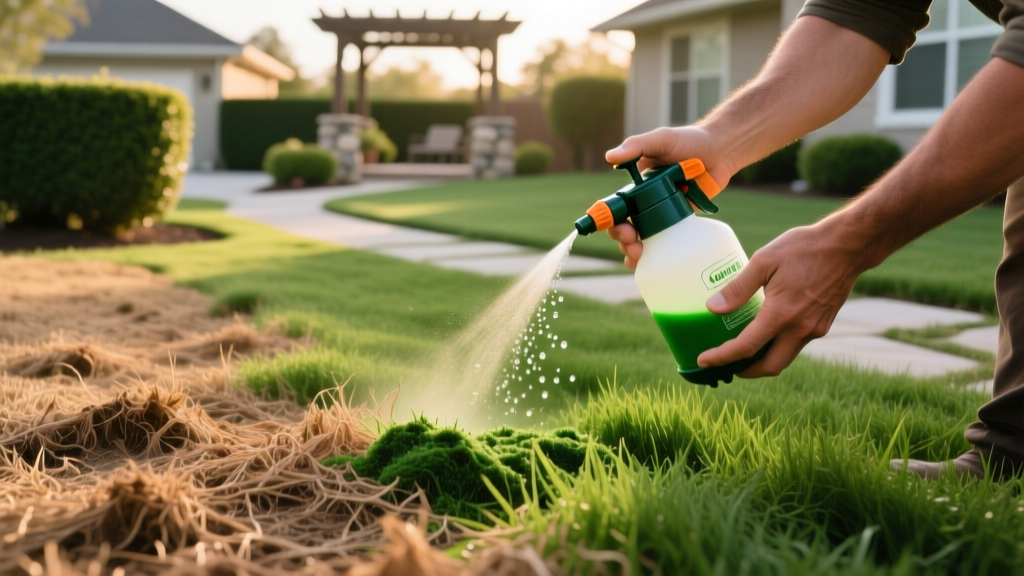
How to Apply Grass Painting for Dormant and Drought-Stressed Lawns
The Science and Strategy Behind Turf Pigments
When municipal water restrictions tighten or warm-season grasses like Bermuda and Zoysia enter winter dormancy, homeowners face a stark, brown landscape. Grass painting—more accurately termed turf pigmentation—has evolved from a niche golf course practice into a mainstream residential lawn care procedure. Unlike temporary dyes that wash out in a single rainstorm, modern turf pigments utilize carbon-based binders and iron oxides that adhere directly to the cellulose in grass blades, lasting anywhere from 60 to 90 days.
According to the EPA WaterSense landscaping guidelines, allowing turf to go dormant and reducing irrigation is a primary water conservation strategy during drought cycles. However, the aesthetic compromise of a brown yard leads many to seek alternatives. The University of California Agriculture and Natural Resources drought management program frequently highlights turf pigments as a viable, water-free alternative to complete lawn removal or expensive synthetic turf installation.
Expert Distinction: Pigment vs. Dye
Do not buy generic landscape dyes. Dyes are water-soluble and will bleed onto shoes and pet paws after a light dew. Professional grass painting requires pigments containing acrylic polymers or organic binders that cure onto the leaf tissue, becoming completely rainfast and transfer-proof within hours.
Product Selection and Coverage Matrix
Selecting the right concentrate is critical for achieving a natural look. Overly dark concentrates applied to light dormant grass result in an artificial, 'painted' appearance. Below is a comparison of industry-standard products used by lawn care professionals.
| Product | Formulation | Dilution Ratio | Coverage (per Gallon Conc.) | Rainfast Time |
|---|---|---|---|---|
| Endurant TE (Turf Enhancer) | Pigment + Binder | 1:1 to 1:5 | 1,000 - 1,500 sq ft | 2 - 4 hours |
| LawnLift (EnviroColor) | Organic Pigment | 1:2 to 1:8 | 800 - 1,200 sq ft | 4 - 6 hours |
| Geoponics Endurant Perma | Heavy-duty Polymer | 1:1 to 1:3 | 1,200 - 1,800 sq ft | 1 - 2 hours |
Step 1: Lawn Preparation and Thatch Management
Applying pigment over an unprepared lawn is the most common cause of failure. If you paint over fallen leaves, twigs, or excessive thatch, the color will disappear as soon as the wind blows the debris away.
- Mow to Standard Height: Cut your dormant Bermuda or Zoysia to its normal winter height (usually 1 to 1.5 inches). Do not scalp the lawn, as pigment needs adequate leaf surface area to adhere to.
- Dethatch and Rake: Use a stiff-tined leaf rake or a power dethatcher to pull up dead organic matter sitting at the soil line.
- Blow Off Debris: Use a commercial backpack blower to remove all loose clippings, dust, and leaves. The grass blades must be completely dry and free of dust for the acrylic binders to form a mechanical bond.
Step 2: Calibration and Mixing Protocols
Turf pigments settle rapidly in the bottle. If you do not agitate the mixture properly, you will spray pure water for the first half of the tank and thick, black sludge for the second half.
The Proper Mixing Order
- Fill your sprayer tank with half of your required water volume.
- Add the exact measured volume of turf pigment concentrate.
- Agitate the tank vigorously for 60 seconds.
- Add the remaining water to reach your final dilution volume and agitate again.
Dilution Strategy: For fully dormant, straw-brown Bermuda grass, use a 1:1 or 1:2 ratio (one part pigment to two parts water) to achieve a deep, dark green. For cool-season fescue that is merely drought-stressed and pale yellow, use a 1:5 or 1:8 ratio to simply enhance the existing chlorophyll color without turning it artificially dark.
Step 3: Application Technique and Equipment
Never use a hose-end sprayer or a cone-nozzle attachment for grass painting. Cone nozzles deliver a heavy center and light edges, resulting in severe streaking. You must use a pump sprayer (2-gallon or 4-gallon capacity) equipped with a flat fan nozzle, such as a TeeJet 8002 or 8003, which provides a uniform, even spray pattern.
Warning: Concrete and Hardscape Staining
Turf pigments will permanently stain porous concrete, pavers, and stone. Always use a cardboard shield when spraying near driveways and sidewalks. Keep wind speeds below 8 mph during application to prevent drift. If overspray hits concrete, immediately scrub it with a stiff brush and a 10% bleach solution before the binder cures.
The Spraying Pattern
Maintain a consistent walking speed of roughly 3 miles per hour. Keep the nozzle exactly 18 to 24 inches above the turf canopy. Spray in parallel passes, overlapping each pass by 50% to ensure complete, streak-free coverage. Apply a light, even mist; the grass should look damp but not dripping. If the pigment is pooling on the soil, you are applying too heavily.
Step 4: Curing and Post-Application Maintenance
Once applied, the pigment requires UV light and ambient heat to cure. In optimal conditions (65°F to 85°F with low humidity), the paint will become rainfast in 2 to 4 hours. If temperatures drop below 50°F, curing can take up to 8 hours. Restrict all foot traffic and pet access during this curing window to prevent tracking the wet pigment onto carpets or hardscapes.
Sprayer Cleanup (Critical)
If you allow turf pigment to dry inside your sprayer, the acrylic polymers will permanently ruin the seals, O-rings, and nozzle. Immediately after application, flush the tank with clean water. Next, fill the tank with a solution of 10% household ammonia and 90% water. The ammonia breaks down the alkaline binders. Spray the ammonia solution through the nozzle, let it sit for 10 minutes, and flush one final time with clean water.
Troubleshooting Common Application Failures
- Streaking and Zebra Striping: Caused by using a cone nozzle, walking at inconsistent speeds, or failing to overlap passes by 50%. Fix by lightly misting a second coat in the perpendicular direction.
- Color Rubbing Off on Shoes: This happens if the grass was wet with morning dew during application, preventing the binder from adhering to the cellulose. Always apply between 10:00 AM and 2:00 PM when the turf is bone dry.
- Unnatural 'Blue-Green' Tint: Often occurs when using cheap, dye-based products on yellowing fescue. Switch to a carbon-black based pigment like Endurant TE, which neutralizes yellow tones and produces a natural, deep forest green.
- Patchy Fading After 3 Weeks: Dormant grass continues to shed old leaf tissue. As the painted blades naturally slough off and new (unpainted) dormant blades emerge from the crown, the lawn will look patchy. A light touch-up application at a 1:6 dilution will resolve this.
Grass painting is a highly effective, low-cost alternative to winter overseeding with ryegrass. While overseeding requires thousands of gallons of water to establish the winter seed, a single $60 bottle of professional turf pigment can maintain a pristine, green landscape through the harshest drought restrictions and winter dormancy periods, saving both water and money.

