
Lawn Care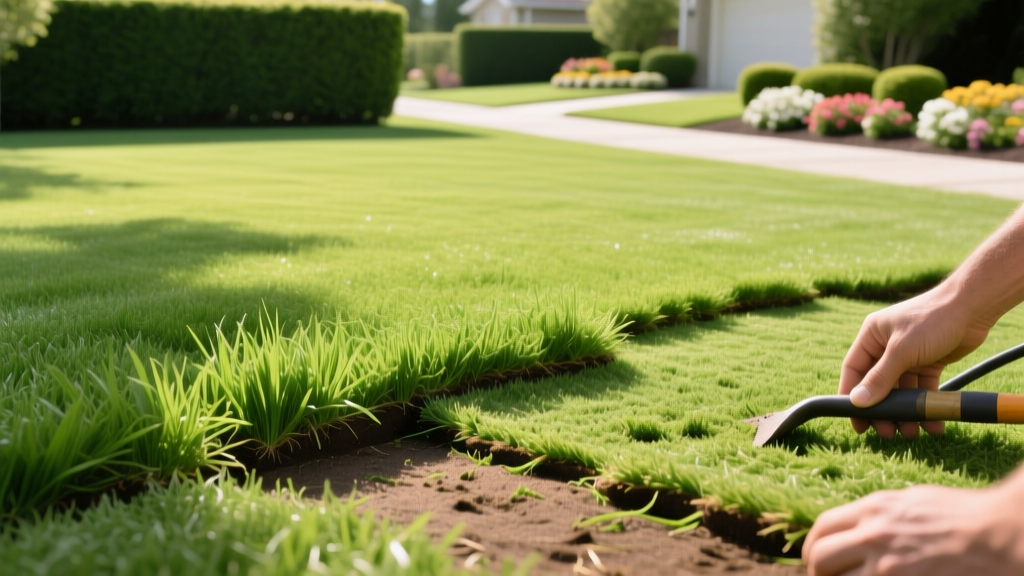
Grass Patch Repair: Diagnose and Fix Dead Lawn Spots Fast
Dead spots in a lawn are rarely just random occurrences; they are specific symptoms of underlying biological, chemical, or physical failures. Misdiagnosing the root cause is the primary reason homeowners waste an average of $150 to $300 annually on ineffective seed, fertilizers, and water. Successful grass patch repair requires acting as a turf pathologist: identifying the exact vector of damage, neutralizing it, and executing a precise soil-to-seed restoration protocol.
The Diagnostic Matrix: Identify Your Patch Type
Before buying a single bag of seed or chemical, perform a physical inspection of the damaged area. Use this diagnostic matrix to match the visual symptoms to the underlying cause.
| Visual Symptom | The Tug / Soil Test | Probable Cause | Immediate Rescue Fix |
|---|---|---|---|
| Irregular brown rings with dark, smoke-colored borders | Grass blades have distinct tan lesions with dark margins | Brown Patch (Rhizoctonia solani) | Curative Azoxystrobin application |
| Perfectly circular yellow spots with dark green outer rings | Roots are intact; soil smells faintly of ammonia | Pet Urine Nitrogen Burn | Gypsum application and heavy flushing |
| Irregular brown patches that feel spongy | Turf pulls up like loose carpet; white C-shaped grubs visible | Japanese Beetle / Masked Chafer Grubs | Curative Trichlorfon (Dylox) treatment |
| Thinning grass, footprints remain visible for hours | Screwdriver cannot penetrate soil past 1 inch | Severe Soil Compaction | Core aeration and compost topdressing |
Deep Dive: Fungal Pathogens and Curative Fungicides
Fungal diseases like Brown Patch and Dollar Spot thrive when nighttime temperatures exceed 68°F combined with high humidity and prolonged leaf wetness. According to turfgrass pathology research from NC State University, applying standard contact fungicides after the mycelium has already infected the plant crown is largely ineffective. You must use systemic fungicides that are absorbed by the plant tissue.
Expert Warning: Do not apply high-nitrogen fertilizers to a fungal patch. Nitrogen forces rapid, succulent blade growth that is highly susceptible to Rhizoctonia and Pythium blight. Starve the fungus by withholding nitrogen until the disease is neutralized.
The Chemical Rescue Protocol
For active Brown Patch or Dollar Spot, utilize a systemic strobilurin fungicide. Scotts DiseaseEx (Active ingredient: Azoxystrobin 0.31%) is the most accessible consumer-grade systemic option.
- Curative Application Rate: 3.5 lbs per 1,000 square feet.
- Cost: Approximately $35 for a 10 lb bag (covers ~2,800 sq ft at curative rates).
- Watering Requirement: Water in with exactly 0.25 inches of irrigation immediately after application to move the active ingredient into the thatch layer and root zone without causing runoff.
- Rotation Rule: Fungi develop resistance to strobilurins rapidly. For a second application 14 days later, switch to a DMI fungicide like Propiconazole (e.g., Bayer Advanced Disease Control) to prevent genetic resistance.
Deep Dive: Insect Vectors and Grub Eradication
If your turf pulls away from the soil easily, you are dealing with root-feeding insects. Grubs sever the root system just below the thatch layer, making it impossible for the grass to uptake water, resulting in drought-like symptoms even when the soil is moist. The University of California Statewide IPM Program emphasizes that treatment timing and active ingredient selection are critical for curative grub control.
Curative vs. Preventative Insecticides
If the damage is already visible in late summer or early fall, preventative chemicals like Imidacloprid will not work. You need a fast-acting curative contact insecticide.
- Active Ingredient: Trichlorfon (Brand name: Dylox 6.2).
- Application Rate: 3 lbs per 1,000 square feet.
- Cost: ~$45 for a 30 lb bag.
- Execution: Trichlorfon degrades rapidly in alkaline soils (pH above 7.0). Test your soil pH first. If your pH is high, you must water the product in immediately (within 30 minutes) using 0.5 inches of water to push it past the thatch before it breaks down.
Environmental Damage: Urine Burns and Compaction
Pet urine causes localized nitrogen toxicity. The high concentration of urea salts literally burns the crown of the grass, while the outer edges of the spot turn dark green due to the diluted fertilizer effect.
Soil Chemistry Fix: Flushing the area with water is only the first step. To neutralize the residual sodium and urea salts bound to the soil cation exchange sites, apply pelletized gypsum (calcium sulfate) at a rate of 50 lbs per 1,000 square feet. The calcium displaces the sodium, allowing it to be leached out of the root zone during your next deep watering cycle.
For compaction-induced patches, the soil's macroporosity has collapsed below the 10% threshold required for oxygen diffusion. Liquid aeration products (humic acid/saponin blends) cannot physically fracture compacted clay. You must use a mechanical core aerator to pull 3-inch plugs, physically creating channels for gas exchange and water infiltration.
The 5-Step Physical Grass Patch Repair Protocol
Once the biological or chemical vector has been neutralized, execute this physical repair sequence to restore the turf canopy. This methodology aligns with renovation standards published by Penn State Extension for optimal seed-to-soil contact.
- Excavation and Scarification: Use a bow rake to aggressively scarify the dead patch. Remove all dead thatch and loosen the top 1 inch of soil. If the patch is larger than 2 square feet, use a flat spade to slice out the dead sod entirely and remove it.
- Base Amendment: Mix 2 parts native soil with 1 part screened compost (not peat moss, which repels water when dry). Fill the excavated area until it is level with the surrounding grade.
- Precision Seeding: Select a seed blend matched to your light conditions. For high-traffic repair, use a Turf-Type Tall Fescue blend (e.g., Jonathan Green Black Beauty). Apply seed at a heavy rate of 8 to 10 lbs per 1,000 square feet for patch repair (double the standard overseeding rate). Press the seed into the soil using the back of a landscaping rake—do not bury it deeper than 1/8 inch.
- Moisture-Retentive Topdressing: Cover the seeded area with a 1/4 inch layer of finely milled sphagnum peat moss or EZ Straw seed accelerator. This prevents seed desiccation and bird predation.
- The 14-Day Watering Matrix: Germination requires constant surface moisture. Water the patch 3 to 4 times daily for 5 minutes each session for the first 14 days. Once the grass reaches 1.5 inches, transition to one deep watering of 20 minutes every third day to force root depth.
Cost Breakdown for a 10x10 Foot Patch Repair
| Material | Quantity Needed | Estimated Cost |
|---|---|---|
| Screened Compost (bagged) | 2 cubic feet | $12.00 |
| Turf-Type Tall Fescue Seed | 1 lb | $8.00 |
| Sphagnum Peat Moss Topdressing | 1 cubic foot | $10.00 |
| Starter Fertilizer (Mesotrione included) | 0.5 lb | $6.00 |
| Total Material Cost | -- | ~$36.00 |
By isolating the specific vector of damage and applying targeted chemical and physical interventions, you eliminate the cycle of recurring dead spots and establish a resilient, deeply rooted turf canopy.

