
Lawn Care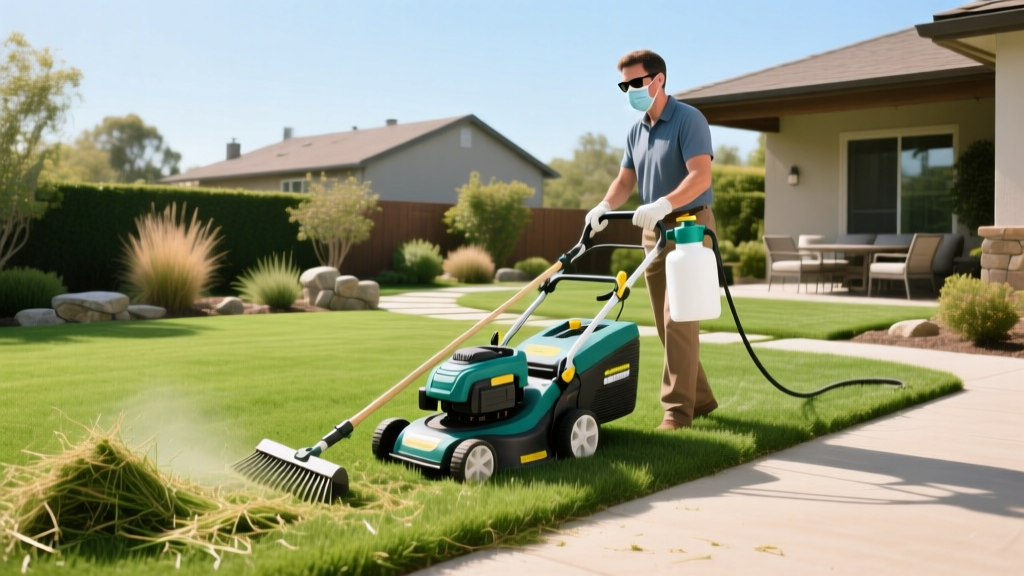
Step-by-Step Lawn Maintenance for Grass Pollen Allergy
The Biology of Turfgrass Pollen and Allergic Rhinitis
Maintaining a pristine yard is a significant challenge when you or a family member suffers from a severe grass pollen allergy. Turfgrasses like Bermuda (Cynodon dactylon), Timothy (Phleum pratense), and Kentucky Bluegrass (Poa pratensis) are wind-pollinated. Unlike insect-pollinated plants that produce heavy, sticky pollen, wind-pollinated grasses release millions of microscopic, lightweight spores designed to travel miles on air currents. According to the Asthma and Allergy Foundation of America (AAFA), grass pollen is one of the most common triggers for seasonal allergic rhinitis, peaking heavily in late spring and early summer.
The fundamental rule of allergy-safe lawn care is understanding bolting. When turfgrass experiences environmental stress (drought, heat, or soil compaction), it prematurely produces seed heads—a survival mechanism to reproduce before dying. These seed heads are the primary source of lawn pollen. Therefore, your maintenance procedures must focus on stress prevention and strategic physical removal before pollen disperses.
⚠️ Critical Warning: The Leaf Blower Hazard
Never use a gas or electric leaf blower to clear grass clippings from your driveway or patio after mowing. Leaf blowers generate wind speeds up to 250 MPH at the nozzle, aggressively aerosolizing settled pollen, mold spores, and dust mites into the breathing zone. Always use a stiff-bristle push broom or a wet hose washdown instead.
Step 1: Pre-Mowing Preparation and Protective Gear
Standard surgical masks or cloth face coverings are entirely ineffective against grass pollen, which ranges from 20 to 120 microns in size but often breaks down into sub-micron starch granules that penetrate deep into the lungs. You must upgrade your personal protective equipment (PPE) before stepping onto the turf.
- Respirator: Upgrade from a standard 3M N95 to a Gerson 1730 P100 Half-Mask Respirator ($18–$25). The P100 filter is oil-proof and captures 99.97% of airborne particulates, including sub-micron pollen fragments.
- Eye Protection: Pollen easily enters through the tear ducts, causing histamine release. Wear sealed, indirect-vented goggles like the Uvex Stealth OTG Safety Goggles ($15–$20), which fit over prescription glasses and prevent airborne spores from reaching the conjunctiva.
- Clothing Barrier: Wear a disposable Tyvek coverall or dedicate a specific long-sleeve mowing shirt that is immediately removed and washed post-chores. Pollen clings electrostatically to cotton and wool fibers.
Step 2: Strategic Mowing Procedures to Trap Pollen
Timing and mower configuration dictate whether you suppress pollen or launch it into the air. The American College of Allergy, Asthma, & Immunology (ACAAI) notes that pollen counts are highest in the early morning and on dry, windy days.
The 4:00 PM Rule and Weather Triggers
Schedule your mowing between 4:00 PM and 7:00 PM. By late afternoon, the daily pollen shed has largely concluded, and atmospheric humidity begins to rise, which weighs down airborne spores. The absolute best time to mow is within two hours after a heavy rainstorm, as precipitation physically washes pollen out of the air and binds it to the soil surface.
Bagging vs. Mulching
While mulching mowers are generally recommended for returning nitrogen to the soil, allergy sufferers must switch to a bagging attachment during the peak spring flush (May through June). Mulching decks recirculate clippings and seed heads, violently chopping them and blowing microscopic pollen fragments out of the side-discharge chute. A high-lift bagging blade creates a vacuum that pulls seed heads directly into a sealed collection bag.
Step 3: Mowing Height Matrices to Prevent Seeding
Scalping your lawn (cutting it too short) induces severe drought stress, triggering the grass to bolt and produce pollen-heavy seed heads within 48 hours. You must maintain the optimal height for your specific turf species to keep the plant in a vegetative, non-flowering state.
| Turfgrass Species | Optimal Mowing Height | Pollen Severity | Mowing Frequency (Peak Spring) |
|---|---|---|---|
| Bermuda (Common) | 1.5 – 2.5 inches | Extreme | Every 3–4 days |
| Kentucky Bluegrass | 2.5 – 3.5 inches | High | Every 4–5 days |
| Tall Fescue | 3.0 – 4.0 inches | Moderate | Every 5–7 days |
| Zoysia (Emerald/Meyer) | 1.0 – 2.0 inches | Low | Every 7–10 days |
| St. Augustine | 2.5 – 4.0 inches | Very Low | Every 5–7 days |
💡 Pro Tip: The 1/3 Rule is Non-Negotiable
Never remove more than one-third of the grass blade in a single pass. If your Tall Fescue reaches 6 inches due to spring rain, do not cut it down to 3 inches at once. Cut it to 4 inches, wait two days, and then cut it to 3 inches. Drastic height reduction shocks the root system, immediately triggering a pollen-producing survival response.
Step 4: The Robotic Mower Investment (The Ultimate Allergy Hack)
For homeowners with debilitating grass pollen allergies, the most effective maintenance procedure is removing the human from the equation entirely. Upgrading to a robotic mower eliminates your exposure to aerosolized clippings and guarantees the grass never reaches the bolting stage.
Robotic mowers operate on a continuous micro-mulching schedule. By shaving off just 1 to 2 millimeters of grass daily, the turf never experiences the shock of a heavy cut, and seed heads are physically incapable of forming. Furthermore, because the clippings are the size of dust motes, they decompose into the thatch layer instantly without harboring mold or pollen.
- Worx Landroid Vision WR2000 ($2,200 – $2,500): Uses AI cameras to navigate without boundary wires, making setup effortless for complex yards up to 1/2 acre.
- Husqvarna Automower 430XH ($2,500 – $2,800): Features GPS-assisted navigation and ultrasonic collision sensors, ideal for steep slopes and large properties up to 0.8 acres.
While the upfront cost is high, the medical savings from reduced antihistamine prescriptions, allergy shots, and lost workdays often justify the investment for severe sufferers within three to four years.
Step 5: Irrigation and Soil Dampening Techniques
Water management serves a dual purpose in allergy-safe lawn care: keeping the turf stress-free and physically suppressing airborne allergens.
- Deep, Infrequent Watering: Apply 1 to 1.5 inches of water per week in two separate sessions (e.g., Wednesday and Sunday mornings). This forces roots deep into the soil profile, creating a drought-resilient plant that does not need to bolt and produce pollen to survive summer heat.
- Pre-Mowing Mist: If you must mow on a dry day, run your overhead sprinklers for exactly 5 minutes about an hour before you begin. This lightly dampens the grass blades, causing surface pollen to stick to the wet foliage rather than becoming airborne when the mower deck passes over it.
Step 6: Post-Maintenance Decontamination Protocol
Once the mowing is complete, your immediate actions dictate whether you will suffer an allergic reaction that evening. Grass pollen is highly adhesive and will remain viable on surfaces for days.
- Exterior Shedding: Remove your shoes, coveralls, and mask outside the house. Do not walk across indoor carpets with your mowing clothes.
- HEPA Vacuuming: Use a sealed-system HEPA vacuum (like the Shark Navigator Lift-Away NV356e) to clean the entryway. Standard vacuums simply exhaust microscopic pollen fragments back into the room through their exhaust ports.
- The Wash Cycle: Wash mowing clothes immediately using warm water (at least 85°F) and a hypoallergenic, dye-free detergent. Add a half-cup of white vinegar to the rinse cycle to break down the electrostatic bond between pollen proteins and fabric fibers.
- Personal Decontamination: Shower immediately, ensuring you wash your hair. Pollen accumulates heavily in hair and will transfer to your pillowcase at night, causing prolonged nocturnal exposure and severe morning congestion.
Summary of Seasonal Adjustments
By shifting your perspective from purely aesthetic lawn care to biological management, you can maintain a healthy, green yard without triggering chronic histamine responses. Prioritize plant health to prevent bolting, utilize physical barriers during peak shed windows, and seriously consider automation if your sensitivity remains unmanageable despite strict adherence to these protocols.

