
Lawn Care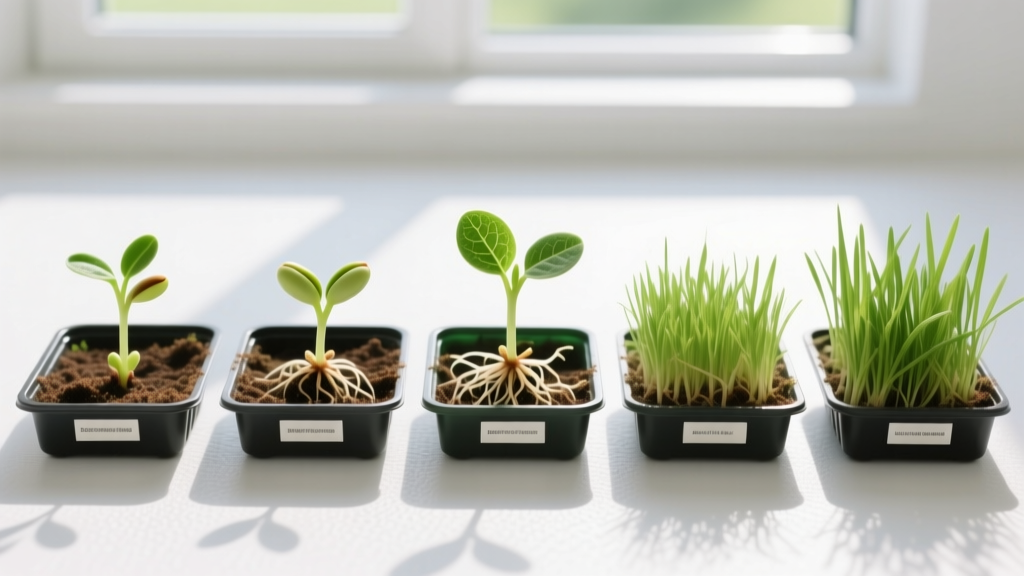
Exact Time for Grass to Grow From Seed by Species
Understanding the Timeline: Germination vs. Full Establishment
When calculating the exact time for grass to grow from seed, homeowners must distinguish between two critical biological milestones: germination and full establishment. Germination is the moment the radicle (first root) breaks through the seed coat and the first leaf blade emerges from the soil surface. Full establishment, however, is the point at which the turf develops a deep root system, begins lateral tillering, and can withstand standard mowing and foot traffic.
The time for grass to grow from seed is not a fixed number; it is a biological process dictated by thermal time (accumulated growing degree days), soil moisture, and seed-to-soil contact. While a bag of Kentucky Bluegrass might claim a 14-day germination window on the packaging, actual field conditions can stretch this to 30 days if soil temperatures hover near the lower threshold. Below, we break down the precise timelines for the most common turfgrass species planted in North American residential lawns.
Germination and Establishment Chart by Turfgrass Species
The following matrix provides the baseline expectations for sprouting and maturity. These timeframes assume optimal soil temperatures and consistent irrigation.
| Turfgrass Species | Grass Type | Germination Time (Days) | Optimal Soil Temp (°F) | Full Establishment |
|---|---|---|---|---|
| Perennial Ryegrass | Cool-Season | 5 - 10 | 50 - 65 | 2 - 3 Months |
| Tall Fescue | Cool-Season | 7 - 12 | 50 - 65 | 3 - 4 Months |
| Kentucky Bluegrass | Cool-Season | 14 - 30 | 50 - 65 | 4 - 6 Months |
| Fine Fescue | Cool-Season | 7 - 14 | 45 - 60 | 3 - 4 Months |
| Bermudagrass | Warm-Season | 10 - 30 | 65 - 75 | 3 - 4 Months |
| Zoysiagrass | Warm-Season | 14 - 21 | 65 - 75 | 4 - 6 Months |
| Centipedegrass | Warm-Season | 14 - 28 | 70 - 85 | 4 - 5 Months |
Source note: Germination ranges align with data published by University of Minnesota Extension and Clemson University Home & Garden Information Center.
Critical Variables That Accelerate or Delay Sprouting
If your lawn is falling outside the standard time for grass to grow from seed, one of the following environmental variables is likely acting as a bottleneck.
1. Soil Temperature Thresholds
Air temperature is a poor indicator of seed viability. Seeds respond exclusively to the temperature of their immediate soil environment. Cool-season grasses require a minimum soil temperature of 50°F to initiate enzymatic activity within the seed endosperm. If you plant Tall Fescue in early spring when the air is 65°F but the soil is still 42°F, germination will stall, leaving seeds vulnerable to rot and fungal pathogens like Pythium blight.
Pro Tool Recommendation: Do not guess your soil temperature. Use a dedicated probe thermometer, such as the REOTEMP 20-Inch Soil Thermometer, inserted 2 inches into the ground at 8:00 AM for the most accurate daily baseline reading.
2. Moisture and the Seed Coat
Once a seed absorbs water (imbibition), the germination clock starts. If the top 1.5 inches of soil dries out even once during the first 10 days, the newly formed radical root will desiccate and die, resetting the process entirely. For fast-germinating species like Perennial Ryegrass, this means watering lightly 2 to 3 times a day for 5-10 minutes per session to maintain a constantly damp (but not waterlogged) seedbed.
The Three Phases of Lawn Establishment
Understanding the physiological phases of turf development helps you adjust your maintenance schedule as the grass matures.
- Phase 1: Germination and Emergence (Days 1-21)
The seed swells, roots anchor, and the first leaf pierces the soil. The plant is entirely dependent on the endosperm's stored energy and surface moisture. Do not apply broadleaf herbicides or walk heavily on the soil during this phase. - Phase 2: Root Development and Tillering (Days 22-60)
The primary root system deepens, and the plant begins producing secondary shoots (tillers) from the crown. This is the optimal window to apply a secondary dose of starter fertilizer to fuel lateral growth. - Phase 3: Canopy Closure and Hardening (Days 61-120)
The turf forms a dense mat, shading the soil and naturally suppressing weed seeds. Mowing frequency increases, and the lawn transitions to a standard deep-and-infrequent watering schedule to encourage drought tolerance.
Troubleshooting Delayed Germination
If the expected time for grass to grow from seed has passed and your lawn remains bare, diagnose the issue using this framework:
- Soil Crusting: Heavy clay soils can form a hard crust after watering, physically trapping delicate seedlings underground. Fix: Lightly drag a leaf rake or a piece of chain-link fence over the soil to break the surface tension without uprooting seeds.
- Pre-Emergent Herbicide Carryover: If you applied a crabgrass preventer (like Prodiamine or Dithiopyr) within the last 4-6 months, it will inhibit turfgrass seed germination just as effectively as it stops weeds. Fix: You must wait out the chemical residual period or use seeds treated with activated charcoal coatings, though results will still be suppressed.
- Dormant or Expired Seed: Grass seed loses viability over time, especially if stored in humid, unconditioned garages. Check the 'Sell By' date on the tag. Seed older than 18 months may have a germination rate below 50%.
- Bird and Rodent Predation: Uncoated seed left on the surface is highly visible to foraging wildlife. Fix: Apply a biodegradable seed blanket like the Pennington Seed Starter Mat, which hides the seed, retains moisture, and prevents washouts.
Advanced Tactics for Faster, Thicker Turf
To compress the establishment timeline and ensure a higher survival rate, integrate these professional-grade techniques into your planting protocol:
Utilize Seed Coating Technologies
Modern premium seeds often feature proprietary coatings. For example, Pennington's SeedSmart technology includes a pink or green fungicidal coating (typically Apron Maxx) that protects the seed from soil-borne diseases during the vulnerable imbibition phase, while also absorbing extra moisture to keep the seed hydrated between watering cycles. Always check the seed tag for the 'Pure Live Seed' (PLS) percentage; coated seeds will have a lower PLS by weight, meaning you must apply slightly more product per 1,000 square feet to achieve the correct seeding rate.
Strategic Starter Fertilizer Application
New seedlings require immediate access to phosphorus for root development, but standard lawn fertilizers are heavily weighted toward nitrogen. Apply a dedicated starter fertilizer, such as Scotts Turf Builder Starter Food for New Grass (24-25-4), on the exact day you sow the seed. Apply at a rate of 3.5 lbs per 1,000 sq ft. The high phosphorus content (the middle number, 25) accelerates root mass expansion, effectively shaving 10 to 14 days off the total establishment timeline.
Warning on Weed Preventers: If you need to prevent weeds while growing new grass, do not use standard pre-emergents. Use a starter fertilizer containing Mesotrione (e.g., Scotts Starter Food Plus Weed Preventer). Mesotrione inhibits photosynthesis in broadleaf weeds and crabgrass but is completely safe for germinating Kentucky Bluegrass, Tall Fescue, and Perennial Ryegrass.
Topdressing and Seed-to-Soil Contact
Seed tossed directly onto existing thatch or hard dirt will fail to establish roots. After broadcasting your seed, topdress the area with a 1/8-inch layer of screened compost or peat moss. This micro-layer acts as a moisture sponge, regulates soil temperature, and ensures the seed remains in physical contact with the growing medium. For large areas, renting a slit-seeder or a core aerator prior to planting will drastically reduce the time for grass to grow from seed by placing the seed directly into the soil profile.

