
Lawn Care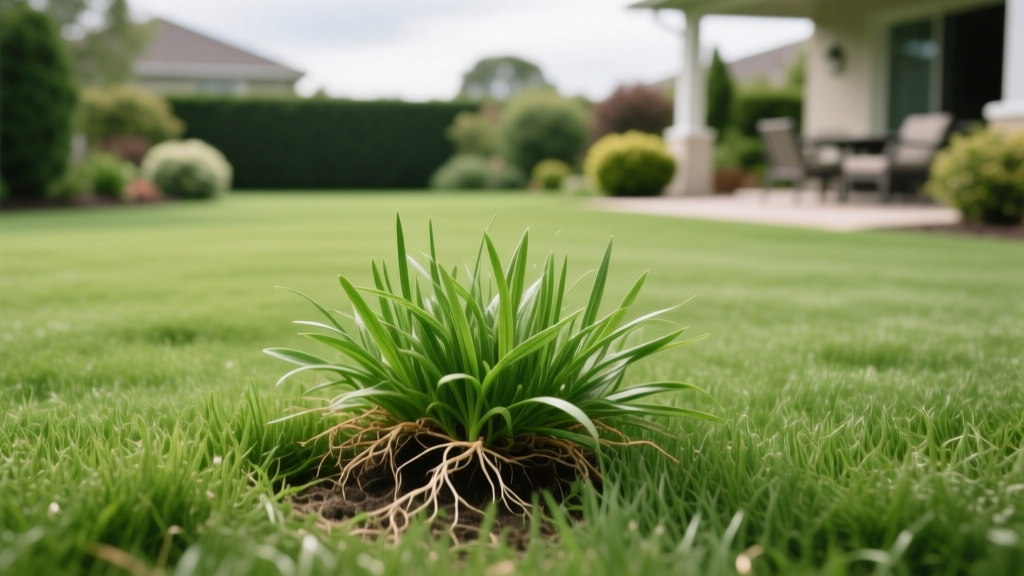
Eradicate Green Kyllinga Weed: Spot-Treatment & Control Guide
The Sedge Masquerade: Understanding Green Kyllinga
Green kyllinga (Kyllinga brevifolia) is a perennial sedge that aggressively infiltrates residential lawns, often mistaken for a harmless grass or a broadleaf weed. Unlike true grasses, sedges thrive in excessively moist, compacted soils where turfgrass roots suffocate. If your lawn emits a distinct, sweet, freshly-cut aroma when mowed and you notice small, round, green seed heads popping up just hours after a haircut, you are likely dealing with a green kyllinga infestation. Eradicating this weed requires abandoning standard broadleaf herbicides and adopting a targeted sedge-management protocol.
Botanical Profile and Field Identification
Accurate identification is the prerequisite for effective spot-treatment. According to turfgrass pathology data from the University of Florida IFAS Extension, misidentifying kyllinga as yellow nutsedge leads to improper chemical selection and treatment failure.
The 3-Point Field Test for Green Kyllinga
- Stem Geometry: Roll the lower stem between your thumb and forefinger. True grasses have round stems; kyllinga has a distinctly triangular stem ('sedges have edges').
- Seed Head Structure: Yellow nutsedge features a branching, umbrella-like seed head. Green kyllinga produces a single, tight, spherical green cluster at the top of the stem.
- Rhizome Network: Pulling the plant reveals a complex, shallow network of white, scaly rhizomes (underground stems) that snap easily, leaving fragments in the soil to regenerate.
The Pre-Emergent Fallacy: Why Standard Preventatives Fail
A common point of failure in homeowner lawn care programs is the reliance on pre-emergent herbicides like prodiamine or dithiopyr to stop kyllinga. While these chemicals effectively block crabgrass and annual weed seeds from germinating, green kyllinga spreads primarily through its subterranean rhizome network in established lawns. Seed germination is a secondary, minor vector for this species. Therefore, applying a spring pre-emergent will do virtually nothing to halt an active kyllinga colony expanding beneath your soil surface. Post-emergent, systemic herbicides are mandatory for eradication.
Chemical Spot-Treatment Matrix
Selecting the correct active ingredient depends on your specific turfgrass species and the severity of the infestation. The following matrix outlines the most effective chemistries available for residential spot-treatment.
| Active Ingredient | Brand Example | Safe For Grass Types | Speed of Action | Est. Cost (per 1,000 sq ft) |
|---|---|---|---|---|
| Halosulfuron-methyl | SedgeHammer+ | Most Cool & Warm-Season | Systemic (2-3 weeks) | $4.00 - $6.00 |
| Sulfentrazone | Dismiss NXT | Most Cool & Warm-Season | Contact Burn (24-48 hrs) | $2.50 - $3.50 |
| Imazaquin | Image Kills Nutsedge | Warm-Season ONLY (Bermuda, Zoysia, St. Aug) | Slow Systemic (3-4 weeks) | $1.50 - $2.00 |
Note: Imazaquin will severely damage or kill Fescue and Kentucky Bluegrass. Always verify the product label against your specific turf species before application.
Precision Application Protocol: Halosulfuron-Methyl
For the most reliable, turf-safe eradication across both cool- and warm-season lawns, Halosulfuron-methyl (SedgeHammer+) remains the industry gold standard. Follow this exact mixing and application protocol to ensure the chemical translocates down to the rhizomes.
- Preparation: Mow your lawn to a height of 2 inches. Wait 48 hours after mowing before applying the herbicide to allow the kyllinga leaves to regenerate sufficient surface area for chemical absorption.
- Mixing Ratio: In a 1-gallon pump sprayer, combine 0.031 ounces (one provided scoop) of 75% DF Halosulfuron-methyl granules with 1 gallon of water. This treats approximately 400 square feet of spot-infested area.
- Surfactant Addition: Add 0.25% Non-Ionic Surfactant (NIS) to the mixture (roughly 1/2 teaspoon per gallon). Kyllinga leaves have a waxy cuticle; without a surfactant, the water droplets will bead up and roll off, rendering the treatment useless.
- Application: Spray the kyllinga foliage until wet, but avoid runoff. Keep the nozzle 12 inches from the ground to minimize drift onto desirable turf.
- Post-Application Care: Do not irrigate the lawn or allow rainfall for at least 48 hours. Wait 7 days before your next mowing to allow maximum translocation to the root system.
Environmental Remediation: Fixing the Root Cause
Herbicides only treat the symptom. Green kyllinga is an indicator weed, signaling that your soil environment is hostile to turfgrass but ideal for sedges. As noted by turf management specialists at Texas A&M AgriLife Extension, without correcting the underlying moisture and compaction issues, kyllinga will recolonize within a single growing season.
Diagnostic Step: The Screwdriver Soil Test
Take a standard 6-inch flathead screwdriver and push it into the soil in the areas where kyllinga is thriving. If you cannot easily push the metal shaft at least 4 inches into the ground, your soil is critically compacted. The turfgrass roots are trapped in the top inch of soil, while the kyllinga rhizomes easily navigate the hardpan beneath.
Core Aeration and Topdressing
Rent a gas-powered core aerator in the early fall (for cool-season grasses) or late spring (for warm-season grasses). Set the machine to pull 3-inch deep plugs on 2-inch centers. Immediately after aerating, topdress the lawn with a coarse, washed builder's sand at a rate of 1 cubic yard per 1,000 square feet. Drag the sand into the aeration holes using a stiff push broom. This permanently alters the soil drainage profile, depriving the kyllinga of the stagnant moisture it requires.
Irrigation Recalibration
Kyllinga thrives on frequent, shallow watering. If you water your lawn for 15 minutes every day, you are actively cultivating sedges. Perform a catch-cup test: place five identical empty tuna cans across your irrigation zones and run the sprinklers. Measure the water depth. Adjust your controller to deliver 0.5 to 0.75 inches of water per session, but only run the system twice a week. This forces turfgrass roots to grow deep while drying out the topsoil where kyllinga rhizomes reside.
Expert Troubleshooting: Why Did It Come Back?
'The most frequent cause of kyllinga treatment failure is mechanical fragmentation. When homeowners pull kyllinga by hand or use a string trimmer to cut it down to the soil line, the brittle white rhizomes snap. A single 1/4-inch fragment left in the soil contains enough meristematic tissue to generate a new plant within 14 days. Never pull mature kyllinga; always use systemic herbicides to kill the root network intact.'
If you see new, smaller kyllinga shoots emerging 3 weeks after a Halosulfuron application, do not immediately re-spray. The initial application likely killed the primary mother plant, but secondary rhizome nodes are pushing up new growth. Wait until the new shoots have developed at least three visible leaves, then apply a second, lighter spot-treatment of Sulfentrazone to burn down the secondary growth without overloading the soil with residual chemicals. By combining precise chemical spot-treatments with aggressive soil decompaction, you can permanently remove green kyllinga from your lawn ecosystem.

