
Lawn Care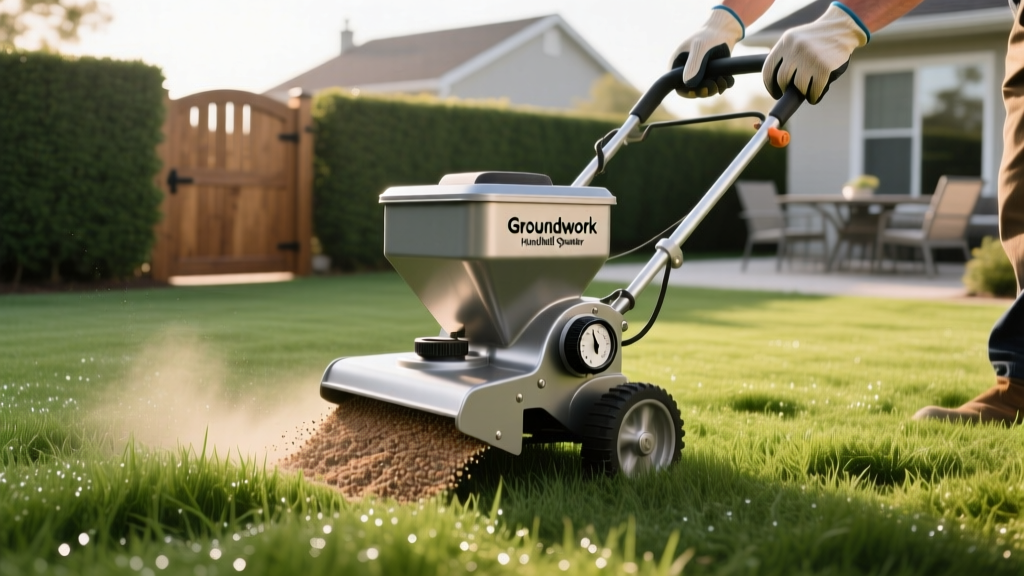
Groundwork Handheld Spreader: Selection, Calibration & Maintenance
The Groundwork Advantage: Budget-Friendly Precision
Groundwork, the proprietary lawn and garden brand primarily distributed through Rural King and regional farm-and-fleet retailers, has carved out a massive niche in the turf care market by offering high-utility tools at entry-level price points. When it comes to spot-treating weeds, applying pre-emergents to garden beds, or fertilizing small urban lawns under 5,000 square feet, a full-sized push spreader is overkill and prone to overlapping errors. This is where the Groundwork handheld spreader earns its place in the equipment shed.
However, the low initial cost (typically ranging from $15 to $35) means that longevity and accuracy rely entirely on proper selection, meticulous calibration, and aggressive post-use maintenance. Fertilizer salts are highly corrosive, and a neglected handheld spreader will seize up within a single season. This guide provides the exact frameworks, calibration math, and maintenance protocols required to get professional-grade results from your Groundwork equipment.
Expert Insight: Never use a handheld broadcast spreader for large, open rectangular lawns. The pendulum motion of human arm swinging combined with variable walking speeds creates a 'wavy' application pattern. Reserve handhelds for perimeter work, steep slopes, narrow side-yards, and targeted patch repair.
Anatomy of the Groundwork Handheld Spreader
To maintain and calibrate your equipment, you must understand its mechanical failure points. The Groundwork handheld lineup generally shares a common architecture:
- Polypropylene Hopper: Resists chemical degradation from urea and ammonium sulfate, but can become brittle if left in direct UV sunlight for multiple seasons.
- The Impeller (Spinning Disk): Located at the base of the hopper. As product drops onto it, the fins catch the granules and throw them outward. Chipped fins will cause severe streaking.
- Deflector Shield: A small plastic guard that drops down to block one side of the impeller, allowing you to spread along driveways and sidewalks without throwing fertilizer onto concrete.
- Crank Shaft and Gears: The primary failure point. Metal shafts housed in plastic casings are highly susceptible to fertilizer dust intrusion, which turns into a corrosive paste when exposed to ambient humidity.
Selection Matrix: Manual vs. Battery-Operated
Groundwork typically offers two distinct handheld categories. Choosing the wrong one for your specific lawn topology will result in uneven application and physical fatigue.
| Feature | Groundwork 5 lb Manual Crank | Groundwork 8 lb Battery-Assisted |
|---|---|---|
| Average Price | $16.99 - $19.99 | $29.99 - $34.99 |
| Impeller Speed | Variable (tied to hand cranking speed) | Constant (motorized RPM) |
| Best Use Case | Spot weed control, ice melt, small seed patches | Full perimeter fertilization, heavy granular pre-emergents |
| Maintenance Level | High (crank shaft requires frequent lubing) | Medium (must protect battery contacts from moisture) |
The Verdict: If you are spreading heavy, coarse granules like Scotts Turf Builder or Milorganite, the manual crank requires significant hand fatigue to maintain the necessary RPM for an even fan pattern. Upgrade to the battery-assisted model for any application taking longer than 10 minutes.
Step-by-Step Calibration for Accurate Application
Handheld spreader dials (usually numbered 1 through 10) are notoriously inaccurate across different granule densities. A setting of '4' might apply 2 lbs of lightweight grass seed per 1,000 sq ft, but 6 lbs of dense iron-based fertilizer. You must calibrate using the Penn State Extension catch-and-weigh method.
The 100 Square Foot Calibration Test
- Measure the Test Zone: Mark off a 10 ft x 10 ft area on your driveway or a tarp. (100 sq ft is exactly 1/10th of a standard 1,000 sq ft lawn area).
- Weigh the Product: Place an empty bucket on a digital kitchen scale and tare it to zero. Add exactly 16 ounces of your chosen fertilizer to the Groundwork hopper.
- Set the Dial: Start with the manufacturer's recommended setting (or guess '4' if unknown).
- Execute the Spread: Walk over the 10x10 area at a normal pace (3 mph), cranking at a steady rhythm. Make two passes (up and back) to simulate real-world overlapping.
- Catch and Weigh: Pour the remaining fertilizer from the hopper into the bucket on the scale.
- Calculate the Math: Subtract the remaining weight from 16 oz. If you used 5 oz to cover 100 sq ft, your application rate is 50 oz per 1,000 sq ft (3.12 lbs). Adjust the dial down by one notch and repeat if your target rate was 2.5 lbs per 1,000 sq ft.
Critical Maintenance: Preventing Impeller Corrosion
The number one reason Groundwork handheld spreaders end up in the trash after one season is crank shaft seizure. Modern fertilizers contain sulfur-coated urea and ammonium sulfate. These compounds are hygroscopic—they pull moisture from the air, creating a mild sulfuric acid solution that rapidly pits metal shafts and fuses them to the plastic gear housing.
WARNING: Never use standard WD-40 to lubricate your spreader crank. Standard WD-40 leaves a wet, oily residue that acts as a magnet for fertilizer dust, creating an abrasive grinding paste that will destroy the plastic gears within weeks.
The Professional 5-Minute Washdown Protocol
Do not immediately take your spreader to the hose. Water dissolves fertilizer dust into a liquid that seeps directly into the sealed gear housing where it cannot dry.
- Step 1: The Dry Purge. Use a leaf blower or compressed air to blast out all loose, dry fertilizer dust from the hopper, impeller fins, and the crank handle crevices.
- Step 2: The Cold Rinse. Once 95% of the dust is removed, use a gentle stream of cold water to rinse the hopper. Cold water prevents the remaining trace chemicals from dissolving into a thick slurry.
- Step 3: Forced Drying. Shake out excess water and immediately use the leaf blower again to force air into the crank mechanism.
- Step 4: PTFE Lubrication. Apply two drops of WD-40 Specialist Dirt & Dust Resistant Dry Lube (PTFE) or CRC Heavy Duty Silicone directly onto the metal crank shaft where it enters the housing. Spin the crank to distribute the dry lubricant.
Troubleshooting Common Groundwork Failures
Even with meticulous care, mechanical issues can arise. Use this diagnostic framework to identify and fix problems in the field.
Symptom: The Spreader is 'Streaking' the Lawn
Cause 1: Inconsistent Walking Speed. Handheld spreaders require a strict 3.0 mph walking pace. That equates to a 20-minute mile, or roughly 120 steps per minute. If you slow down to turn around but keep cranking, you will dump a heavy line of fertilizer, burning the grass.
Cause 2: Impeller Fin Damage. Drop the spreader on concrete, and the plastic fins on the impeller can chip. A missing fin creates a 'dead zone' in the broadcast fan. Inspect the disk and order a replacement impeller if chipped.
Symptom: Product Bridges and Clumps in the Hopper
Cause: High Humidity and Static. Fine products like Milorganite or lime clump together due to static electricity in the plastic hopper and ambient moisture.
The Fix: Add a clean, dry golf ball or a few large steel washers to the hopper before filling it with product. The agitation of the heavy objects bouncing against the bottom of the hopper while you walk will physically break up bridges and ensure a steady drop rate onto the impeller.
Symptom: Fertilizer Throwing onto the Driveway
Cause: Deflector Misalignment. The Groundwork edge-guard deflector must be fully engaged when walking along hardscapes. If the plastic hinge is bent, the deflector won't drop low enough to block the outer trajectory of the granules. Use a heat gun to gently warm the plastic hinge and bend it back to a 45-degree downward angle to ensure the concrete remains stain-free.

