
Lawn Care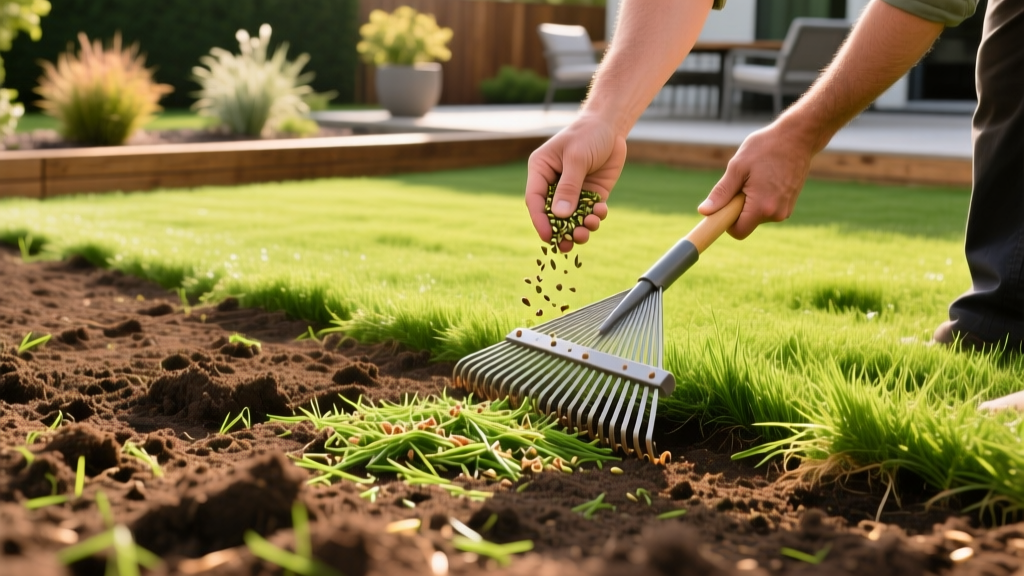
How to Grow Grass From Seeds: Soil Prep, Seeding Rates & Care
Establishing a new lawn or repairing bare patches requires precision. Understanding how to grow grass from seeds goes beyond simply scattering seed on dirt; it demands strict soil preparation, accurate seeding rates, and a calibrated hydration schedule. This guide provides the exact measurements, product specifications, and timelines required for successful turfgrass establishment, eliminating the guesswork that leads to patchy germination and weed invasion.
The Science of Seed-to-Soil Contact
Grass seed requires three elements to break dormancy: moisture, oxygen, and warmth. The most common reason for establishment failure is poor seed-to-soil contact. If seeds sit on top of dry thatch or compacted clay, they will desiccate before the radicle (embryonic root) can penetrate the earth. According to Penn State Extension, seeds must be covered with 1/8 to 1/4 inch of soil to retain moisture while still allowing sunlight to trigger germination. Achieving this requires mechanical soil disruption before the seed ever leaves the bag.
Phase 1: Soil Diagnostics and Amendment
Do not guess your soil chemistry. Purchase a mail-in soil test kit from your local university cooperative extension (typically $15 to $25) at least four weeks before planting.
Target Soil Parameters for Establishment:
- pH Level: 6.0 to 7.0 for cool-season grasses; 5.8 to 6.5 for warm-season grasses.
- Phosphorus (P): Critical for early root ATP production. If the soil test shows low P, apply a starter fertilizer with a 1-2-1 or 1-3-1 NPK ratio.
- Organic Matter: Aim for 3% to 5%. If below 2%, incorporate 1 cubic yard of compost per 1,000 square feet into the top 4 inches of soil.
If your pH is below 6.0, apply calcitic lime at a rate of 50 lbs per 1,000 sq ft to raise the pH by approximately 0.5 points. For a quick nutrient baseline, use a starter fertilizer like Scotts Turf Builder Starter Food for New Grass (24-25-4 NPK), applying it at a rate of 1 lb of nitrogen per 1,000 sq ft on the exact day you seed.
Phase 2: Calculating Seed Load and Selecting Cultivars
Over-seeding leads to fungal damping-off, while under-seeding leaves room for crabgrass. The University of Minnesota Turfgrass Science program emphasizes matching the seeding rate strictly to the species. Premium seed blends in 2026 cost between $6 and $9 per pound, making accurate math essential for your budget.
| Grass Species | Seeding Rate (lbs/1,000 sq ft) | Germination Window | Top Cultivar Pick |
|---|---|---|---|
| Tall Fescue | 5.0 - 8.0 lbs | 7 - 14 days | Jonathan Green Black Beauty Ultra |
| Kentucky Bluegrass | 1.0 - 2.0 lbs | 14 - 30 days | Scotts Turf Builder KBG Blend |
| Perennial Ryegrass | 4.0 - 6.0 lbs | 5 - 10 days | Pennington Smart Seed |
| Bermudagrass | 1.0 - 2.0 lbs | 10 - 21 days | Pennington Sahara |
Phase 3: The 4-Step Seeding Execution
For areas larger than 2,000 square feet, renting a mechanical slit-seeder (approx. $75/day) is vastly superior to broadcast spreading, as it cuts 1/4-inch grooves and drops the seed directly into the soil. For smaller lawns or overseeding, follow this manual protocol:
- Tilling and Grading: Rototill the top 4 inches of soil. Rake the area to establish a positive grade sloping away from foundations at a minimum 2% drop (1/4 inch per foot).
- Broadcast Application: Calibrate your drop or rotary spreader to the setting listed on the seed bag. Divide your total seed volume in half. Spread the first half walking north-to-south, and the second half walking east-to-west to eliminate streaks.
- Topdressing and Contact: Spread a 1/4-inch layer of screened compost or Canadian sphagnum peat moss over the seed. This acts as a moisture-retaining blanket. Drag a piece of chain-link fence or a heavy landscaping rake lightly over the area to mix the seed into the top 1/4 inch of soil.
- Mulching Slopes: On any grade exceeding 15%, cover the seeded area with wheat straw (not hay, which contains viable weed seeds). Use exactly one bale per 1,000 sq ft. You should still be able to see the soil through the straw; if you cannot, you have applied too much, which will block sunlight.
Warning: Never apply standard broadleaf herbicides or 'weed and feed' products before or immediately after seeding. Most pre-emergent and post-emergent chemicals will halt grass seed germination for 4 to 8 weeks. If weeds are a concern, look for starter fertilizers containing mesotrione (e.g., Scotts Starter Food for New Grass with Weed Preventer), which is safe for germinating turfgrass.
Phase 4: Germination Hydration Matrix
Watering is where most DIY establishment projects fail. The goal during the first 21 days is to keep the top 1/2 inch of soil consistently moist without creating anaerobic, waterlogged conditions that invite Pythium blight.
- Weeks 1 & 2 (Germination Phase): Water 2 to 3 times daily for 5 to 10 minutes per zone. Run cycles at 8:00 AM, 12:00 PM, and 4:00 PM. The soil should look dark, but puddles must not form.
- Weeks 3 & 4 (Root Establishment): Reduce frequency to once daily, but increase duration to 15 to 20 minutes. This forces the young roots to chase the moisture deeper into the soil profile.
- Week 5 and Beyond (Maturation): Transition to standard lawn watering: 2 days per week, applying roughly 1/2 inch of water per session (1 inch total per week). Use a tuna can placed on the lawn to measure exact output from your sprinkler heads.
Troubleshooting Establishment Failures
Even with perfect execution, environmental variables can disrupt growth. Here is how to diagnose and correct common failure modes based on NC State TurfFiles diagnostic frameworks:
- Symptom: Seed sprouts, then turns yellow and collapses.
Cause: Damping-off disease caused by overwatering and poor drainage.
Fix: Reduce watering frequency immediately and allow the surface to dry slightly between cycles. - Symptom: Bare patches on slopes after a rainstorm.
Cause: Seed washout.
Fix: For future plantings on slopes, abandon straw and use biodegradable rolled erosion control blankets (RECBs) pinned with landscape staples. - Symptom: Patches of missing seed with no germination.
Cause: Bird predation or ant harvesting.
Fix: Ensure adequate topdressing (1/4 inch of compost) to hide the seed. Avoid using reflective tape, which is largely ineffective against flocking birds.
The First Mow and Beyond
Do not mow until the new grass reaches 3.5 to 4 inches in height. Set your mower deck to 2.5 inches and ensure the blade is freshly sharpened; a dull blade will rip the shallow-rooted seedlings entirely out of the soil. Wait until you have mowed the new lawn at least three times before applying any selective broadleaf weed killers. By following these exact parameters, your seed investment will yield a dense, deeply rooted turf capable of outcompeting weeds and surviving seasonal stress.

