
Lawn Care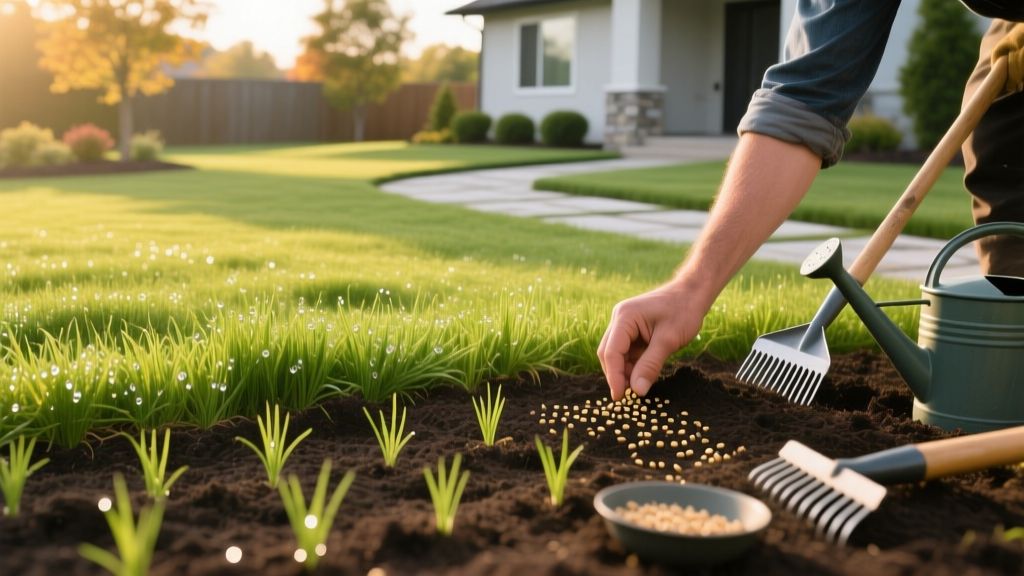
How to Grow a New Grass Lawn: Seed, Soil Prep & Planting Guide
The Biology of Lawn Establishment: Why the First 30 Days Matter
Establishing a new lawn from seed is not merely a matter of scattering seed over dirt; it is a precise 30-day biological process. The transition from dormant seed to a deeply rooted turfgrass plant requires exact moisture, temperature, and soil-to-seed contact parameters. According to turfgrass researchers at NCSU TurfFiles, the majority of new lawn failures occur due to improper seedbed preparation and erratic watering schedules during the critical germination window. This guide provides the exact measurements, product specifications, and timelines required to successfully grow a new grass lawn that survives its first summer and winter.
Phase 1: Site Assessment and Soil Engineering
Grass seed will not thrive in compacted, nutrient-deficient, or highly acidic soil. Before purchasing seed, you must engineer the seedbed.
Soil Testing and Amendment
Order a comprehensive soil test from your local university extension office. You are looking for three specific data points:
- Soil pH: Turfgrass requires a pH between 6.0 and 7.0. If your soil tests below 6.0, apply pelletized calcitic lime at a rate of 50 lbs per 1,000 square feet to raise the pH. If above 7.5, apply elemental sulfur at 5 lbs per 1,000 square feet.
- Phosphorus (P) Levels: Phosphorus is critical for root development in seedlings. Most states restrict phosphorus in standard fertilizers, but starter fertilizers are exempt for new lawns. If your soil test shows low P, you will need a starter fertilizer with an N-P-K ratio like 18-24-12.
- Organic Matter: Aim for 3% to 5% organic matter. If your soil is heavy clay or pure sand, incorporate a 1/4-inch layer of screened compost into the top 2 inches of the soil profile.
⚠️ Critical Tilling Warning: Avoid using a rototiller on established weeds. Tilling brings dormant weed seeds (like crabgrass and poa annua) to the surface, guaranteeing a massive weed flush that will choke out your new grass. Instead, use a core aerator or a mechanical slit-seeder to prepare the soil without inverting the weed seed bank.
Phase 2: Seed Selection and Pricing Matrix
Selecting the right cultivar dictates your lawn's drought tolerance, disease resistance, and maintenance requirements. Avoid generic "contractor mixes" sold at big-box stores, which often contain cheap annual ryegrass fillers. Purchase certified, weed-free seed from specialized turf suppliers.
| Grass Species | Climate Zone | Seeding Rate (lbs/1,000 sq ft) | Germination (Days) | Avg. Seed Cost (50lb bag) |
|---|---|---|---|---|
| Tall Fescue (TTTF Blend) | Transition / Cool | 5.0 - 8.0 | 7 - 14 | $160 - $220 |
| Kentucky Bluegrass | Cool Season | 2.0 - 3.0 | 14 - 28 | $250 - $350 |
| Bermudagrass (Hulled) | Warm Season | 1.0 - 2.0 | 10 - 21 | $180 - $240 |
| Perennial Ryegrass | Cool / Overseed | 5.0 - 7.0 | 5 - 10 | $140 - $190 |
For detailed regional cultivar recommendations and disease resistance ratings, consult the UMass Amherst Turf Management program or your local state extension turfgrass evaluation trials.
Phase 3: Precision Sowing and Starter Nutrition
Once the soil is graded and raked smooth, it is time to sow. Broadcast spreaders are acceptable, but mechanical slit-seeders (available for rent at most equipment yards for $75-$95 per day) yield vastly superior germination rates by cutting a shallow trench and dropping the seed directly into the soil.
The Cross-Hatch Sowing Method
If using a rotary broadcast spreader (like the Scotts EdgeGuard Mini), calibrate your spreader to the setting listed on the seed bag. Divide your total seed volume in half. Apply the first half walking in a North-South pattern, and the second half walking in an East-West pattern. This cross-hatching eliminates streaking and bare spots.
Starter Fertilizer and Weed Prevention
Immediately after sowing, apply a high-phosphorus starter fertilizer. To prevent weeds without harming your new grass, select a starter fertilizer that contains mesotrione (the active ingredient in Tenacity). Products like Scotts Turf Builder Starter Food for New Grass Plus Weed Preventer (approx. $45 for a 14 lb bag covering 5,000 sq ft) will inhibit crabgrass and broadleaf weeds for up to 6 weeks while the grass establishes. Standard pre-emergents like prodiamine will kill your grass seed.
Phase 4: The 30-Day Germination and Establishment Timeline
Watering is the single most critical variable in how to grow new grass lawn successfully. The seed must never dry out during germination, but the soil must never become waterlogged, which causes seed rot.
- Days 1–5 (Imbibition): Seeds absorb water and swell. Water lightly for 10 minutes, 2 to 3 times per day. The goal is to keep the top 1/2 inch of soil consistently moist. Do not allow puddling.
- Days 6–14 (Radicle Emergence): The first root (radicle) anchors into the soil. You will see the first green shoots (coleoptile). Reduce watering frequency to once daily, but increase the duration to 15 minutes to encourage deeper root probing.
- Days 15–21 (Leaf Development): True leaves emerge. The lawn will look patchy; this is normal. Begin tapering water to every other day, applying 1/2 inch of water per session to force roots deeper.
- Days 22–30 (First Mow): Once the grass reaches 3.5 inches tall, perform the first mow. Set your mower deck to 2.5 inches. Never remove more than 1/3 of the leaf blade at once. Ensure your mower blades are freshly sharpened; dull blades will rip tender seedlings out of the soil by the roots.
💡 Pro Tip: Top-Dressing for Moisture Retention
After sowing, apply a very thin (1/8 inch) layer of peat moss or screened compost over the seed. This acts as a micro-greenhouse, retaining moisture and protecting the seed from bird predation and wind displacement. Avoid using straw, which often introduces agricultural weed seeds to your pristine seedbed.
After sowing, apply a very thin (1/8 inch) layer of peat moss or screened compost over the seed. This acts as a micro-greenhouse, retaining moisture and protecting the seed from bird predation and wind displacement. Avoid using straw, which often introduces agricultural weed seeds to your pristine seedbed.
Common Failure Modes and Troubleshooting
Even with meticulous planning, environmental factors can disrupt establishment. Here is how to diagnose and fix common new lawn failures:
- Symptom: Seed Washed Away in Gullies. Cause: Heavy rain on bare, sloped soil. Fix: For slopes exceeding a 15% grade, use a tackifier or hydromulch blanket to bind the seed to the soil. Re-seed washed areas immediately.
- Symptom: Hard, Cracked Soil Crust. Cause: High clay content soils baking in the sun, preventing delicate shoots from piercing the surface. Fix: Gently drag a piece of chain-link fence or a stiff push broom over the crusted area to break the surface tension without uprooting seedlings.
- Symptom: Yellowing, Rotting Seedlings (Damping Off). Cause: Overwatering combined with high humidity, leading to Pythium blight. Fix: Immediately reduce watering frequency. Apply a systemic fungicide containing azoxystrobin (e.g., Scotts DiseaseEX) at the preventative rate.
Growing a new lawn from seed requires patience and strict adherence to moisture and nutrient protocols. By investing time in soil preparation, selecting certified cultivars, and managing the 30-day hydration window, you will establish a dense, resilient turfgrass canopy that will serve your landscape for decades.

