
Lawn Care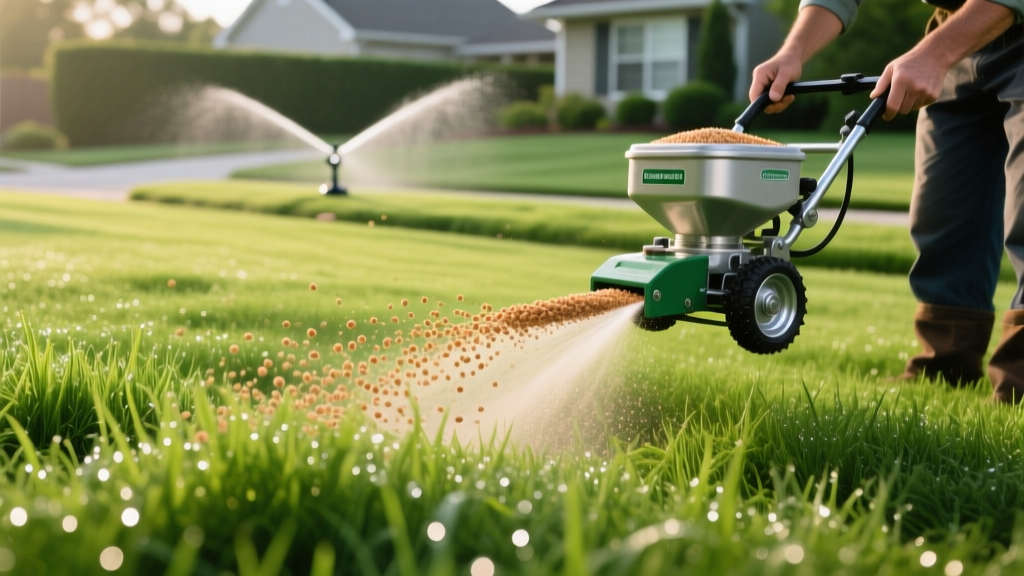
High Nitrogen Fertilizer for Grass: When and How to Apply It
Nitrogen is the primary macronutrient driving vegetative growth, chlorophyll synthesis, and dense tillering in turfgrass. While balanced fertilizers have their place in establishment phases, high nitrogen fertilizer for grass is the industry standard for correcting pale color, accelerating spring green-up, and maximizing turf density. However, misapplying high-N formulations is the leading cause of turf necrosis, thatch over-accumulation, and groundwater leaching. This guide details the exact formulations, seasonal timing, and application protocols required to leverage high-nitrogen feeds safely and effectively.
Decoding the NPK Ratio: What Qualifies as 'High Nitrogen'?
In lawn care, a fertilizer is generally classified as 'high nitrogen' when the first number in the NPK (Nitrogen-Phosphorus-Potassium) ratio is 20 or higher, and significantly outweighs the secondary and tertiary macronutrients. Common high-N ratios include 24-0-11, 32-0-4, and 46-0-0.
The Actual Nitrogen Calculation
The percentage on the bag dictates the actual weight of nitrogen. To calculate how much product you need to apply exactly 1.0 lb of actual nitrogen per 1,000 square feet, use this formula:
100 ÷ First NPK Number = Pounds of product per 1,000 sq ft.
Example: For a 24-0-11 fertilizer, divide 100 by 24. You need 4.16 lbs of product per 1,000 sq ft. A standard 50-lb bag will therefore cover approximately 12,019 square feet.
Top High Nitrogen Formulations for Lawns
Not all nitrogen sources behave identically. Quick-release sources (like urea and ammonium sulfate) provide immediate green-up but carry high burn risks. Slow-release sources (like polymer-coated urea or methylene urea) feed the lawn steadily over 8 to 12 weeks. Below is a comparison matrix of professional-grade and consumer high-N options available on the market.
| Product Formulation | NPK Ratio | Nitrogen Source | Coverage (50lb Bag) | Cost per 1,000 sq ft | Best Use Case |
|---|---|---|---|---|---|
| Lesco Professional High Nitrogen | 24-0-11 | Methylene Urea (Slow) | 12,000 sq ft | $5.66 | Standard fall feeding for cool-season lawns |
| Generic Agricultural Urea | 46-0-0 | Urea (Quick) | 14,500 sq ft | $2.90 | Budget-friendly rapid green-up (high burn risk) |
| XCU Polymer-Coated Urea | 32-0-8 | PCU (90-Day Slow) | 16,000 sq ft | $5.31 | Single-application summer feeding for warm-season |
| Scotts Turf Builder SummerGuard | 32-0-4 | Ammonium Sulfate | 10,000 sq ft | $9.50 | Consumer-grade quick fix for yellowing turf |
Seasonal Timing: When to Apply (and When to Abstain)
Applying high nitrogen fertilizer for grass at the wrong time of year can force top-growth at the expense of root development, or push tender new shoots into an impending frost. Timing must be strictly aligned with your turfgrass species.
Cool-Season Grasses (Fescue, Kentucky Bluegrass, Ryegrass)
According to Penn State Extension, the absolute best time to apply high-nitrogen fertilizer to cool-season grasses is in the early fall (September 1 to October 15). During this window, soil temperatures are still warm enough to drive root growth, but air temperatures are cool enough to prevent heat stress. A secondary, lighter application can be made in late spring (May). Never apply high-N to cool-season grasses in June, July, or August. Forcing top-growth during summer heat depletes the plant's carbohydrate reserves, making it highly susceptible to brown patch fungus and drought stress.
Warm-Season Grasses (Bermuda, Zoysia, St. Augustine, Centipede)
Warm-season grasses thrive in heat and require high nitrogen during their peak growing season. Research from NC State TurfFiles indicates that applications should begin in late spring (mid-to-late May, only after the lawn has completely greened up and been mowed twice) and continue through mid-summer. Stop all high-nitrogen applications at least six weeks before your region's first expected fall frost to allow the grass to properly harden off for winter dormancy.
Warning: The Centipedegrass Exception
While Bermuda and Zoysia tolerate and demand high nitrogen (up to 4 lbs of N per 1,000 sq ft annually), Centipedegrass is highly sensitive to excess nitrogen and phosphorus. Applying high-N fertilizers to Centipedegrass often triggers 'Centipede Decline,' a fatal condition characterized by yellowing and root dieback. Limit Centipedegrass to 1 to 2 lbs of total nitrogen annually, using balanced or low-N formulations.
Step-by-Step Application Protocol to Prevent Fertilizer Burn
High-nitrogen fertilizers are essentially concentrated salts. If applied improperly, they will draw moisture out of the grass roots (a process called 'salt draw'), resulting in chemical burn. Follow this exact protocol to ensure safe uptake.
- Mow and Clear: Mow the lawn to its standard height. If thatch exceeds 0.5 inches, core aerate or dethatch before fertilizing; otherwise, the nitrogen will bind to the thatch layer and never reach the soil.
- Calibrate the Spreader: Do not trust the settings printed on the bag blindly. Measure a 20x50 ft area (1,000 sq ft). Weigh out the exact amount of product required for 1,000 sq ft based on your NPK math. Put it in your spreader and walk the test area. Adjust the dial until you run out of product exactly as you finish the 1,000 sq ft grid.
- The Double-Pass Technique: Apply the fertilizer in two passes. Walk North-to-South for the first pass, then East-to-West for the second pass, using half the required product for each direction. This eliminates striping and ensures uniform coverage.
- Syringe Irrigation: Immediately after application, apply exactly 0.25 to 0.5 inches of water. This washes the fertilizer prills off the grass blades (preventing leaf burn) and dissolves the salts into the top 2 inches of the soil profile where the feeder roots reside. Avoid heavy watering that causes runoff.
Troubleshooting Fertilizer Burn and Over-Application
If you notice blue-gray footprints, yellowing striping patterns, or necrotic leaf tips within 48 hours of application, your lawn is experiencing fertilizer burn or severe drought stress exacerbated by salt draw.
- Immediate Fix (Leaching): Apply 1 full inch of water immediately, and repeat daily for three days. The goal is to flush the excess salts below the root zone and dilute the soil solution.
- Do Not Mow: Avoid mowing burned turf. The damaged leaf blades still provide shade to the soil and crown; removing them will expose the stressed plant to further solar radiation.
- Volatilization Loss: If you applied urea-based fertilizer and failed to water it in within 24 hours, the nitrogen likely converted to ammonia gas and escaped into the atmosphere (volatilization). You will not see burn, but you will not see green-up either. You must re-apply at half the original rate and water immediately.
The Prerequisite: Soil Testing
Before purchasing high nitrogen fertilizer for grass, verify your soil's baseline nutrient levels. Applying high nitrogen to soil that is severely deficient in potassium or suffering from a locked-out pH (below 5.5 or above 7.5) is a waste of capital. The grass physically cannot utilize the nitrogen without the co-factors provided by a balanced soil profile. Submit a soil sample to your local university cooperative extension office to determine your exact cation exchange capacity (CEC) and baseline NPK requirements before executing a high-nitrogen feeding program.

