
Lawn Care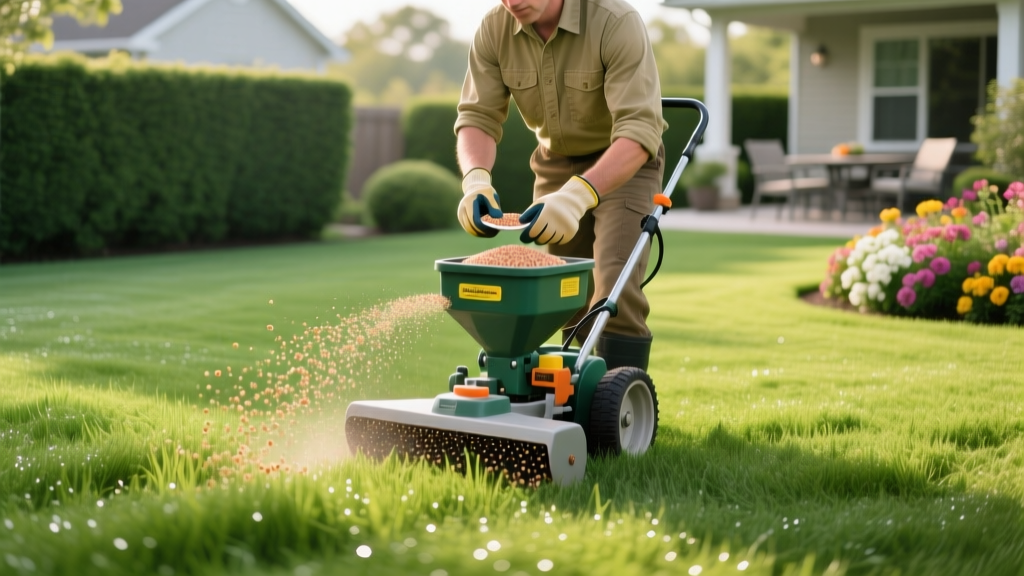
High Phosphorus Fertilizer for Lawns: When and How to Apply
The Biological Role of Phosphorus (P) in Turfgrass
In the N-P-K ratio printed on every fertilizer bag, phosphorus (P) is the middle number. While nitrogen drives upward blade growth and potassium regulates stress tolerance, phosphorus is the undisputed engine of root development and cellular energy transfer. Specifically, phosphorus is a core structural component of ATP (Adenosine Triphosphate), the primary energy currency of plant cells. Without adequate phosphorus, new grass seedlings cannot generate the energy required to push roots deep into the soil profile, leaving them vulnerable to drought, heat stress, and uprooting.
However, applying high phosphorus fertilizer to an established lawn with adequate soil P levels is not just a waste of money—it is an environmental liability. Unlike nitrogen, which is highly mobile and leaches through the soil, phosphorus binds tightly to soil particles. When over-applied, it accumulates in the topsoil and is eventually carried away via surface runoff into local waterways, triggering severe algal blooms and eutrophication. According to the Environmental Protection Agency (EPA), nutrient runoff from residential and agricultural landscapes remains a leading cause of impaired water quality in the United States.
⚠️ Regulatory Warning: Phosphorus Bans
Due to runoff concerns, over 20 U.S. states and numerous municipalities (including parts of New York, Florida, Washington, and the Great Lakes region) have strict legal restrictions on the sale and application of phosphorus-containing fertilizers. In these jurisdictions, you can only legally purchase and apply high phosphorus starter fertilizers if you are establishing a new lawn, repairing bare spots, or if a certified soil test explicitly documents a phosphorus deficiency. Always verify your local municipal codes before purchasing.
Decoding Your Soil Test: Do You Actually Need High P?
You cannot determine your soil's phosphorus levels by looking at the grass. Visual deficiencies (a dark, purplish tint to the leaf blades) usually only appear in extreme cases or during cold spring temperatures when root uptake is restricted. To make an informed decision, you must order a standard macronutrient soil test from a university extension or a private agronomic lab.
When reviewing your soil test results, look for the phosphorus reading, which is typically measured in parts per million (ppm) using either the Mehlich-3 or Bray P1 extraction methods. According to guidelines published by UMass Extension, you should interpret your results using the following thresholds:
- 0 to 15 ppm (Low to Medium): Your soil is deficient. A high phosphorus starter fertilizer is highly recommended when seeding or sodding to ensure successful establishment.
- 16 to 25 ppm (Optimal): Your soil has sufficient phosphorus for routine maintenance. Do not apply high P fertilizers. Use a zero-phosphorus maintenance fertilizer (e.g., 24-0-6) for established lawns.
- Above 25 ppm (High to Excessive): Your soil is saturated with phosphorus. Adding more will not benefit the grass and will only increase runoff risk. Avoid all P-containing products.
The pH Lockout Factor
Even if your soil test shows adequate phosphorus levels, your grass might not be able to access it. Phosphorus availability is highly dependent on soil pH. In highly acidic soils (pH below 5.5), phosphorus binds tightly to iron and aluminum, rendering it insoluble. In highly alkaline soils (pH above 7.5), it binds to calcium. The optimal soil pH for phosphorus availability is between 6.5 and 7.0. If your pH is outside this window, applying more high phosphorus fertilizer will not solve the problem; you must first amend the soil with lime (to raise pH) or elemental sulfur (to lower pH).
Top High Phosphorus Starter Fertilizers Compared
When establishing a new lawn via seed, hydroseeding, or sod, a dedicated starter fertilizer is required. These formulations feature an elevated middle number (P) to stimulate rapid root mass expansion. Below is a comparison of three industry-standard high phosphorus fertilizers available to homeowners and professionals in 2026.
| Product | N-P-K Ratio | Coverage (sq ft) | Avg. Price | Best Application |
|---|---|---|---|---|
| Scotts Turf Builder Starter Food | 24-25-4 | 5,000 | $38.00 | DIY residential seeding & sod |
| Lesco Professional Starter | 18-24-12 | 12,000 | $52.00 | Large-scale professional hydroseeding |
| Pennington UltraGreen Starter | 22-23-4 | 5,000 | $35.00 | Overseeding and bare spot repair |
Exact Application Protocols and Rate Calculations
The most common mistake homeowners make with starter fertilizers is guessing the application rate. Applying too much can burn tender new roots, while applying too little starves the seedling. Agronomic best practices dictate applying exactly 1.0 pound of P2O5 (phosphorus pentoxide) per 1,000 square feet at the time of seeding or sodding.
Step-by-Step Rate Calculation
Let's calculate the exact spreader setting requirement using the Lesco Professional Starter (18-24-12) as our example:
- Identify the P percentage: The middle number is 24, meaning the bag contains 24% P2O5 by weight (0.24).
- Calculate product needed per 1,000 sq ft: Divide the target rate (1.0 lb) by the percentage (0.24). 1.0 / 0.24 = 4.16 lbs of product.
- Calculate total coverage: If you bought a standard 50 lb bag, divide the total bag weight by the rate per 1,000 sq ft. 50 / 4.16 = 12,019 sq ft of coverage.
- Calibrate your spreader: Set your rotary spreader to dispense exactly 4.16 lbs of granules over a measured 1,000 square foot area (e.g., a 20x50 ft section of the lawn).
💡 Pro Tip: Incorporation is Mandatory
Phosphorus is highly immobile in soil. If you simply broadcast high phosphorus fertilizer on top of the soil after seeding, it will remain in the top 1/4 inch and will not reach the developing root zone. For new seed, rake the granules into the top 2 inches of soil before dropping seed. For sod, apply it to the bare soil before laying the pallets, or apply immediately after laying and water heavily to wash the granules down to the soil interface.
Frequently Asked Questions
Can I use high phosphorus fertilizer on an established lawn in the fall?
No. While older, outdated lawn care guides recommended high-P 'winterizers' in the autumn, modern turfgrass science has debunked this practice. Established lawns have deep, mature root systems that do not require massive phosphorus spikes. Fall fertilization should focus on high nitrogen and high potassium (e.g., 24-0-10) to promote root carbohydrate storage and winter hardiness. Applying P to an established lawn is largely illegal in many states and environmentally harmful.
Is bone meal a good high phosphorus fertilizer for lawns?
Bone meal (typically 3-15-0) is an excellent organic source of phosphorus for garden beds and flower bulbs, but it is highly impractical for turfgrass. Because it is a slow-release organic amendment, it requires soil microbes to break it down, a process that halts entirely when soil temperatures drop below 55°F. Furthermore, the scent of bone meal frequently attracts digging animals like raccoons, skunks, and neighborhood dogs, which will tear up your newly seeded lawn. Stick to water-soluble synthetic starter fertilizers for rapid, uniform turf establishment.
How long does high phosphorus fertilizer last in the soil?
Unlike nitrogen, which leaches out of the soil profile within 4 to 8 weeks, phosphorus does not leach. It binds to soil particles and can remain in the topsoil for years. A single, properly calculated application of starter fertilizer at the time of seeding will provide sufficient phosphorus for the lawn's first 12 to 18 months of growth. You should not apply another phosphorus-heavy product during this establishment window.

