
Lawn Care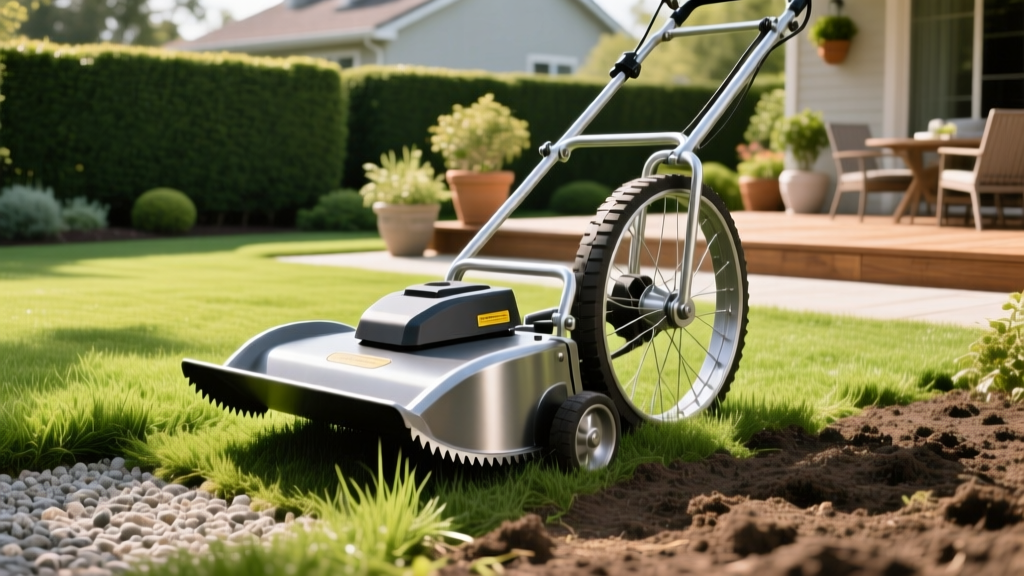
High Wheel Push Mower Guide: Terrain Specs, Deck Sizes & Maintenance
The Physics of High Rear Wheels: Why Diameter Matters
Standard push mowers typically feature 7-inch to 8-inch wheels across all four corners. A high wheel push mower alters this geometry by equipping the rear axle with wheels ranging from 9.5 to 11.5 inches in diameter. This is not merely an aesthetic upgrade; it fundamentally changes the leverage ratio and pivot mechanics of the mower deck.
When a standard mower's front wheel drops into a 2-inch depression (such as a divot, exposed root, or sprinkler head), the deck pitches forward aggressively, often resulting in scalping. Because the rear axle acts as the fulcrum, larger rear wheels increase the distance between the pivot point and the ground. According to turfgrass management principles outlined by the University of Georgia Extension, maintaining a consistent cutting height is critical to prevent stressing the grass crown. The altered geometry of an 11-inch rear wheel reduces the degree of forward deck pitch by up to 40% compared to an 8-inch wheel when traversing identical dips, effectively keeping the cutting blade parallel to the soil contour.
The Scalping Threshold
Scalping occurs when the mower deck drops low enough for the blade to sever the grass crown and scrape the topsoil. On lawns with moderate undulation (1 to 3 inches of variance per 10 feet), high rear wheels raise the rear deck, shifting the center of gravity backward and allowing the front caster wheels to glide over obstacles rather than wedging into them.
2026 Equipment Matrix: Top High Wheel Push Mowers
Selecting the right equipment requires matching the wheel diameter to your specific terrain variance. Based on current market availability and deck engineering, here is a comparison of the leading high wheel push mowers for residential use.
| Model | Deck Size | Rear Wheel Diameter | Engine / Power | Est. Price |
|---|---|---|---|---|
| Toro Recycler 22" High Wheel (21322) | 22 in. | 11 in. | Briggs & Stratton 725 EXi | $479 |
| Craftsman M215 (CMXGMAM215) | 21 in. | 9.5 in. | Briggs & Stratton 675 | $349 |
| Troy-Bilt TB220 High Wheel | 22 in. | 11 in. | Troy-Bilt 163cc OHV | $399 |
While Consumer Reports testing frequently notes that larger rear wheels can make a manual push mower slightly more cumbersome to pivot in tight, confined spaces, the trade-off is vastly superior performance on open, uneven lawns. The Toro Recycler's 11-inch wheels provide the maximum leverage advantage, whereas the Craftsman's 9.5-inch wheels offer a middle ground for lawns with only minor undulations.
Terrain Decision Framework: Do You Need High Wheels?
Not every lawn requires a high wheel push mower. Use this diagnostic framework to determine if the investment is justified for your property:
- Choose Standard Wheels (7-8") if: Your lawn is professionally graded, mostly flat, and free of exposed tree roots or deep divots. Standard wheels offer a tighter turning radius and lower overall weight.
- Choose Mid-High Wheels (9.5") if: You have minor settling in your soil, occasional sprinkler head risers, and a mix of flat zones and gentle slopes.
- Choose True High Wheels (11"+) if: Your property features mature trees with surface roots, ungraded rustic terrain, steep drainage swales, or you frequently mow overgrown areas where large wheels prevent the deck from bogging down in thick thatch.
High-Wheel Specific Maintenance Protocols
The altered physics of high wheel push mowers introduce unique mechanical stresses. The larger diameter of the rear wheels acts as a longer lever arm, transferring increased lateral torque to the rear axle and bushings when turning. Adhering to a specialized maintenance routine is critical to prevent premature failure.
1. Axle and Bushing Inspection
Because high wheels catch more lateral force during pivots, the plastic or bronze bushings inside the wheel hub wear out faster than those on standard mowers. Every 50 hours of operation, perform the 12-and-6 Wiggle Test:
- Jack up the rear of the mower and secure it on jack stands.
- Grab the rear wheel at the 12 o'clock and 6 o'clock positions.
- Push and pull alternately. If you detect more than 1/8-inch of play, the bushings are compromised.
- Fix: Remove the cotter pin and axle bolt, slide off the wheel, and replace the nylon flange bearings. Apply a light coat of lithium grease to the axle shaft before reassembly.
2. Deck Pitch Calibration on Slopes
High wheel mowers are inherently rear-heavy. If the deck is not pitched correctly, the larger rear wheels will cause the mower to "float" in the back, resulting in an uneven cut where the grass is shorter in the front and taller in the back. To calibrate:
- Place the mower on a flat concrete surface.
- Measure from the ground to the bottom edge of the deck at the front and rear.
- Adjust the rear height adjusters so the rear of the deck is exactly 1/8 to 1/4 inch higher than the front. This ensures the blade only cuts the grass once, preventing the blowout and clumping issues frequently cited in Briggs & Stratton maintenance guides for tilted engines.
Expert Warning: Never operate a high wheel push mower laterally across slopes exceeding a 15-degree grade. The elevated center of gravity created by the 11-inch wheels increases the risk of lateral rollover. Always mow up and down the face of a slope, utilizing the high rear wheels to track straight over ruts.
3. Wheel Ratchet and Pawl Lubrication
Many high wheel models feature a ratcheting mechanism in the rear wheels to allow the mower to roll forward freely while locking when pulled backward (preventing rollback on hills). Dirt and grass clippings easily infiltrate these hubs. Annually, remove the rear wheels, clean the pawl mechanism with a degreaser, and apply a dry PTFE lubricant. Avoid wet greases, which attract abrasive silica dust from the soil.
Frequently Asked Questions
Will high wheels make my push mower harder to push?
On flat ground, high wheels actually reduce rolling resistance because they bridge small obstacles rather than climbing over them. However, in thick, wet grass, the larger surface area of an 11-inch wheel can create slightly more drag than a narrow 7-inch wheel. Keeping your tire pressures at the manufacturer's recommended 20-25 PSI (if pneumatic) will mitigate this.
Can I retrofit standard wheels onto a high wheel mower?
While physically possible if the axle diameter matches (usually 5/8" or 3/4"), it is highly discouraged. Lowering the rear wheels alters the engineered deck pitch, causing the mower to scalp severely and potentially starving the engine of oil if the tilt angle exceeds the manufacturer's safe operating threshold.

