
Lawn Care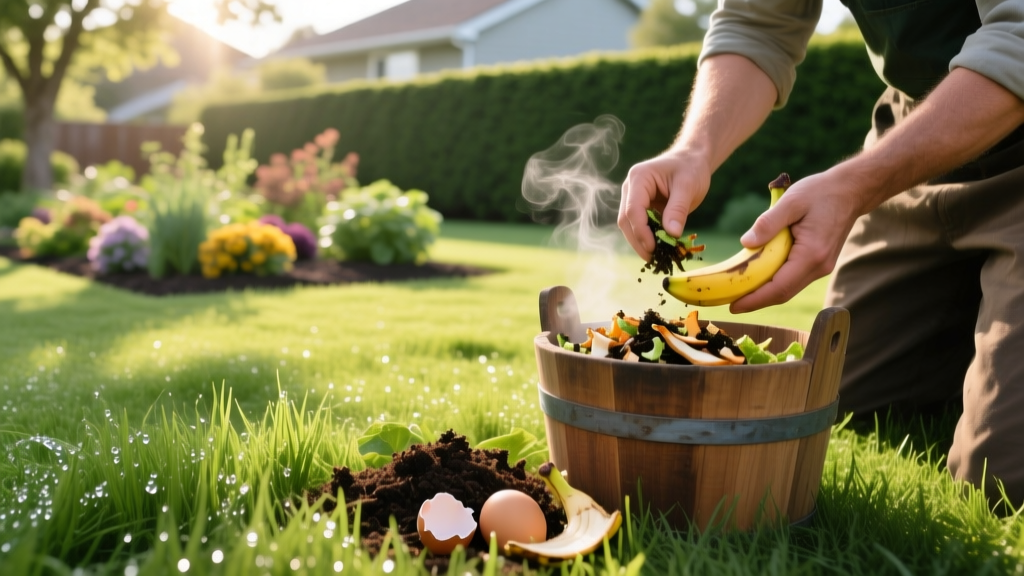
How to Make Homemade Fertilizer for Organic Lawn Care
The Hidden Cost of Synthetic Lawn Fertilizers
Conventional synthetic fertilizers, typically labeled with high NPK ratios like 30-0-4, deliver a rapid flush of water-soluble nitrogen. While this produces a quick green-up, it bypasses the soil food web. Over time, the high salt index of synthetic feeds degrades soil structure, reduces Cation Exchange Capacity (CEC), and contributes to nutrient runoff. According to the U.S. Environmental Protection Agency, excess nitrogen and phosphorus from lawn care are primary drivers of local waterway eutrophication. Transitioning to a homemade fertilizer regimen feeds the soil microbiology, which in turn feeds the turfgrass roots, creating a resilient, drought-tolerant lawn without chemical dependencies.
The Science of Organic Soil Feeding
Homemade fertilizers rely on the mineralization process. Soil microbes break down organic matter, converting complex organic molecules into plant-available inorganic ions (like ammonium and nitrate). This slow-release mechanism ensures a steady nutrient supply and prevents the rapid leaching associated with synthetic urea. Furthermore, organic inputs increase soil humus, which improves water retention by up to 20% in sandy soils and enhances drainage in heavy clays.
Expert Insight: Before applying any homemade fertilizer, test your soil pH. Most turfgrasses thrive between 6.0 and 7.0. If your pH is below 5.5, microbial activity slows drastically, rendering your organic fertilizers ineffective until the pH is corrected with agricultural lime.
4 Proven Homemade Fertilizer Recipes
The following recipes are scaled for a standard 5,000 square foot lawn. Adjust volumes proportionally based on your exact turf area.
1. Aerated Compost Tea (The All-Rounder)
Compost tea inoculates your lawn with beneficial bacteria and fungi while providing a mild, balanced nutrient boost. It is particularly effective for improving soil structure and suppressing fungal pathogens like brown patch.
- Ingredients: 5 gallons of non-chlorinated water (rainwater or dechlorinated tap water), 2 cups of mature, screened compost, 1 tablespoon of unsulfured blackstrap molasses.
- Equipment: 5-gallon bucket, mesh bag (or old pantyhose), aquarium air pump with air stone.
- Preparation: Place compost in the mesh bag and submerge in water. Add molasses (this feeds the microbes). Insert the air stone and aerate continuously for 24 to 36 hours at room temperature (65-75°F). The tea should smell earthy and sweet; if it smells sour or rotten, discard it.
- Application: Apply undiluted using a backpack sprayer or watering can at a rate of 1 gallon per 100 square feet. Apply in the early morning or late evening to prevent UV degradation of the microbes.
2. Epsom Salt & Molasses Greening Boost
Magnesium is the central atom in the chlorophyll molecule. Lawns deficient in magnesium often exhibit interveinal chlorosis (yellowing between leaf veins). This recipe provides a rapid, organic green-up without pushing excessive top growth.
- Ingredients: 1 cup of Epsom salts (magnesium sulfate), 1/2 cup of unsulfured blackstrap molasses, 5 gallons of warm water.
- Preparation: Dissolve the Epsom salts completely in the warm water, then stir in the molasses. The molasses provides trace minerals (iron, calcium) and acts as a natural surfactant to help the solution adhere to grass blades.
- Application: Spray evenly over 5,000 square feet of turf. Water the lawn lightly immediately after application to wash the solution off the blades and into the soil profile.
3. Grass Clipping 'Green' Tea (Nitrogen Fix)
Instead of bagging grass clippings, steep them to extract water-soluble nitrogen and potassium. This is an excellent mid-summer recovery feed after heavy mowing.
- Ingredients: 1/3 bucket of fresh, untreated grass clippings, 5 gallons of water.
- Preparation: Submerge the clippings in water and cover the bucket. Let it steep for 3 to 5 days, stirring daily. The liquid will turn a deep green or brown color.
- Application: Strain the liquid through a fine mesh to prevent clogging your sprayer. Dilute the concentrate at a 1:5 ratio with fresh water. Apply at 1 gallon per 100 square feet.
4. Coffee Ground & Wood Ash Blend (Dry Application)
For a slow-release dry fertilizer that also improves soil aeration, utilize kitchen and fireplace waste. Coffee grounds contain roughly 2% nitrogen, while hardwood ash provides potassium and calcium.
- Ingredients: 10 pounds of used, dried coffee grounds, 2 pounds of sifted hardwood ash.
- Preparation: Ensure coffee grounds are completely dried to prevent mold. Mix thoroughly with the wood ash in a wheelbarrow.
- Application: Broadcast evenly across the lawn using a drop spreader or by hand. Rake lightly to work the mixture into the thatch layer. Note: Wood ash is highly alkaline (pH 9-11). Do not use this blend if your soil pH is already above 7.0.
Ingredient Nutrient Profile Matrix
Understanding the exact nutritional output of your homemade ingredients allows you to tailor your applications to your lawn's specific deficiencies.
| Ingredient | Primary Nutrients | Release Rate | Cost per 1,000 sq ft |
|---|---|---|---|
| Compost Tea | Balanced N-P-K + Microbes | Immediate (Liquid) | $0.50 - $1.00 |
| Epsom Salts | Magnesium, Sulfur | Immediate (Liquid) | $0.25 |
| Grass Clipping Tea | Nitrogen, Potassium | Immediate (Liquid) | $0.00 (Free) |
| Coffee / Ash Blend | Nitrogen, Calcium, Potassium | Slow (3-6 months) | $0.00 (Free) |
Application Timing and Soil Temperature Thresholds
Applying organic fertilizers at the wrong time wastes effort, as soil microbes are dormant in cold temperatures. According to turfgrass research from the University of Minnesota Extension, microbial mineralization peaks when soil temperatures are consistently above 65°F (18°C).
Critical Timing Rule: Do not apply compost teas or liquid organic feeds in early spring when soil temperatures are below 55°F (13°C). The microbes will not process the nutrients, and the molasses can feed opportunistic, cold-weather pathogens like snow mold.
- Spring (Soil Temp 60-65°F): Apply Epsom salt and molasses boost to support early chlorophyll production and root development.
- Early Summer (Soil Temp 70-75°F): Apply aerated compost tea to build soil biology before the stress of peak summer heat.
- Early Fall (Soil Temp 65°F and dropping): Apply the dry coffee ground and wood ash blend. The slow-release nitrogen will be stored in the roots for early spring green-up.
Common DIY Fertilizer Mistakes to Avoid
While homemade fertilizers are generally safer than synthetics, improper preparation can harm your turf.
Mistake 1: Using Uncomposted Kitchen Scraps
Blending raw vegetable scraps or meat and applying them to the lawn is a critical error. Raw organic matter has a high Carbon-to-Nitrogen (C:N) ratio. As soil bacteria break down these raw scraps, they consume available soil nitrogen to fuel the decomposition process, resulting in severe nitrogen immobilization and yellowing grass. Furthermore, raw scraps attract rodents and pests. Always use fully matured, hot-composted materials.
Mistake 2: Over-Applying Wood Ash
Hardwood ash is an excellent source of potassium, but it acts as a fast-acting liming agent. Applying more than 5 pounds per 1,000 square feet in a single season can rapidly spike your soil pH above 7.5. In alkaline conditions, essential micronutrients like iron, manganese, and zinc become chemically locked in the soil, leading to severe iron chlorosis (bright yellow grass with green veins). Always test soil pH before applying ash.
Mistake 3: Ignoring Dechlorination
Tap water contains chlorine or chloramine, which are designed to kill bacteria. If you mix compost tea with straight tap water, you will kill the beneficial microbes you are trying to cultivate. Always let tap water sit uncovered in the sun for 24 hours to allow chlorine to off-gas, or use a water filter designed to remove municipal chemicals before brewing organic teas.

