
Lawn Care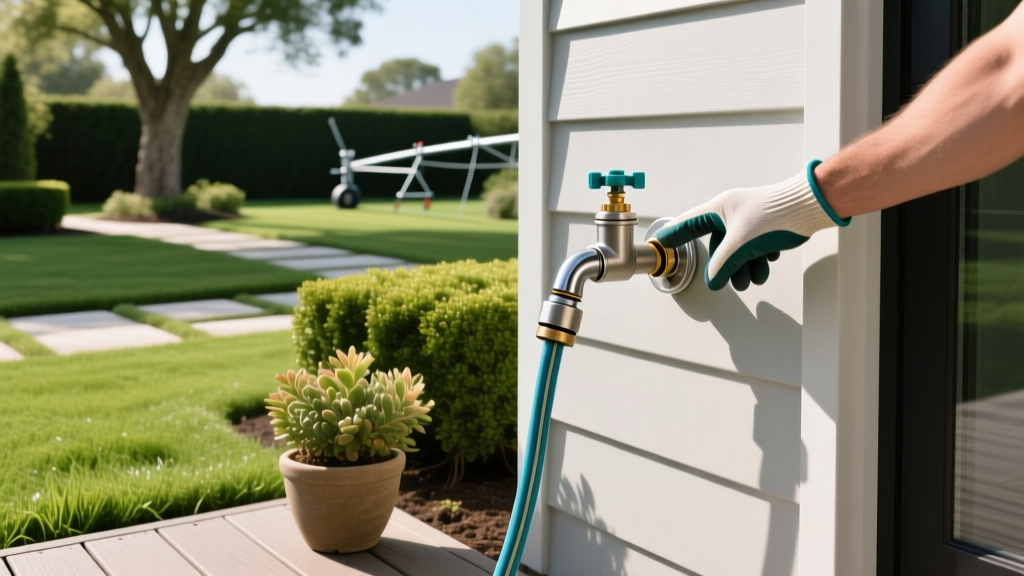
Hose Bib With Backflow Preventer: Liquid Weed & Pest Safety Guide
Liquid herbicides and pesticides are cornerstones of any effective lawn care playbook. Whether you are spot-treating broadleaf weeds with 2,4-D Amine, applying Mesotrione for pre-emergent crabgrass control, or drenching your soil with Imidacloprid for grub prevention, hose-end sprayers offer unmatched convenience. However, this convenience masks a severe, often overlooked hazard: back-siphonage. If your exterior faucet lacks a proper hose bib with backflow preventer, a sudden drop in municipal water pressure can siphon toxic chemical mixtures directly into your home's potable water supply.
As DIY lawn care enthusiasts take on more advanced pest and weed removal strategies in 2026, understanding cross-connection safety is no longer optional—it is a critical component of responsible chemical application. This guide details the mechanics of backflow, the specific hardware required to prevent it, and the exact installation protocols to keep your household safe while maintaining a pristine lawn.
The Siphoning Hazard in DIY Pest and Weed Control
Back-siphonage occurs when the pressure in your municipal water supply drops below the pressure inside your garden hose. This negative pressure creates a vacuum effect. According to the Environmental Protection Agency (EPA), common triggers for pressure drops include nearby water main breaks, fire hydrant flushing, or peak-usage demand in your neighborhood.
If your garden hose is attached to a hose-end sprayer filled with a concentrated weed killer, or if the nozzle is submerged in a bucket of mixed pesticide, that vacuum will pull the chemical solution backward through the hose, through the exterior faucet, and into your home's interior plumbing. You could unknowingly drink, cook with, or bathe in water contaminated with concentrated lawn chemicals.
WARNING: The Cross-Contamination Risk
The EPA's pesticide safety guidelines explicitly warn against allowing pesticides to enter water sources. Siphoning not only poses acute health risks to your family and pets but can also result in severe municipal fines if your cross-connection contaminates the broader neighborhood water grid. Always use an approved backflow prevention device when handling liquid lawn treatments.
The EPA's pesticide safety guidelines explicitly warn against allowing pesticides to enter water sources. Siphoning not only poses acute health risks to your family and pets but can also result in severe municipal fines if your cross-connection contaminates the broader neighborhood water grid. Always use an approved backflow prevention device when handling liquid lawn treatments.
Vacuum Breakers vs. True Backflow Preventers: What to Buy
Not all backflow devices are created equal. Hardware stores often sell cheap plastic attachments that provide minimal protection. For liquid pest and weed removal playbooks, you need hardware rated for chemical cross-connections. Below is a comparison matrix of the most common devices used in residential lawn care.
| Device Type | Max Pressure | Continuous Pressure Safe? | Best Lawn Care Use Case | Approx. Cost (2026) |
|---|---|---|---|---|
| Atmospheric Vacuum Breaker (AVB) | 125 PSI | No (Fails if under pressure >12 hrs) | Manual hose-end sprayers for liquid herbicides | $15 - $30 |
| Hose Connection Dual-Check Valve | 125 PSI | Yes | Leaving soaker hoses or timers attached to the bib | $25 - $45 |
| Pressure Vacuum Breaker (PVB) | 150 PSI | Yes | Automated fertigation and pestigation drip systems | $85 - $160 |
Expert Recommendation: For standard DIY weed and pest control using manual hose-end sprayers (like the Ortho Dial N Spray or Chapin hose-end models), a brass Atmospheric Vacuum Breaker (AVB) or a Dual-Check Valve threaded directly onto the hose bib is the most practical choice. Brands like Woodford (Model 530) or Zurn Wilkins offer heavy-duty brass models that resist UV degradation and freezing cracks far better than plastic alternatives.
Step-by-Step: Installing Your Hose Bib Backflow Preventer
Proper installation ensures the device functions under high municipal pressure (typically 60-80 PSI) without leaking or blowing off the threads. Follow these exact steps for a secure fit on a standard 3/4-inch Garden Hose Thread (GHT).
- Prep the Threads: Clean the existing hose bib threads with a wire brush to remove calcium buildup or old tape. Ensure the bib is fully shut off.
- Apply PTFE Tape: Wrap the male threads of the backflow preventer with 5 to 6 layers of high-density PTFE (Teflon) tape. Always wrap clockwise so the tape doesn't unravel when you thread the device on.
- Hand Thread: Screw the backflow preventer onto the hose bib by hand until it is snug. Do not cross-thread; if it resists, back it off and start again.
- Torque with Pliers: Use channel-lock pliers or a pipe wrench to give the fitting exactly one-quarter (1/4) to one-half (1/2) turn past hand-tight. Do not overtighten, as this can crack the internal rubber check valves or strip the brass threads.
- Pressure Test: Turn on the water supply slowly. Leave the hose-end sprayer closed to build maximum static pressure in the line. Check the connection for weeping. A few drops from the AVB's weep hole when the water is first turned on is normal as the internal poppet seats itself.
Best Practices for Mixing and Applying Liquid Treatments Safely
Having a hose bib with backflow preventer is your primary defense, but safe chemical handling requires a layered approach. Integrate these protocols into your weed and pest removal playbook:
- Never Leave Sprayers Pressurized: After applying your liquid herbicide or pesticide, immediately turn off the water at the bib, squeeze the hose-end sprayer trigger to relieve trapped pressure, and detach the sprayer. Leaving an AVB under continuous pressure for more than 12 hours can cause the internal poppet to deform, rendering the backflow protection useless.
- Use Anti-Siphon Sprayer Nozzles: Invest in hose-end sprayers that feature built-in anti-siphon check valves. This provides a secondary physical barrier between the chemical reservoir and the garden hose.
- Maintain the Air Gap: If you are mixing bulk liquid treatments in a 5-gallon bucket and using a siphon-mix sprayer, never let the spray tube rest at the bottom of the bucket where sediment can clog it. More importantly, never leave the tube submerged if you walk away from the hose.
- Winterize the Device: In late autumn, after your final pre-winter weed treatment, unscrew the backflow preventer, drain all residual water, and store it indoors. Even 'frost-proof' hose bibs can trap water in the attached backflow device, leading to cracked brass housings when temperatures drop below freezing.
Troubleshooting Common Backflow Preventer Failures
If your backflow preventer begins leaking continuously from the top weep hole or air-inlet vent, the internal rubber poppet is likely fouled. Municipal water lines often carry microscopic grit, sand, or calcium scale. When this debris gets trapped between the rubber seal and the brass seat, the valve cannot close completely.
The Fix: Turn off the water, unscrew the top cap of the AVB (usually requires a flathead screwdriver or a specialized spanner wrench), remove the rubber poppet assembly, and rinse it under clean water. Inspect the rubber for deep grooves or tears. If the rubber is compromised, replace the internal repair kit (typically $4-$8) rather than replacing the entire brass body.
Frequently Asked Questions
Can I use a hose splitter with a backflow preventer?
Yes, but the order of operations matters. The backflow preventer must be threaded directly onto the hose bib first. The hose splitter (Y-connector) must be attached downstream of the backflow preventer. If you place the splitter before the preventer, the unprotected side of the splitter remains vulnerable to siphoning.
Do I need a backflow preventer if I only use granular pesticides?
If you strictly apply granular products (like Scotts Turf Builder with Halts) using a broadcast spreader and never attach a hose to your exterior bib, you are not at risk for liquid back-siphonage. However, municipal codes in many regions still mandate backflow preventers on all exterior hose bibs regardless of usage, to prevent accidental contamination from future owners or neighbors borrowing a hose.
Will a backflow preventer reduce my water pressure for sprinkler use?
A high-quality brass dual-check valve or AVB will introduce a negligible pressure drop of 1 to 3 PSI. This will not noticeably impact the performance of your impact sprinklers or soaker hoses. However, cheap, restrictive plastic models with narrow internal baffles can reduce flow rates by up to 20%, leading to uneven coverage during pest control applications.

