
Lawn Care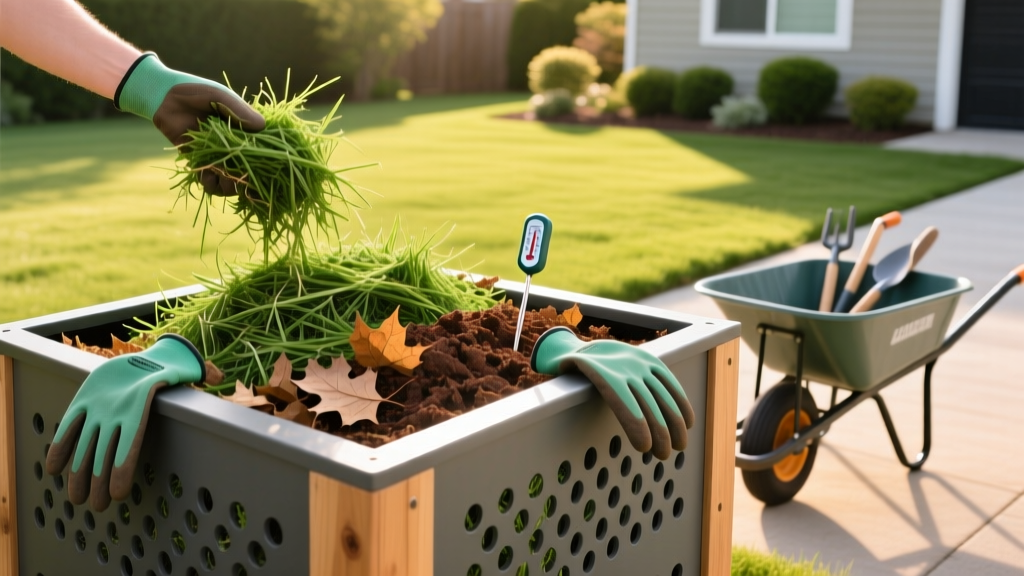
How to Make Compost from Grass Clippings Without the Smell
Bagging lawn waste sends millions of tons of nitrogen-rich organic matter to landfills annually, where it decomposes anaerobically and generates methane. When homeowners attempt to compost this material at home, they frequently encounter a slimy, foul-smelling mess. The secret to producing high-quality, odor-free compost from grass clippings lies in managing moisture, oxygen, and the carbon-to-nitrogen (C:N) ratio. Grass clippings are roughly 80% water and contain up to 4% nitrogen by dry weight. Without structural amendments, they mat together, exclude oxygen, and trigger anaerobic bacteria that produce hydrogen sulfide and ammonia gases.
The Carbon-to-Nitrogen Matrix for Grass Clippings
Microbes require an ideal C:N ratio of 25:1 to 30:1 to efficiently break down organic matter. Fresh grass clippings have a C:N ratio of roughly 15:1 to 20:1, meaning they are heavily skewed toward nitrogen. To prevent ammonia off-gassing (the "rotten egg" smell), you must dilute the nitrogen with high-carbon "brown" materials. According to the U.S. Environmental Protection Agency, balancing these inputs is the single most critical factor in hot composting.
| Material Type | C:N Ratio | Volume Ratio (Browns : Grass) | Primary Function |
|---|---|---|---|
| Dry Autumn Leaves | 50:1 | 2:1 | Carbon source, bulk structure |
| Wheat or Oat Straw | 80:1 | 2.5:1 | Aeration, moisture wicking |
| Shredded Corrugated Cardboard | 350:1 | 1:1 | Carbon load, fungal food |
| Pine Needles (Dried) | 80:1 | 2:1 | Acidic carbon, slow breakdown |
| Wood Chips / Sawdust | 300:1 to 500:1 | 0.5:1 | Long-term structure (use sparingly) |
Pro Tip for Volume Measurements: Do not measure by weight. Grass clippings are dense and heavy when wet. Always measure your inputs by volume (e.g., using a standard 5-gallon bucket). For every one bucket of fresh grass clippings, add two to three buckets of loosely packed dry leaves or straw.
Step-by-Step Hot Composting Protocol
Hot composting accelerates the breakdown process and generates temperatures high enough (130°F–160°F) to kill most weed seeds and turf pathogens. Follow this exact sequence to build a 3x3x3 foot hot pile.
- Wilt the Clippings: Never add fresh, wet clippings directly to the pile. Spread them on a tarp or driveway for 24 to 48 hours. This drops the moisture content from 80% down to the ideal 50-60% range and prevents immediate matting.
- Build the Base Layer: Start with a 6-inch layer of coarse woody material (twiggy brush or thick straw) at the bottom of your bin to ensure passive air intake from below.
- Layer the Inputs: Alternate 3-inch layers of wilted grass clippings with 6-inch layers of your chosen brown material. Water each brown layer lightly with a hose as you build.
- Monitor Core Temperature: Insert a 20-inch dial compost thermometer (such as the REOTEMP Backyard Compost Thermometer, typically priced between $25 and $35) into the center of the pile. Within 48 hours, the core should reach 130°F.
- Turn on the Temperature Drop: Do not turn the pile on a fixed schedule. Turn it only when the core temperature drops below 110°F. This introduces fresh oxygen and moves cooler outer materials into the hot center. Expect to turn the pile every 3 to 5 days during the active phase.
Troubleshooting Common Clipping Compost Failures
Even with precise ratios, environmental variables can disrupt the decomposition process. Use this diagnostic framework to correct issues in real-time.
- Symptom: Pile smells like ammonia or sulfur.
Cause: Excess nitrogen and anaerobic conditions.
Fix: Immediately turn the pile and mix in two additional volumes of dry, shredded cardboard or straw to absorb moisture and restore the C:N balance. - Symptom: Pile is cold and decomposition has stalled.
Cause: Moisture levels are below 40%, or the pile lacks sufficient nitrogen to feed the bacteria.
Fix: Perform the "squeeze test." Grab a handful of compost (wearing gloves) and squeeze. If you cannot wring out a drop or two of water, the pile is too dry. Add water while turning, or mix in a nitrogen booster like alfalfa meal or fresh coffee grounds. - Symptom: Pile is hot but shrinking rapidly and turning to ash.
Cause: Excessive aeration or drying out from high heat.
Fix: Compress the pile slightly and add moisture. Ensure the outer layer is capped with a 2-inch layer of finished compost or soil to insulate and retain humidity.
The Hidden Danger: Persistent Herbicide Carryover
The most severe risk when composting lawn waste is the presence of pyridine carboxylic acid herbicides. Active ingredients like clopyralid, aminopyralid, and fluroxypyr are widely used in commercial turf and residential broadleaf weed killers (often found in "Weed and Feed" products). These chemicals are specifically designed to resist microbial breakdown and can survive the hot composting process, remaining active in your soil for up to three years. Applying contaminated compost to garden beds will cause severe stunting, leaf curling, and death in sensitive broadleaf crops like tomatoes, peppers, and legumes.
WARNING: Never compost grass clippings from lawns treated with broadleaf herbicides within the last 12 months. If you source clippings from neighbors or municipal lawn waste, you must verify their chemical history. The University of Minnesota Extension strongly recommends testing unknown compost sources before broad application.
How to Perform a Compost Bioassay Test
Before applying your finished compost to sensitive plants, conduct a simple bioassay to check for herbicide residue:
- Mix one part of your finished grass clipping compost with one part standard, sterile potting soil.
- Plant 3 to 4 sensitive seeds (such as peas, beans, or tomatoes) in the mixture, and plant a control group in pure potting soil.
- Grow the seedlings for 14 to 21 days under normal light and water conditions.
- Diagnosis: If the test plants exhibit twisted stems, cupped leaves, or stunted growth compared to the control group, your compost is contaminated with persistent herbicides. Do not use it on garden beds; it can only be safely reapplied to your turfgrass lawn, which is immune to these specific chemicals.
Harvesting and Applying Your Finished Amendment
Grass clipping compost typically finishes in 60 to 90 days using the hot method. Finished compost will be dark brown, crumbly, and smell like rich forest soil. The original grass and leaves should be entirely unrecognizable.
Lawn Top-Dressing Application
Returning nutrients to your turf is the most efficient use of grass-derived compost. Apply a 1/4-inch layer of screened compost across your lawn immediately after core aeration in the fall (for cool-season grasses) or early summer (for warm-season grasses). This requires approximately 1 cubic yard of compost per 1,000 square feet of turf. The aeration holes will pull the compost directly into the root zone, improving soil structure and water retention.
Garden Bed Incorporation
For vegetable gardens and flower beds, incorporate 1 to 2 inches of compost into the top 6 inches of native soil using a broadfork or tiller prior to spring planting. This provides a slow-release nitrogen source that feeds heavy-feeding crops throughout the growing season without the salt burn associated with synthetic fertilizers.

