
Lawn Care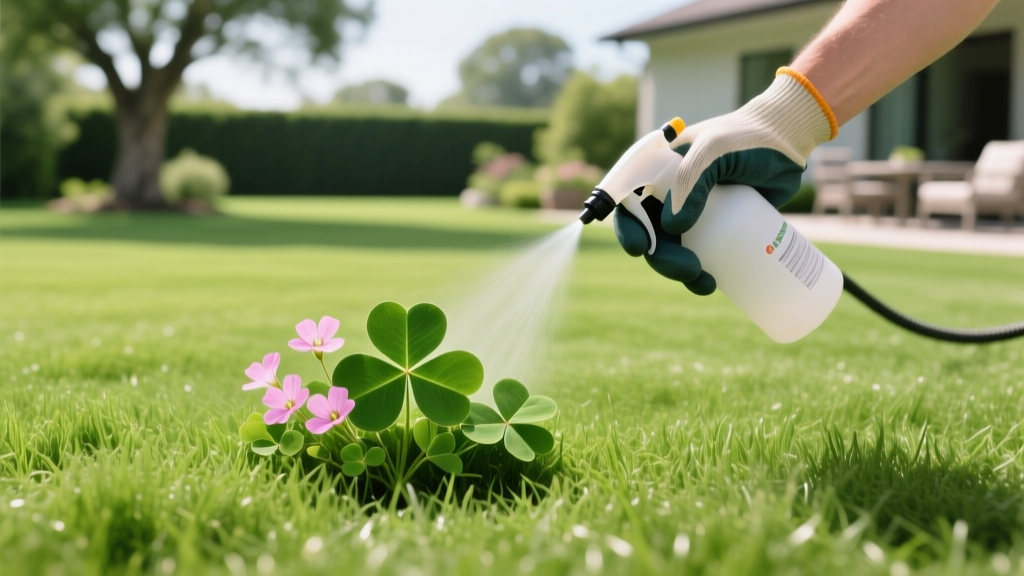
How to Eliminate Clover: Spot-Treatment & Herbicide Guide
The Soil Science Behind Clover Infestations
Before reaching for a sprayer, it is critical to understand why clover is thriving in your turf. Clover (Trifolium species) is a legume, meaning it possesses a symbiotic relationship with Rhizobium bacteria in its root nodules. This allows the plant to fix atmospheric nitrogen into a usable form. Consequently, clover aggressively colonizes lawns that are nitrogen-deficient. If your soil test reveals nitrogen levels below 2.5 lbs per 1,000 square feet annually, your grass is starving while the clover feeds itself. According to Penn State Extension, simply applying herbicides without correcting the underlying nitrogen deficit will result in a 100% recurrence rate within one growing season.
Identifying Your Clover Species
Not all clovers respond identically to herbicides. Correct identification dictates your chemical selection and application timing. The table below breaks down the three most common lawn-invading species in North America.
| Species | Leaf Structure | Growth Habit | Herbicide Susceptibility |
|---|---|---|---|
| White Clover (Trifolium repens) | Three oval leaflets, often with a white 'V' chevron | Creeping stolons, roots at nodes | Moderate; requires systemic translocated herbicides |
| Red Clover (Trifolium pratense) | Larger, hairy leaflets with prominent chevron | Upright, short-lived perennial | High; susceptible to standard broadleaf killers |
| Hop Clover (Trifolium campestre) | Small, teardrop-shaped leaflets, no chevron | Low creeping, small yellow flowers | High; easily controlled with 2,4-D mixtures |
Chemical Spot-Treatment: Selective Herbicides
To eliminate clover without harming your surrounding turfgrass, you must use selective post-emergent herbicides. The most effective formulations utilize a 'three-way' active ingredient profile. This combination attacks the weed through multiple modes of action, preventing chemical resistance.
The 'Three-Way' Active Ingredients
- 2,4-D (2,4-Dichlorophenoxyacetic acid): A synthetic auxin that causes uncontrolled, unsustainable growth in broadleaf weeds, ultimately leading to vascular tissue collapse.
- Dicamba: Works similarly to 2,4-D but is absorbed through both foliage and roots, providing excellent control of established white clover stolons.
- MCPP (Mecoprop-p): Enhances the overall speed of necrosis and improves efficacy on mature, woody clover stems.
Pro Tip: The Quinclorac Factor
If you are dealing with a highly resistant patch of white clover, look for a product that includes Quinclorac as a fourth active ingredient. Quinclorac is exceptionally aggressive on tough broadleaves and grassy weeds. However, do not use Quinclorac on St. Augustine or Bahiagrass, as it will cause severe phytotoxicity and yellowing.
If you are dealing with a highly resistant patch of white clover, look for a product that includes Quinclorac as a fourth active ingredient. Quinclorac is exceptionally aggressive on tough broadleaves and grassy weeds. However, do not use Quinclorac on St. Augustine or Bahiagrass, as it will cause severe phytotoxicity and yellowing.
Recommended Products and Pricing (2026 Market)
For residential spot-treatments, concentrate formulas offer the best cost-per-application ratio. SpeedZone Lawn Weed Killer Concentrate (approx. $28 for a 20 oz bottle) is a professional-grade four-way herbicide that includes Carfentrazone-ethyl for rapid 'burn-down' visible within 24 hours. For a more budget-friendly, ready-to-spray option, Ortho WeedClear Lawn Weed Killer (approx. $16 for a 32 oz hose-end bottle) provides reliable three-way control for smaller yards.
The Surfactant Secret: Breaking the Cuticle
Clover leaves are coated in a thick, waxy cuticle that repels water-based herbicides. If you spray a three-way herbicide without a surfactant, up to 40% of the chemical will bead up and roll off onto the soil, wasting the product and increasing environmental runoff. The Environmental Protection Agency (EPA) strongly advises following label instructions regarding adjuvants to minimize off-target soil contamination.
Always add a Non-Ionic Surfactant (NIS) to your tank mix. Products like Hi-Yield Spreader Sticker (approx. $8 for 16 oz) cost pennies per application. Mix at a rate of 0.25% v/v, which equates to roughly 1 teaspoon of surfactant per gallon of water. This reduces the surface tension of the spray droplets, allowing the herbicide to flatten and penetrate the clover's waxy epidermis.
Organic and Cultural Elimination Methods
For homeowners managing organic lawns or those with pets that frequently graze on the turf, synthetic auxins may not be desirable. Here are the most effective non-synthetic alternatives:
Iron HEDTA (FeHEDTA)
Chelated iron products, such as Fiesta Turf Weeder (approx. $45 per gallon), exploit the fact that broadleaf weeds absorb iron much more rapidly than grasses. The excess iron causes oxidative stress and rapid tissue desiccation in the clover. Application note: Iron HEDTA requires multiple applications spaced 14 days apart, as it only burns off the top growth initially. It will temporarily stain your concrete driveway black, so rinse hardscapes immediately after spraying.
Manual Extraction
For isolated patches under 5 square feet, manual removal is viable. Use a dandelion weeder with a V-notch tip to pry up the stolon network. You must extract the nodes where the stolons touch the soil, as these nodes contain adventitious roots that will regenerate the plant if left behind. The Royal Horticultural Society (RHS) notes that hand-weeding is most effective in early spring before the plant establishes deep taproots for summer drought survival.
Step-by-Step Spot-Treatment Protocol
Follow this exact sequence to maximize herbicide translocation and ensure complete root kill.
- Prep the Turf (Day -2): Do not mow for 48 hours before application. Allowing the clover leaves to grow slightly larger increases the surface area for chemical absorption.
- Check the Forecast: Ensure temperatures will remain between 60°F and 85°F for the next 48 hours. Avoid application if rain is expected within 24 hours.
- Mix the Solution: In a 1-gallon pump sprayer, add 2 to 4 tablespoons of your chosen concentrate, 1 teaspoon of NIS surfactant, and fill with water. Agitate gently.
- Apply to Wetness: Spray the clover patch until the leaves are uniformly coated and glistening, but not dripping. Dripping indicates runoff, which wastes chemical and harms soil biology.
- The Waiting Period (Day +1 to +2): Do not water the lawn. Do not mow. Allow the herbicide 48 hours to translocate from the foliage down into the stolon network and root system.
- Resume Maintenance (Day +3): Mow the lawn and resume your normal irrigation schedule.
Warning: Dicamba Volatilization
Never apply Dicamba-based herbicides when ambient temperatures exceed 85°F. At high temperatures, Dicamba vaporizes (volatilizes) and drifts through the air, severely damaging or killing nearby broadleaf ornamentals, shrubs, and garden vegetables.
Never apply Dicamba-based herbicides when ambient temperatures exceed 85°F. At high temperatures, Dicamba vaporizes (volatilizes) and drifts through the air, severely damaging or killing nearby broadleaf ornamentals, shrubs, and garden vegetables.
Post-Elimination Lawn Recovery
Once the clover is dead, it will leave bare patches in your turf. If left unaddressed, these bare spots will quickly be colonized by crabgrass or spurge. To prevent this, you must aggressively re-establish your desired turf.
Rake out the dead clover thatch to expose the soil. Overseed the bare patches with a high-quality, disease-resistant grass seed blend suited to your climate (e.g., Tall Fescue for cool-season zones, Bermudagrass for warm-season zones). Top-dress the seed with a 1/4-inch layer of compost and apply a starter fertilizer high in phosphorus (e.g., a 10-18-10 NPK ratio) to accelerate root development. Finally, commit to a routine nitrogen fertilization schedule—applying 0.5 to 1 lb of nitrogen per 1,000 sq ft during the active growing season—to keep the turf canopy thick enough to naturally shade out any future clover seedlings.

