
Lawn Care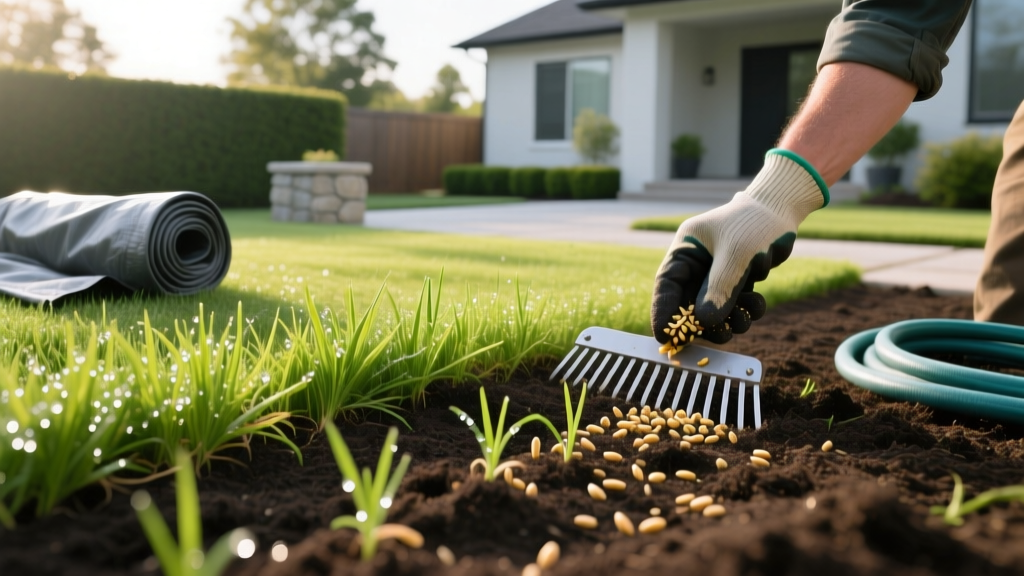
How to Grow Lawn Grass From Seed: The Complete Establishment Guide
Establishing a new lawn from seed is a high-reward project that requires precise timing, specific soil conditions, and strict moisture management. While laying sod offers instant gratification, seeding a 5,000-square-foot yard typically costs between $300 and $500 for premium seed, starter fertilizer, and soil amendments—roughly 70% less than sod installation. To achieve a dense, drought-tolerant turf, you must move beyond generic advice and execute a targeted soil-to-seed protocol.
Establishment Baseline: Expect to invest 10-14 hours of active labor over a weekend for a 5,000 sq ft area, followed by 30 days of daily micro-watering. The ideal soil temperature for cool-season grass germination is 50°F to 65°F, while warm-season grasses require 65°F to 75°F.
The Soil Foundation: Testing and Amendment
Grass seed will fail to establish in compacted, highly acidic, or nutrient-deficient soil. Before purchasing seed, order a professional laboratory soil test. Consumer-grade digital pH meters are notoriously inaccurate. Instead, use a mail-in lab service like the MySoil Professional Soil Test Kit (approximately $30), which provides exact macronutrient levels and precise amendment recommendations.
Your target pH for almost all turfgrasses is between 6.0 and 7.0. If your soil test reveals a pH below 6.0, apply pelletized lime at a rate of 50 lbs per 1,000 sq ft to raise the pH. If the pH is above 7.5, apply elemental sulfur at 10 lbs per 1,000 sq ft. These amendments take 3 to 6 months to fully react in the soil, so apply them during the season prior to your planned seeding if possible.
For physical soil preparation, rent a core aerator or a walk-behind slit-seeder from a local equipment rental center (typically $60-$80 for a half-day). Core aeration pulls 2-to-3-inch soil plugs, alleviating compaction and creating micro-depressions for seed to settle into. If you are working with bare dirt, till the top 4 inches of soil and rake it completely level, removing all rocks and debris larger than a golf ball.
Choosing the Right Seed for Your Hardiness Zone
Selecting the correct turfgrass species is the most critical decision in the establishment process. Planting a cool-season grass in a deep-south climate will result in summer die-off, while warm-season grasses will go dormant and brown in northern winters. According to the NC State University TurfFiles database, matching your seed to your transitional or regional zone is non-negotiable for long-term survival.
| Grass Type | Climate Zone | Seeding Rate (per 1,000 sq ft) | Germination Window | Avg. Seed Cost (50 lb bag) |
|---|---|---|---|---|
| Tall Fescue | Cool / Transitional | 8 - 10 lbs | 7 - 12 days | $70 - $90 |
| Kentucky Bluegrass | Cool | 2 - 3 lbs | 14 - 30 days | $120 - $160 |
| Bermudagrass | Warm | 1 - 2 lbs (hulled) | 10 - 21 days | $150 - $200 |
| Zoysia | Warm / Transitional | 2 - 3 lbs | 14 - 21 days | $180 - $250 |
Always purchase seed with a germination rate of 90% or higher and a weed seed content of 0.1% or less, as printed on the state-certified seed tag. Avoid "contractor mix" bags from big-box stores, which often contain cheap annual ryegrass fillers that will die off after one season.
Step-by-Step Seeding and Soil Contact Protocol
Seed-to-soil contact is the primary driver of germination success. Seed left sitting on top of dry thatch or bare, crusted soil will desiccate and die. Follow this exact application sequence:
- Apply Starter Fertilizer: Use a high-phosphorus starter fertilizer (e.g., Scotts Turf Builder Starter Food for New Grass, 24-25-4) to promote rapid root development. Apply at the rate specified on the bag, typically 3.5 lbs per 1,000 sq ft.
- Broadcast the Seed: Use a rotary broadcast spreader with an edge guard. Divide your total seed volume in half. Apply the first half walking in horizontal passes, and the second half walking in vertical passes to ensure an even, grid-like distribution without striping.
- Rake for Contact: Use a flexible leaf rake turned upside down (tines facing up) to gently drag across the soil. This covers the seed with exactly 1/8 to 1/4 inch of soil. Never bury grass seed deeper than 1/4 inch, or the shoot will exhaust its energy reserves before reaching the surface.
- Apply a Seed Cover: Spread a thin layer (1/4 inch) of weed-free straw, peat moss, or a specialized mulch product like Penn Mulch. This retains moisture and protects the seed from being washed away by heavy rain or eaten by birds.
The Critical First 30 Days: Watering Timelines
According to Penn State Extension, inconsistent moisture during the first three weeks is the leading cause of seeding failure. The goal is to keep the top 1 inch of soil constantly moist, but never soggy or waterlogged.
Warning: Do not rely on in-ground irrigation systems during the germination phase. Standard rotor heads deliver water too heavily and will wash away seed and mulch. Use oscillating or impact sprinklers connected to a garden hose for gentle, even coverage.
- Days 1 to 10 (Pre-Germination): Water 2 to 3 times per day for 5 to 10 minutes per zone. The soil surface should look dark and damp, but there should be no standing puddles.
- Days 11 to 20 (Early Sprout): As seeds germinate and roots anchor, reduce frequency to once per day, but increase the duration to 15 to 20 minutes. This encourages roots to grow deeper into the soil profile.
- Days 21 to 30 (Establishment): Transition to a standard deep-watering schedule. Water every other day for 30 minutes, delivering roughly 1 inch of water per week including rainfall.
First Mow and Post-Emergent Weed Strategies
Patience is required before the first mow. Do not mow the new lawn until the grass blades reach at least 3.5 inches in height. When you do mow, adhere strictly to the one-third rule: never remove more than one-third of the blade length in a single pass. Set your mower deck to 2.5 inches. Ensure your mower blade is freshly sharpened; a dull blade will tear tender new grass shoots, leaving ragged edges that invite fungal diseases like brown patch.
Newly seeded lawns are highly susceptible to weed invasion, but you cannot use standard pre-emergent herbicides (like Prodiamine) before or immediately after seeding, as they will inhibit grass seed germination. Wait until you have mowed the new lawn at least three times before applying a selective post-emergent broadleaf herbicide containing 2,4-D or Quinclorac to target dandelions and crabgrass without harming the established turf.

