
Lawn Care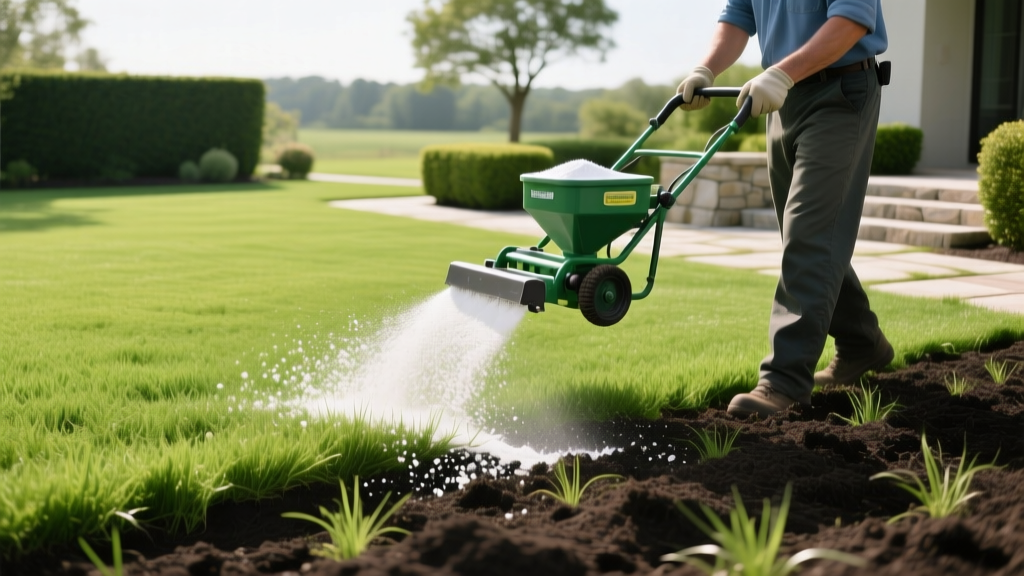
How to Increase Soil pH in Acidic Lawns: Lime and Application Rates
The Hidden Cost of Acidic Turf: Why pH Dictates Fertilizer Efficiency
When turfgrass struggles to absorb nitrogen, phosphorus, and potassium despite regular fertilization, the culprit is rarely the fertilizer itself. In acidic soils (pH below 6.0), hydrogen and aluminum ions saturate the soil's cation exchange sites, effectively locking out essential macronutrients. For cool-season grasses like Kentucky Bluegrass and Tall Fescue, the optimal pH range is 6.2 to 6.8. Warm-season grasses like Bermuda and Zoysia tolerate slightly lower levels, thriving between 5.8 and 6.5. Learning how to increase soil pH is not just about adding calcium; it is about restoring the chemical balance required for root expansion and microbial activity.
Expert Insight: Applying a standard 46-0-0 urea fertilizer to a lawn with a pH of 5.0 results in up to 50% nitrogen loss through volatilization and poor root uptake. Correcting the pH yields a higher ROI than simply buying premium fertilizer.
Accurate Diagnostics: Moving Beyond Basic pH to Buffer Index
A common failure mode among homeowners is applying a generic 'one bag per 5,000 square feet' lime rate based solely on a basic water-pH test. According to the UMass Amherst Turf Program, a basic pH test only measures active acidity (the hydrogen ions currently in the soil solution). It completely ignores reserve acidity—the hydrogen and aluminum ions bound to clay particles and organic matter.
To calculate exact lime requirements, your soil lab must perform a Buffer pH test (commonly the SMP or Mehlich buffer test). A sandy soil and a heavy clay soil might both show an active pH of 5.0, but the clay soil possesses a vastly higher Cation Exchange Capacity (CEC). The clay soil will require three to four times more lime to neutralize its reserve acidity and achieve the same pH shift as the sandy soil.
Amendment Matrix: Calcitic vs. Dolomitic Lime and Alternatives
Selecting the wrong amendment can lead to nutrient imbalances. Below is a comparison of the most effective materials for raising soil pH in residential lawns as of 2026.
| Amendment | Composition & CCE | Cost (Approx. per 1,000 sq ft) | Best Use Case |
|---|---|---|---|
| Calcitic Lime (Pelletized) | Calcium Carbonate (CCE: 90-100%) | $4.00 - $6.00 | Standard acidic lawns with adequate magnesium levels. |
| Dolomitic Lime | Calcium-Magnesium Carbonate (CCE: 95%) | $5.50 - $8.00 | Acidic soils where lab tests specifically indicate a magnesium deficiency. |
| Hardwood Wood Ash | Calcium Carbonate + Potash (CCE: 25-30%) | $0.00 (if sourced locally) | Minor pH adjustments (less than 0.3 points) and winter potassium boosts. |
| Hydrated Lime | Calcium Hydroxide (CCE: 120-135%) | $7.00 - $9.00 | Avoid on established lawns. High burn risk; reacts too rapidly for turf safety. |
Calculating Exact Application Rates Based on Soil Texture
Once you have your Buffer pH (SMP) reading from a university or commercial lab, use the following framework to determine your application rate. The University of Minnesota Extension recommends never applying more than 50 lbs of limestone per 1,000 square feet in a single application to prevent surface crusting and nutrient tie-up.
- Sandy Loam (Low CEC): To raise pH from 5.5 to 6.5, apply approximately 25-35 lbs of pelletized lime per 1,000 sq ft.
- Silt Loam (Medium CEC): To raise pH from 5.5 to 6.5, apply approximately 45-55 lbs per 1,000 sq ft.
- Heavy Clay (High CEC): To raise pH from 5.5 to 6.5, apply 50 lbs per 1,000 sq ft in the fall, and a second 50 lbs application the following spring.
Warning: If your soil test recommends 100 lbs of lime per 1,000 sq ft, you must split this into two separate applications spaced 4 to 6 months apart. Over-liming causes iron chlorosis, turning your grass pale yellow as the high pH locks out micronutrients.
Step-by-Step Calibration and Application Protocol
Pelletized lime (such as Espoma Organic Garden Lime or Jonathan Green Mag-I-Cal) is engineered for rotary spreaders, reducing the dust and wind-drift associated with powdered agricultural lime.
- Timing: Apply in early fall or late spring. Fall is optimal because freeze-thaw cycles and winter precipitation help incorporate the calcium into the soil profile before the peak growing season.
- Aeration: Core aerate the lawn immediately before liming. The aeration holes provide a direct conduit for the lime to reach the root zone, bypassing the thatch layer.
- Spreader Calibration: For a standard Scotts EdgeGuard Mini rotary spreader using typical 5mm pelletized lime, set the dial to 5. Walk at a steady pace of 3 feet per second.
- Watering: Apply 0.25 to 0.5 inches of irrigation immediately after broadcasting. This washes the pellets off the grass blades (preventing foliar burn) and initiates the dissolution process in the soil.
Troubleshooting: Why Your Soil pH Is Not Changing
If you retest your soil 12 months after application and the pH remains stubbornly low, evaluate these common failure modes:
1. Insufficient Particle Size (Mesh Count)
Lime reactivity is dictated by surface area. Agricultural lime is graded by mesh size. If you purchased cheap, unbranded bulk lime from a local quarry, it may contain a high percentage of coarse particles (passing a 20-mesh sieve but failing a 100-mesh sieve). These coarse particles can take 3 to 5 years to break down. Always verify that bagged lawn lime specifies a minimum of 90% passing a 100-mesh sieve for rapid reactivity.
2. Thatch Accumulation
A thatch layer thicker than 0.5 inches acts as a physical sponge, trapping lime particles and preventing them from contacting the soil. If your lawn has severe thatch, perform a dethatching or aggressive core aeration prior to liming.
3. Continuous Acidifying Inputs
Certain lawn care practices actively lower soil pH. Ammonium-based synthetic fertilizers (like ammonium sulfate) release hydrogen ions as they nitrify in the soil. If you are applying heavy doses of ammonium sulfate to combat dollar spot or feed bermudagrass, you are simultaneously acidifying the soil, effectively canceling out your lime applications. Switch to methylene urea or organic nitrogen sources to stabilize the pH trajectory.
'Soil pH management is a marathon, not a sprint. Because limestone is relatively insoluble, it moves downward through the soil profile at a rate of roughly one inch per year. Patience and precise, calculated applications based on buffer testing will always outperform guesswork.'
Post-Application Monitoring
Do not retest your soil immediately after application. Wait a minimum of 9 to 12 months to allow the calcium carbonate to fully react with the soil's hydrogen and aluminum ions. When you do retest, pull cores from the exact same zones as your initial test to ensure data continuity. By maintaining a strict log of your amendment inputs, mesh sizes, and buffer index shifts, you will build a highly predictable, optimized soil environment that maximizes every dollar spent on turf fertilization.

