
Lawn Care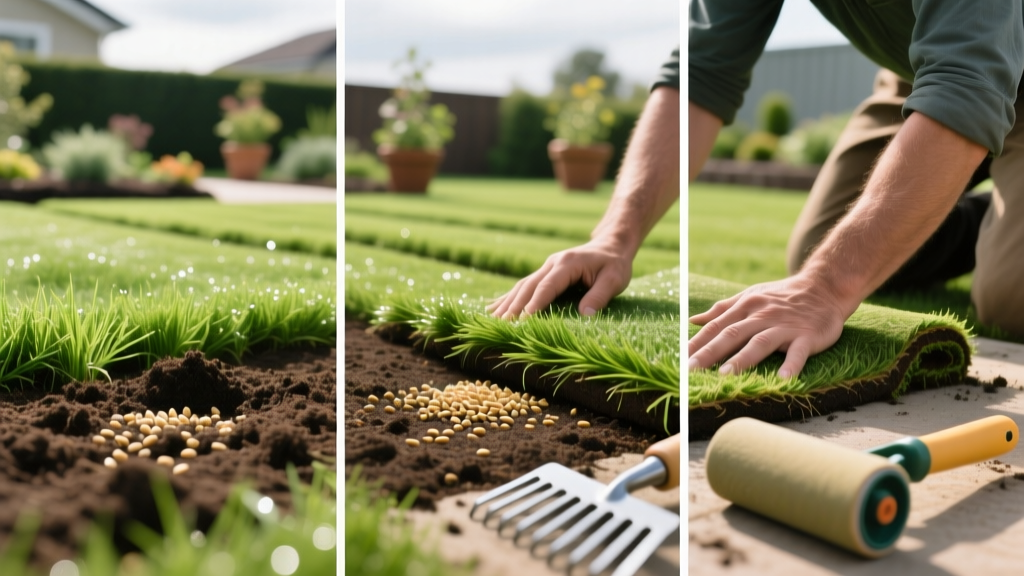
How to Plant New Grass: Seed, Sod, and Soil Prep Guide
The Soil Foundation: Testing and Grading
Successful grass establishment fails or succeeds before a single seed touches the dirt. The most common reason for patchy germination and shallow root systems is ignoring soil chemistry and physical grading. Before purchasing seed or sod, you must conduct a Mehlich-3 soil test to determine your baseline pH and nutrient deficiencies. Cool-season grasses like Kentucky Bluegrass and Tall Fescue thrive in a pH range of 6.0 to 7.0, while warm-season grasses like Bermuda and Zoysia prefer 6.5 to 7.5.
Soil Amendment Framework:
If your soil pH is above 7.5, apply elemental sulfur at a rate of 1.5 lbs per 1,000 square feet to drop the pH by roughly 0.5 points. If your pH is below 5.8, apply pulverized agricultural limestone at 25 to 50 lbs per 1,000 square feet. Always incorporate these amendments into the top 4 inches of soil using a rototiller before grading.
If your soil pH is above 7.5, apply elemental sulfur at a rate of 1.5 lbs per 1,000 square feet to drop the pH by roughly 0.5 points. If your pH is below 5.8, apply pulverized agricultural limestone at 25 to 50 lbs per 1,000 square feet. Always incorporate these amendments into the top 4 inches of soil using a rototiller before grading.
Physical grading is equally critical. The final soil surface must sit exactly 1 inch below your sprinkler heads, sidewalks, and driveway edges to prevent water pooling and ensure seamless transitions. Establish a minimum 2% slope away from your home’s foundation (a 2-inch drop over the first 10 feet) to protect your structural integrity. According to the NCSU TurfFiles database, improper grading is the leading cause of post-establishment fungal diseases like Pythium blight due to localized waterlogging.
Choosing Your Establishment Method
When deciding how to plant new grass, homeowners generally choose between three methods: traditional seeding, sod installation, and hydroseeding. Each method carries distinct 2026 pricing structures, labor requirements, and timelines for a usable lawn.
| Method | Cost per 1,000 sq ft | Time to Usable Lawn | Root Depth at 30 Days |
|---|---|---|---|
| Traditional Seed | $100 - $250 | 8 - 12 Weeks | 1.5 - 2.5 inches |
| Hydroseeding | $150 - $300 | 6 - 8 Weeks | 2.0 - 3.0 inches |
| Sod Installation | $450 - $900 (incl. labor) | 2 - 3 Weeks | 4.0+ inches (established) |
For budget-conscious projects with ample time, premium seed blends like Jonathan Green Black Beauty Ultra offer superior drought resistance and deep rooting potential. If you need an instant lawn for erosion control on steep slopes or immediate aesthetic appeal, sod is the only viable option, though it requires intense initial watering to prevent the root zone from drying out before it knits into the native soil.
Seed Selection and Pre-Emergent Strategy
A major failure point in seeding is weed competition. Standard pre-emergent herbicides containing prodiamine or dithiopyr will kill your grass seed before it germinates. If your soil has a high weed seed bank, you must use a selective pre-emergent that is safe for new grass. Mesotrione (sold under the brand name Tenacity) is the industry standard for this application.
Apply Mesotrione at a rate of 0.33 fluid ounces per 1,000 square feet on the exact same day you seed. This chemical inhibits chlorophyll production in broadleaf weeds and crabgrass without harming germinating cool-season grasses. The University of Minnesota Extension highly recommends this approach for late-summer seedings when crabgrass pressure is at its peak.
Step-by-Step Seeding Execution
Proper seed-to-soil contact is the non-negotiable metric for germination. Seed left resting on top of dry thatch or loose dust will desiccate within hours. Follow this exact sequence for optimal establishment:
- Scarify the Soil: Use a hard-tine rake or a mechanical dethatcher set to a depth of 1/4 inch to create shallow grooves in the topsoil.
- Apply Starter Fertilizer: Broadcast a high-phosphorus starter fertilizer (such as Scotts Turf Builder Starter Food 24-25-4) at a rate that delivers exactly 1.0 lb of actual nitrogen per 1,000 square feet. Phosphorus is critical for early root development.
- Spread the Seed: Use a rotary spreader. Apply 70% of the seed walking in horizontal passes, and the remaining 30% in vertical passes to ensure uniform distribution and avoid striping.
- Rake and Roll: Lightly drag the area with a leaf rake turned upside down (tines pointing up) to push seeds into the grooves. Follow immediately with a half-filled lawn roller to press the seeds firmly into the soil matrix.
- Top-Dress: Apply a 1/8-inch layer of peat moss or finely screened compost over the seed. This acts as a moisture-retention blanket and hides the seed from foraging birds.
The Critical 30-Day Watering Matrix
Overwatering causes seed rot and washes away topsoil, while underwatering halts germination. The moisture requirement changes drastically as the radicle (first root) emerges and the coleoptile (first shoot) breaks the surface. Adhere strictly to this 30-day matrix, adjusting for local evaporation rates and rainfall.
| Timeline | Watering Frequency | Duration per Zone | Target Moisture Depth |
|---|---|---|---|
| Days 1 - 10 (Germination) | 3 to 4 times daily | 5 - 8 minutes | Top 1 inch (keep constantly damp) |
| Days 11 - 21 (Seedling) | 2 times daily | 10 - 15 minutes | Top 2 inches |
| Days 22 - 30 (Establishment) | 1 time daily (early AM) | 20 - 30 minutes | Top 4 inches (encourage deep roots) |
Warning: Never water new grass in the late evening. Prolonged leaf wetness combined with dropping nighttime temperatures creates the perfect environment for Dollar Spot and Brown Patch fungi. Always schedule your final daily watering cycle to finish by 2:00 PM.
First Mow and Post-Establishment Care
Patience is required before the first mow. Do not mow the lawn until the grass reaches at least 4.5 inches in height. Set your mower deck to 3.5 inches and ensure the blades are freshly sharpened. Dull blades will tear the tender seedlings, ripping them entirely out of the shallow soil. Follow the "Rule of Thirds" strictly: never remove more than one-third of the total grass blade height in a single pass.
"The first mowing is a stress event for young grass. Leaving the clippings on the lawn during the first three cuts returns vital nitrogen to the soil and shades the delicate new crowns from intense UV radiation."
After the first 30 days, transition to a standard deep-and-infrequent watering schedule of 1 to 1.5 inches per week, delivered in one or two heavy sessions. When handling chemical herbicides for post-establishment weed control, always follow EPA Safe Pest Control guidelines, and wait until the new grass has been mowed at least three times before applying any broadleaf herbicides like 2,4-D or dicamba.
Frequently Asked Questions
Can I plant new grass over an existing weedy lawn?
No. You must kill existing vegetation first. Apply a non-selective herbicide like glyphosate, wait 14 days for complete die-off, mow the dead material as short as possible, and heavily aerate before seeding. Seeding directly over live weeds guarantees failure due to competition for light and water.
What is the best time of year to plant cool-season grass?
Early fall (late August to mid-September) is the optimal window. Soil temperatures are still warm (65°F - 75°F) for rapid germination, but air temperatures are cooling, which reduces heat stress and water evaporation while minimizing annual weed competition.
Do I need to cover the seed with straw?
Traditional straw is no longer recommended due to the high prevalence of weed seeds embedded in the bales. If you need a cover crop to retain moisture on slopes, use certified weed-free straw, peat moss, or a specialized hydraulic mulch matrix.

