
Lawn Care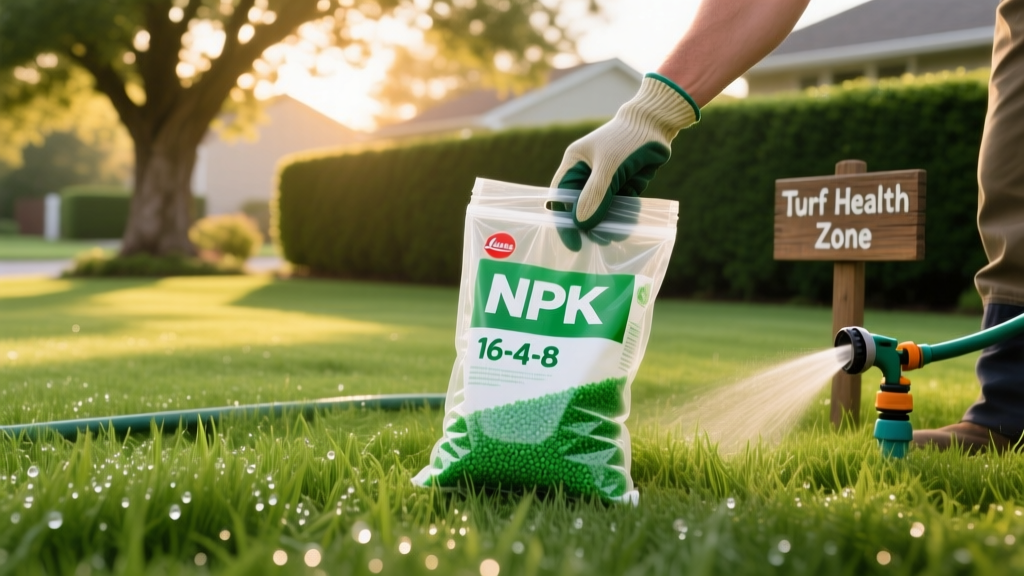
Master NPK: How to Read Fertilizer Numbers for Lawns
The N-P-K Triad: Decoding the Primary Nutrients
Every commercial lawn fertilizer sold in the United States is legally required to display a three-number sequence on the front of the bag, known as the N-P-K ratio. These numbers represent the percentage by weight of the three primary macronutrients: Nitrogen (N), Phosphorus (P), and Potassium (K). Understanding how to read fertilizer numbers is the difference between a lush, resilient turf and a burned, nutrient-starved yard.
If you purchase a 50-pound bag of Lesco Professional 18-24-12 starter fertilizer, the bag contains exactly 18% nitrogen (9 lbs), 24% available phosphate (12 lbs), and 12% soluble potash (6 lbs). The remaining 32% consists of secondary nutrients, micronutrients, and inert carrier materials that help distribute the granules evenly through your spreader.
Nitrogen (N): The Growth Engine
Nitrogen drives vegetative growth, chlorophyll production, and the deep green color of your grass. It is the most frequently applied nutrient because it leaches through the soil profile relatively quickly. However, not all nitrogen is created equal. When reading the label, look for the breakdown of quick-release versus slow-release nitrogen on the back panel. Quick-release sources like urea or ammonium sulfate provide an immediate green-up but carry a high risk of turf burn if over-applied. Slow-release sources like methylene urea or sulfur-coated urea feed the lawn gradually over 8 to 12 weeks.
Phosphorus (P): The Root Builder
Phosphorus is critical for seedling establishment, root development, and energy transfer within the plant. It is heavily featured in "starter fertilizers" used when laying new sod or overseeding.
⚠️ Regulatory Warning: Many states and municipalities (including New York, Michigan, and parts of Florida) have strict bans on phosphorus application to established lawns to prevent toxic algae blooms in local waterways. Unless a recent soil test explicitly shows a phosphorus deficiency, you must select a zero-phosphorus fertilizer (e.g., 32-0-4) for routine maintenance.
Potassium (K): The Stress Shield
Potassium regulates water uptake, enzyme activation, and cellular turgor pressure. It is your lawn's primary defense against environmental stressors like summer drought, winter freeze, and fungal pathogens like brown patch. Fall fertilizers often feature elevated potassium levels (e.g., 10-0-20) to harden the grass before winter dormancy.
Matching Fertilizer Numbers to Your Grass Type
Different turfgrass species have vastly different metabolic demands. Applying a high-nitrogen fertilizer to a low-input grass like Zoysia will result in excessive thatch buildup and increased disease susceptibility. Use the matrix below to align your N-P-K selection with your specific turf.
| Grass Type | Season | Annual Nitrogen Target (lbs/1000 sq ft) | Ideal N-P-K Ratio Profile |
|---|---|---|---|
| Kentucky Bluegrass | Cool | 2.0 - 4.0 | High N, Low P, Moderate K (e.g., 32-0-10) |
| Tall Fescue | Cool | 2.0 - 3.0 | Moderate N, Zero P, High K (e.g., 20-0-15) |
| Bermudagrass | Warm | 2.0 - 5.0 | High N, Low P, Moderate K (e.g., 28-3-10) |
| Zoysia / Centipede | Warm | 1.0 - 2.0 | Low N, Zero P, High K (e.g., 15-0-15) |
Translating Soil Tests into Spreader Settings: The Application Math
Reading the front of the bag is only half the battle. The most common mistake homeowners make is setting their spreader based on the bag's generic chart rather than calculating the exact product weight needed to hit their target nitrogen rate. According to turf management guidelines from the University of Minnesota Extension, applying too much nitrogen leads to rapid, weak growth that attracts pests like chinch bugs and grubs.
Here is the exact formula to calculate how many pounds of fertilizer product you need to apply per 1,000 square feet to deliver exactly 1 pound of actual Nitrogen:
The Nitrogen Calculation Formula:
(Target lbs of N per 1,000 sq ft) ÷ (First number on bag ÷ 100) = lbs of product per 1,000 sq ft
Step-by-Step Calculation Example
- Identify your target: You want to apply 0.8 lbs of Nitrogen per 1,000 sq ft to your Tall Fescue lawn in early fall.
- Read the bag: You are using Scotts Turf Builder WinterGuard, which has an N-P-K of 32-0-10.
- Convert the percentage: Divide the first number (32) by 100 to get 0.32.
- Do the math: 0.8 ÷ 0.32 = 2.5 lbs of product.
- Set the spreader: You must apply exactly 2.5 pounds of this specific granular product over every 1,000 square feet of turf to achieve your goal.
Reading the Fine Print: Secondary and Micronutrients
While N-P-K dominates the front label, the "Guaranteed Analysis" on the back reveals the secondary nutrients that separate premium professional fertilizers from cheap big-box alternatives. When scanning the back label, look for these specific elements:
- Iron (Fe): Often listed at 1% to 5%. Iron provides a deep, dark blue-green color to the grass without stimulating the rapid vertical growth caused by nitrogen. Chelated iron is preferred over iron sulfate, as it remains available to the plant even in high-pH (alkaline) soils.
- Sulfur (S): Essential for amino acid synthesis. More importantly, elemental sulfur acts as a soil acidifier. If your soil test shows a pH above 7.2, a fertilizer containing 5% to 10% sulfur will help bring the pH down into the optimal 6.0–6.5 range for nutrient uptake.
- Calcium (Ca): Crucial for cell wall structure. Often included in gypsum-based carrier materials to help flocculate heavy clay soils, improving drainage and root penetration.
"A fertilizer bag might boast a high nitrogen number, but if the soil pH is locked at 7.8, the grass roots physically cannot absorb it. Always pair your N-P-K selection with a lime or sulfur application based on a recent soil test."
Quick-Release vs. Slow-Release: The Hidden Number Context
The N-P-K numbers do not tell you how fast the nitrogen will become available to the roots. For this, you must look for the WIN (Water Insoluble Nitrogen) percentage on the guaranteed analysis panel.
If a 50-pound bag of 30-0-5 fertilizer costs $45 and lists 15% WIN, it means exactly half of the total nitrogen is slow-release. For established lawns during the heat of summer, you want a WIN percentage of at least 50% to prevent fertilizer burn and nitrate leaching into the groundwater. Organic options like Milorganite (5-2-0, priced around $22 for a 32lb bag) derive nearly 100% of their nitrogen from slow-release microbial breakdown, making them virtually burn-proof but much slower to show visual results.
Frequently Asked Questions About Fertilizer Labels
What does a 10-10-10 fertilizer mean, and is it good for lawns?
A 10-10-10 fertilizer contains equal parts nitrogen, phosphorus, and potassium. While popular for vegetable gardens, it is generally a poor choice for established lawns. Established turf rarely needs phosphorus, and applying a balanced 10-10-10 product results in unnecessary phosphorus runoff. Furthermore, 10% nitrogen is a very low concentration, meaning you have to apply massive volumes of product to meet the lawn's nitrogen needs, which wastes time and money.
Why is the middle number zero on most lawn fertilizers?
The middle number represents phosphorus. As noted by the Environmental Protection Agency (EPA), excess phosphorus is a primary driver of harmful algal blooms in freshwater ecosystems. Because most established lawns have sufficient phosphorus locked in the soil profile, manufacturers formulate "zero-phosphorus" maintenance fertilizers (like 32-0-4) to comply with environmental regulations and prevent water pollution.
Can I use a high-nitrogen fertilizer on newly planted grass seed?
No. High-nitrogen, zero-phosphorus fertilizers will burn tender seedlings and fail to support root growth. For new seed or sod, you must use a "starter fertilizer" with an elevated middle number (phosphorus), such as a 18-24-12 or 10-18-10 ratio, to force rapid root establishment before the first mow.

