
Lawn Care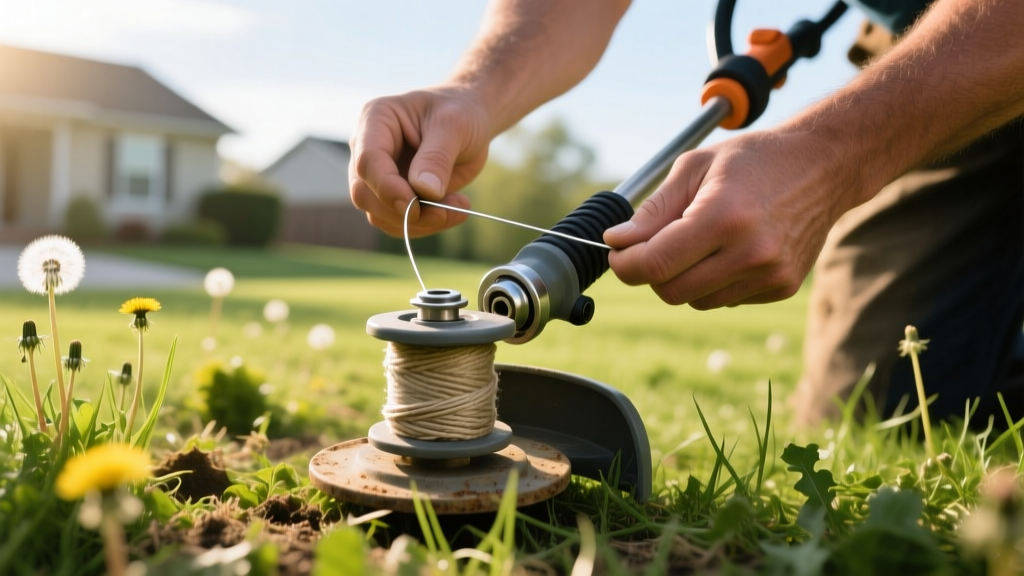
How to Spool a Weed Eater for Cutting Tough Weed Patches
Spot-treating persistent, thick-stemmed weeds like dallisgrass (Paspalum dilatatum) and johnsongrass (Sorghum halepense) often requires mechanical intervention. Whether you are cutting down mature fibrous stalks before a targeted herbicide application to improve canopy penetration, or edging out dead weed patches after treatment, your string trimmer is your primary tool. However, standard 0.065-inch round nylon line shreds on contact with these aggressive species. Knowing exactly how to spool a weed eater with heavy-duty, co-polymer line is the difference between a clean cut and a jammed spool head.
The Physics of Trimmer Line vs. Fibrous Weed Stems
Mature weed species develop thick, waxy cuticles and dense vascular bundles to retain moisture and resist environmental stress. When a high-speed trimmer line strikes a johnsongrass stalk, the kinetic energy must exceed the tensile strength of the plant fiber. Standard monofilament nylon lacks the shear strength to slice through these bundles cleanly. Instead, it grabs, wraps, and snaps, or it melts against the friction, causing the line to fuse inside the spool.
According to turfgrass management guidelines from the Clemson Home and Garden Information Center, mechanical removal of mature perennial weeds requires aggressive cutting to prevent seed head dispersal. Upgrading your line diameter and profile increases the cutting surface area and structural rigidity, allowing the line to slice through waxy cuticles rather than bouncing off them.
Line Diameter and Profile vs. Target Weed Species
| Weed Species | Stem Characteristics | Recommended Line Diameter | Optimal Line Profile |
|---|---|---|---|
| Dallisgrass | Thick, fibrous, deep root clumps | 0.080" to 0.095" | Square or Star |
| Johnsongrass | Tall, cane-like, highly rigid | 0.095" to 0.105" | Twisted or Serrated |
| Goosegrass | Wiry, tough, silver-white base | 0.080" | Square |
| Crabgrass (Mature) | Broad, spongy, interwoven mats | 0.065" to 0.080" | Round or Co-polymer |
Selecting the Right Replacement Spool for Spot-Treatments
Not all heavy-duty lines are created equal. When purchasing replacement line for weed eradication, avoid standard bulk nylon, which typically costs around $12 to $15 per pound. Standard nylon becomes brittle when exposed to UV light and loses its internal moisture over time, leading to catastrophic snapping under the torque of a 30cc gas trimmer.
Pro Landscaper Trick: The Pre-Soak Method
Extruded nylon trimmer line loses moisture during manufacturing and storage, making it brittle. Before you learn how to spool a weed eater with a new batch of line, submerge the entire spool or cut lengths of nylon in warm water for 2 to 4 hours. The nylon absorbs the moisture, restoring its flexibility and impact resistance. This single step can increase line lifespan by up to 40% when cutting through abrasive, silica-rich weed stalks.
For the toughest weed patches, invest in co-polymer or reinforced lines. Products like Oregon Gatorline Titanium or Husqvarna Titanium Force ($25 to $35 per pound) integrate internal wire or advanced polymer blends that resist snapping. Twisted profiles reduce aerodynamic drag, allowing your trimmer head to maintain higher RPMs, which translates to cleaner cuts on thick dallisgrass clumps.
Step-by-Step: How to Spool a Weed Eater (Dual-Line Bump Feed)
The most common failure point in string trimmers is improper spooling, which leads to line welding (melting together) or failure to feed. The following procedure applies to standard dual-line bump feed heads, such as the Echo Speed-Feed 400 or Husqvarna T35.
- Disassemble and Clean: Press the side tabs on the trimmer head to remove the spool. Use a wire brush to clear out impacted mud, sap, and shredded weed fibers from the spool cavity and the eyelet grommets. Debris in the eyelets creates friction that melts the line.
- Identify the Winding Direction: Look at the top of the spool. You will see a directional arrow. Never wind the line in the opposite direction; this causes the line to cross-feed and jam when you bump the head on the ground.
- Anchor the Line: Cut two equal lengths of heavy-duty line (usually 15 to 20 feet each, depending on spool capacity). Feed one end through the inner anchor hole on the spool and pull it through until you have equal lengths on both sides, or lock it into the designated anchor slot if your model uses a single continuous feed.
- Wind with Tension: This is the most critical step. Hold the line taut with your fingers about 12 inches from the spool as you wind. Overlapping wraps or loose wraps will cause the top layer of line to bite into the bottom layer under centrifugal force, locking the spool completely.
- Seat the Eyelets: Leave about 6 inches of line unwound. Snap the line into the retention notches on the outer edge of the spool. This holds the line in place while you reassemble the head.
- Thread and Tension: Feed the loose ends through the metal eyelets on the outer trimmer housing. Push the spool firmly back into the housing. Before locking it, pull both lines outward simultaneously to release them from the retention notches and apply final tension.
Troubleshooting Line Breakage During Weed Eradication
Even with the correct diameter and profile, cutting dense weed patches introduces unique mechanical stresses. If your line continues to fail, diagnose the issue using the failure modes below.
Common Failure Modes and Fixes
- Line Welding (Fusing inside the spool): Caused by excessive friction or winding the line too loosely. Fix: Clean the eyelet grommets, ensure you are using a co-polymer line with a higher melting point, and apply strict tension while winding.
- Shearing at the Eyelet: The line snaps exactly where it exits the trimmer head. This happens when the eyelet grommet is worn down to sharp metal, or when you are forcing a 0.095" line through a head designed for 0.080". Fix: Replace the metal eyelet grommets (a $4 part) or downgrade to the maximum recommended diameter for your specific trimmer head model.
- Shredding on Contact: The line frays into a white, fuzzy mess without cutting the weed. Fix: Your RPMs are too low, or you are using a round profile on a waxy weed. Switch to a square or serrated profile and ensure your trimmer's carburetor or battery output is tuned for maximum throttle.
"When spot-treating invasive perennial grasses, the goal of mechanical cutting is to sever the crown without throwing seeds across the turf. A sharp, twisted co-polymer line at high RPM acts like a scalpel, whereas a dull, round nylon line acts like a blunt whip, often uprooting the weed and scattering seed heads in the process."
— Turfgrass Management Field Notes
Mastering how to spool a weed eater with the correct heavy-duty line transforms your trimmer from a simple edging tool into a highly effective spot-treatment asset. By matching the line profile to the specific weed species, pre-soaking your nylon, and winding with strict mechanical tension, you eliminate downtime and ensure clean, efficient eradication of the toughest lawn invaders.

