
Lawn Care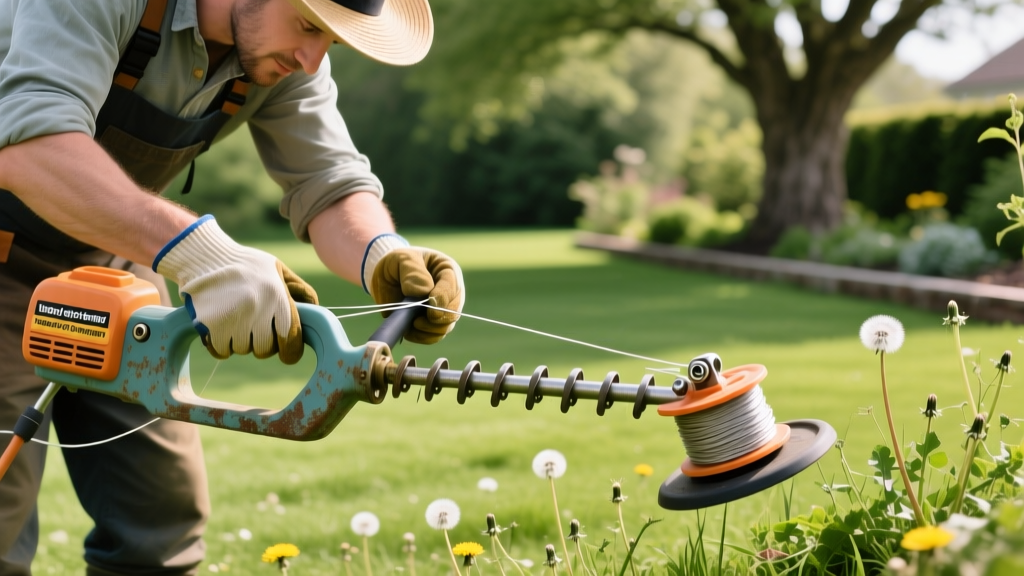
How to String a Weed Eater for Tough Weed Spot-Treatment
The Missing Link in Weed Spot-Treatment: Trimmer Line Precision
When executing a targeted weed spot-treatment plan for invasive species like Dallisgrass, Yellow Nutsedge, or mature Crabgrass, homeowners often focus entirely on herbicide selection. However, the mechanical preparation of the weed canopy is equally critical. If you do not know how to string a weed eater properly for the specific weed species you are targeting, your trimmer will either snap against tough fibrous stems or scalp the weed down to the bare soil.
Scalping is the enemy of systemic spot-treatments. Herbicides like fluazifop or glyphosate require adequate leaf surface area to absorb and translocate the active ingredient down to the root crown. A poorly strung trimmer head lacks the centrifugal stability to maintain a precise 2-to-3-inch cutting height, resulting in uneven chopping and ruined chemical uptake windows. Mastering your spooling technique and line geometry ensures your mechanical reduction perfectly sets the stage for chemical eradication.
Matching Line Geometry to Target Weed Species
Standard round nylon line is sufficient for soft annual grasses, but it will shatter against the woody stems of mature broadleaf weeds or the thick, silica-rich blades of perennial grassy weeds. Selecting the right line profile is the first step in precision spot-treatment.
| Line Shape | Optimal Diameter | Target Weed Species | Spot-Treatment Application |
|---|---|---|---|
| Round (Standard Nylon) | 0.065" - 0.080" | Poa annua, Henbit, Chickweed | Light canopy reduction before pre-emergent application; safe for delicate turf edging. |
| Square / Star (Copolymer) | 0.085" - 0.095" | Dallisgrass, Crabgrass, Nutsedge | Slicing through thick, water-filled stems without snapping; leaves clean cuts for systemic herbicide uptake. |
| Serrated / Twisted | 0.095" - 0.105" | Kudzu, Bindweed, Woody Brush | Heavy mechanical destruction of mature seed heads and fibrous vines along fence lines prior to basal bark treatments. |
For modern high-torque battery trimmers (such as the EGO Power+ 15-Inch 56V or Milwaukee M18 FUEL), utilizing a 0.095" serrated copolymer line provides the necessary mass to maintain RPMs under the heavy load of thick Dallisgrass patches, ensuring the weed is cut cleanly rather than bruised and torn.
Step-by-Step: How to String a Weed Eater for Maximum Tension
Proper tension prevents the line from "welding" (melting together inside the spool due to friction) and ensures the bump-feed mechanism deploys exactly 0.5 inches of line per tap. The following protocol applies to standard dual-line bump heads, including the industry-standard Echo Speed-Feed 400 and Husqvarna T35.
Warning: The Reverse Winding Mistake
Winding the line counter-clockwise on a spool designed for clockwise rotation alters the aerodynamic drag of the extended line. This causes the trimmer motor to bog down by up to 15% and drastically increases line breakage when striking tough weed stems. Always verify the directional arrow stamped on the spool hub.
- Clean the Spool Hub: Remove the spool and clear out impacted mud, grass sap, and nylon dust. Friction inside the hub is the primary cause of feed-jams during active weed trimming.
- Cut and Anchor: Cut exactly 14 feet of copolymer line. Feed one end through the center anchor hole of the spool until equal lengths (7 feet) hang on both sides of the internal divider.
- Wind Under Tension: Following the directional arrow (usually clockwise), wind the line tightly. You must pull the line with roughly 5 lbs of manual tension while winding. Loose winding causes the line to cross over itself, locking the spool when the centrifugal force demands more line.
- Lock the Retention Notches: Snap the final 4 inches of each line into the spool's temporary retention slots. This prevents unspooling while you reassemble the head.
- Thread the Eyelets and Pull: Pass the lines through the metal or reinforced plastic eyelet grommets on the outer housing. Pull both lines firmly simultaneously to release them from the retention slots and lock them into the bump-feed mechanism.
Integrating Mechanical Trimming with Chemical Spot-Treatments
According to weed management protocols outlined by NC State TurfFiles, mechanical disruption of perennial weeds must be carefully timed with chemical applications to maximize efficacy. Here is how to synchronize your string trimmer use with your herbicide schedule:
- The 3-Day Rule: After using your string trimmer to knock down mature seed heads (such as those produced by Penn State Extension identified turf weeds), wait 72 hours before applying systemic herbicides. This allows the weed to push out fresh, highly absorbent leaf tissue.
- Height Calibration: Rest the trimmer head guard on the turf canopy and tilt the shaft slightly forward. This raises the cutting plane to exactly 2.5 inches above the soil line, severing the tough weed canopy while leaving the surrounding desirable turfgrass intact and preserving the weed's stem for chemical absorption.
- Debris Removal: Always rake and remove the severed weed clippings before spraying. If thick Dallisgrass clippings remain on the soil surface, they will intercept the herbicide spray, shielding the living root crown and reducing treatment efficacy by up to 40%.
Troubleshooting Line Breakage in Thick Brush
When spot-treating heavily overgrown border areas or fence lines where woody weeds thrive, line breakage is the most common workflow disruption. Diagnose the failure mode using this matrix:
Breakage at the Eyelet Grommet
Cause: The eyelet is worn down to a sharp metal edge, or you are using a line diameter too thick for the housing (e.g., forcing 0.105" line through a 0.095" rated head). Fix: Replace the eyelet grommets (a $4 OEM part) or step down to a 0.085" multi-component line which offers equal tensile strength at a thinner profile.
Breakage Mid-Span (Snapping in the Air)
Cause: The nylon line has become brittle due to UV degradation and moisture loss. Standard nylon loses up to 30% of its flexibility after 6 months in a hot garage. Fix: Store your bulk trimmer line in a sealed bucket with a damp sponge to maintain the nylon's moisture content and flexibility, or switch to a UV-stabilized copolymer blend.
Spool Welding (Line Melts Together)
Cause: Winding the line too loosely, or resting the trimmer head on hot concrete while the throttle is engaged, generating immense friction heat inside the hub. Fix: Apply a dry silicone spray lubricant to the spool hub interior before winding, and never let the spinning head rest on hard surfaces.
Frequently Asked Questions
Can I use fishing line to string my weed eater for spot treatments?
No. Braided fishing line lacks the specific aerodynamic profile and melting point required for trimmer heads. It will not feed correctly through the bump mechanism and can cause severe damage to the internal plastic gears of the spool hub, voiding your equipment warranty.
How often should I restring when doing large-scale weed eradication?
If you are clearing overgrown fence lines or treating large patches of mature, woody-stemmed weeds, expect to burn through a full 14-foot dual-line spool every 45 to 60 minutes of active cutting time. For standard turf edging and light seed-head removal, a single spooling will typically last 3 to 4 hours.
Does line color affect cutting performance on weeds?
Color is purely a visual indicator for the manufacturer's dye lot and does not affect tensile strength. However, high-visibility colors (orange, neon green) help you visually track the cutting plane, which is highly beneficial when trying to maintain a precise 2-inch cutting height over delicate turfgrass during targeted spot-treatments.

