
Lawn Care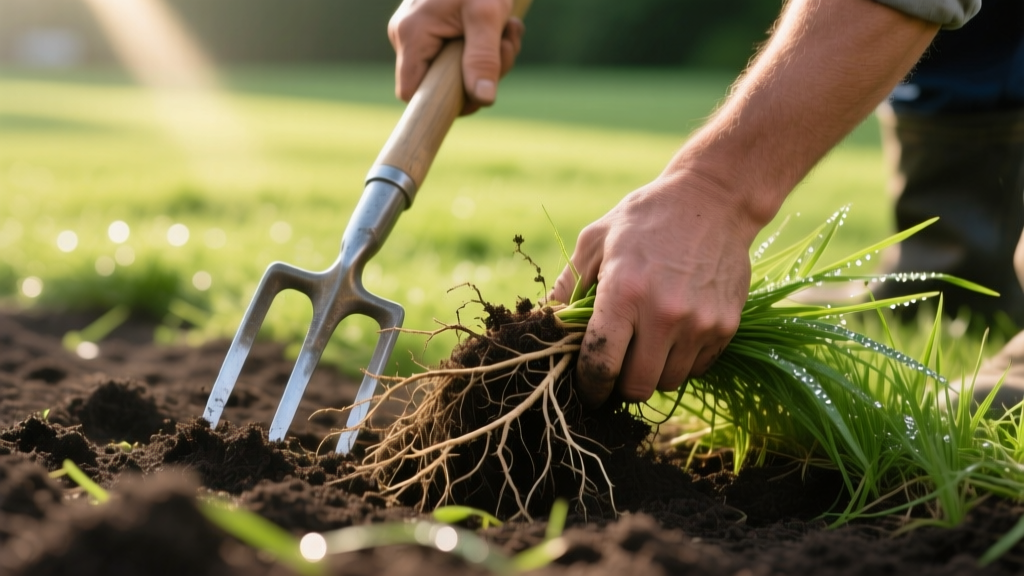
How to Uproot Grass Permanently: Step-by-Step Guide
The Science of Complete Grass Extraction
Knowing how to uproot grass effectively is one of the most critical skills in lawn renovation and landscape conversion. Whether you are clearing an area for a new hardscape, converting turf to a pollinator garden, or eradicating invasive species like Bermudagrass (Cynodon dactylon) or Quackgrass (Elymus repens), simply pulling the green blades is a guaranteed path to failure. Grasses survive via complex underground networks of rhizomes and stolons. If a single 1-inch node is left behind, the plant will regenerate.
This step-by-step procedural guide moves beyond generic advice, providing exact soil moisture metrics, specialized tool recommendations, and mechanical sifting techniques to ensure permanent removal.
Decision Matrix: Choosing Your Uprooting Method
Before breaking ground, select the extraction method that aligns with your specific turf type and project scale. Using the wrong method can actually multiply your problem.
| Method | Best Application | Estimated Cost | Time Investment | Risk of Regrowth |
|---|---|---|---|---|
| Manual Forking | Small patches (under 50 sq ft), precise border work, flower bed prep | $40 - $85 (Tools) | High (10 sq ft/hr) | Low (if done carefully) |
| Mechanical Tilling | Large areas (500+ sq ft), non-rhizomatous annual grasses | $65/day (Rental) | Low (500 sq ft/hr) | Extreme (for invasive perennials) |
| Soil Solarization | Large areas with stubborn rhizomes, summer months with high UV | $50 - $120 (Plastic) | 4 to 6 Weeks | Very Low |
Phase 1: Soil Hydration and Tension Reduction
The most common mistake homeowners make is attempting to uproot grass in dry, compacted soil. Dry soil increases shear strength, causing roots to snap rather than slide out.
- Measure Water Output: Place a tuna can or rain gauge in the center of the target area.
- Apply 0.5 Inches of Water: This specific volume penetrates approximately 4 to 6 inches deep, which covers the primary root zone of most turfgrasses.
- Wait 24 Hours: Allow the water to reduce soil moisture tension. The soil should feel like a wrung-out sponge—cohesive but not muddy. If it is muddy, you will destroy soil structure during extraction.
Phase 2: The Extraction Procedure
Method A: Manual Forking (For Precision and Invasive Species)
Never use a flat-edged spade or shovel to dig out grass. Shovels slice through rhizomes, leaving viable nodes in the ground. Instead, use a spading fork (such as the Fiskars Ergo D-Handle Fork, approx. $45) or a Hori Hori knife (Nisaku NJT650, approx. $32) for tight spaces.
- Insert the spading fork into the soil at a 45-degree angle, about 6 inches away from the edge of the grass clump.
- Push the tines down to their full depth (usually 10-12 inches).
- Lean back on the handle to lever the soil and root mass upward. Do not pry side-to-side, which breaks roots.
- Grasp the grass at the base of the crown, not the tips of the blades, and pull gently in the direction the fork lifted the soil.
⚠️ WARNING: The Rhizome Multiplication Trap
According to Penn State Extension, mechanically tilling invasive perennial grasses like Quackgrass or Bermudagrass is highly discouraged. A single Quackgrass plant can produce up to 4 miles of rhizomes. Running a rototiller over these grasses chops the rhizomes into thousands of pieces. Every single piece containing a node will sprout a new plant, turning a small patch into a massive infestation within one growing season. Always hand-fork invasive perennials.
Method B: Mechanical Slicing (For Annual Grasses and Large Renovations)
If you are removing a non-invasive, clump-forming grass (like standard Tall Fescue) to lay new sod, a mechanical sod cutter or rototiller is appropriate.
- Rent a walk-behind sod cutter (approx. $85/day from local equipment rental yards).
- Set the blade depth to exactly 2.5 inches. This removes the turf and the upper root mat while preserving the valuable topsoil beneath.
- Cut in parallel strips, roll the sod, and remove it from the site immediately to prevent re-rooting.
Phase 3: Root Sifting and Soil Recovery
Even with meticulous hand-forking, microscopic root fragments remain. For high-stakes projects like vegetable garden beds or premium lawn renovations, sifting is mandatory.
- Build a Sifting Screen: Construct a simple 2x4 wooden frame and staple 1/2-inch galvanized hardware cloth to the bottom. (Cost: ~$25 for materials).
- Shovel and Shake: Shovel the loosened topsoil onto the screen placed over a wheelbarrow. Shake vigorously.
- Extract the Debris: The fine soil will fall through, leaving behind rocks, debris, and the white/yellow wiry rhizomes of the unwanted grass.
- Dispose Properly: Do not compost these roots unless your compost pile consistently maintains temperatures above 140°F for several weeks. Otherwise, bag them for municipal yard waste pickup.
Phase 4: Post-Uprooting Solarization (The Insurance Policy)
If you are dealing with aggressive warm-season grasses in a climate with hot summers, physical removal should be followed by solarization. The UC Statewide IPM Program highly recommends this for Bermudagrass eradication.
- Water the bare soil deeply to a 12-inch depth. Moist soil conducts heat better than dry soil.
- Cover the area with 2-mil clear polyethylene sheeting (do not use black plastic; clear plastic traps UV radiation and creates a greenhouse effect, raising soil temps to 125°F+ at the surface).
- Bury the edges of the plastic in a 6-inch trench to seal it completely.
- Leave undisturbed for 4 to 6 weeks during peak summer heat (July/August). This will cook any remaining root nodes and weed seeds.
Frequently Asked Questions (FAQ)
How deep do grass roots actually go?
While it is a common myth that Bermudagrass roots routinely grow 6 feet deep, university turf studies show that 80% to 90% of the root and rhizome mass is concentrated in the top 6 inches of the soil profile. Focusing your extraction efforts on the top 6 to 8 inches will yield the highest success rate.
Can I use vinegar or boiling water instead of uprooting?
Horticultural vinegar (20-30% acetic acid) and boiling water are strictly contact burners. They destroy the cellular structure of the grass blades but do not penetrate the soil to kill the rhizomes. The grass will appear dead for three days and then aggressively resprout from the roots. Physical uprooting or systemic herbicides are the only permanent solutions.
What should I do with the bare soil after uprooting?
According to the University of Minnesota Extension, removing turf also removes organic matter. Before planting or seeding the area, incorporate 2 inches of finished compost into the top 4 inches of the bare soil to restore microbial activity and improve water retention.

