
Lawn Care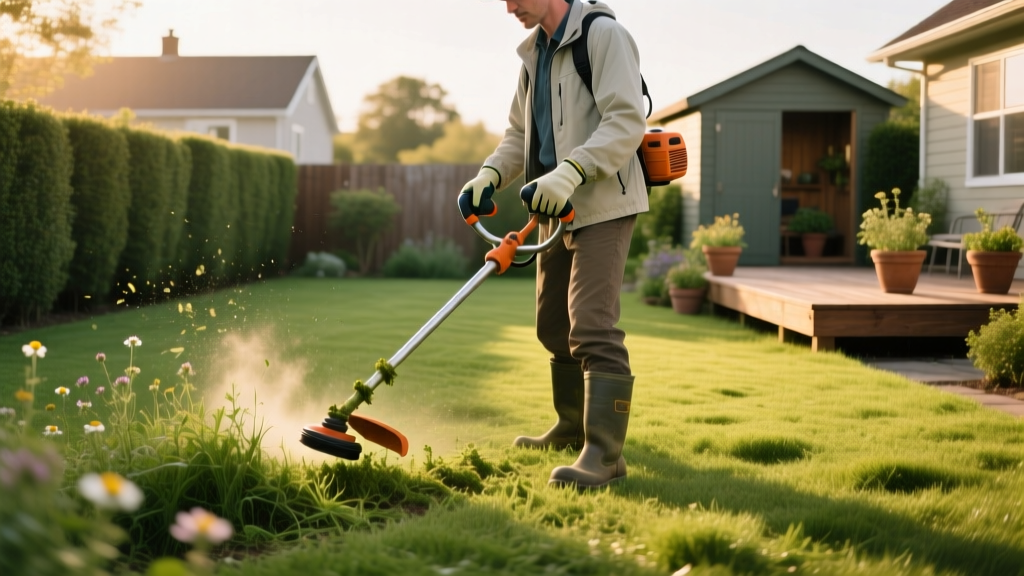
How to Use a Weed Wacker for Precision Weed Spot-Treatment
The Role of String Trimmers in Integrated Weed Management
Most homeowners relegate their string trimmer to edging driveways and clearing fence lines. However, when calibrated correctly, a weed wacker is one of the most effective mechanical tools for spot-treating stubborn, deep-rooted weed species before they establish dominance or drop seed. According to the UC Statewide IPM Program, mechanical disruption of weed crowns combined with targeted chemical application significantly increases mortality rates in perennial species that resist standard broadcast herbicides.
Understanding how to use a weed wacker for precision spot-treatment requires shifting your mindset from 'clearing brush' to 'surgical extraction.' By manipulating the trimmer's RPM, string diameter, and approach angle, you can decapitate weed seed heads, sever vascular crowns, and prepare the plant tissue for systemic herbicide absorption—all without scalping the surrounding desirable turfgrass.
Trimmer Line Selection Matrix for Weed Species
The thickness and geometry of your trimmer line dictate the cutting force and the size of the wound left on the weed. A wound that is too clean (thin line) seals quickly, preventing herbicide uptake. A wound that is too ragged (thick line on small weeds) shatters the stem, destroying the vascular pathway needed for chemical translocation.
| Line Diameter | Line Geometry | Target Weed Species | Primary Action |
|---|---|---|---|
| 0.080-inch | Round | Crabgrass, Annual Bluegrass, Spurge | Clean cut seed heads to prevent dispersal |
| 0.095-inch | Square / Star | Dallisgrass, Nutsedge, Plantain | Aggressive crown scoring for herbicide uptake |
| 0.105-inch | Twisted / Multi-sided | Canada Thistle, Field Bindweed, Johnsongrass | Severing thick, fibrous taproots and woody stalks |
For spot-treatment, the 0.095-inch square or star line is the most versatile. The sharp edges create micro-tears in the weed's cambium layer, which keeps the wound open longer and allows systemic herbicides like glyphosate or fluazifop to penetrate the phloem rapidly.
Species-Specific Spot-Treatment Techniques
Dallisgrass and Crabgrass: The 'Scalp and Starve' Method
Dallisgrass (Paspalum dilatatum) forms thick, fibrous clumps with deep rhizomes that laugh at standard pullers. To manage Dallisgrass mechanically, use the 'Scalp and Starve' technique. Lower the weed wacker head until the 0.095-inch line grazes the soil surface directly inside the clump. The goal is to remove 90% of the leaf blade, severely limiting the plant's ability to photosynthesize. According to Purdue University Turfgrass Science, repeated defoliation of perennial grassy weeds depletes their carbohydrate root reserves, causing eventual collapse. Follow up immediately with a targeted application of MSMA or fluazifop.
Canada Thistle and Bindweed: Crown Decapitation
Perennial broadleaf weeds like Canada Thistle and Field Bindweed rely on extensive underground root networks. Pulling them often snaps the taproot, leaving nodes that regenerate into multiple new plants. Instead, use your weed wacker for 'Crown Decapitation.' Tilt the trimmer head to a 15-degree angle and slice exactly 0.5 inches above the soil line. This removes the mature seed head while leaving the upper crown intact. The plant will immediately attempt to heal the wound, drawing systemic herbicides down into the root zone when applied within minutes of cutting.
Step-by-Step Execution: The Hover-and-Drop Maneuver
Executing a precise cut in a dense lawn without damaging the surrounding Kentucky Bluegrass or Bermudagrass requires the 'Hover-and-Drop' maneuver. Follow this exact sequence:
- Calibrate the RPM: Squeeze the trigger to reach medium-high RPM (approx. 6,000 RPM on gas models, or the middle speed setting on variable-speed electric models). Too low, and the line will wrap around the weed stalk; too high, and it will atomize the plant tissue.
- Establish the Hover: Hold the trimmer shaft at a 45-degree angle to your body. Position the cutting head 6 inches above the target weed, ensuring the string guard is angled away from the desirable turf.
- The Drop: Smoothly lower the spinning head straight down until the line contacts the weed. Do not swing the trimmer horizontally like a scythe; horizontal swings cause accidental turf scalping.
- The Pulse: Apply the line to the weed for exactly 1 to 2 seconds, then lift. Inspect the cut. If the seed head is removed and the crown is scored, move to the next weed.
Critical Warning: Never use metal brush blades or rigid plastic blades for spot-treating weeds embedded in a lawn. These attachments lack the 'give' of a nylon string and will instantly scalp the surrounding turf down to the dirt, creating bare patches that invite future weed infestations.
Synergizing Mechanical Cutting with Systemic Herbicides
Mechanical cutting alone rarely kills mature perennial weeds; it must be paired with chemical spot-treatment. The timing of this synergy is non-negotiable. When a weed is cut, it initiates a biological defense response to seal the wound, typically forming a callus within 30 to 45 minutes. You must apply your systemic herbicide (such as a 2% glyphosate solution or a selective grass herbicide like Fusilade) within 15 minutes of the weed wacker cut.
For maximum efficacy, use a wick applicator or a shielded spray nozzle. A wick applicator physically wipes the chemical directly onto the freshly scored weed crown, eliminating the risk of spray drift damaging nearby ornamental plants or desirable turfgrass. The micro-tears created by the star-shaped trimmer line act as capillary channels, pulling the herbicide deep into the plant's vascular system before the seal forms.
Recommended Equipment for Precision Spot-Treatment
To execute these techniques effectively, you need equipment that offers variable speed control and precise head articulation. Here are the top-performing models for 2026 precision weed management:
- Stihl FSA 90 R (Approx. $349): A commercial-grade gas trimmer featuring a variable-speed trigger and a bike-handle grip that allows for micro-adjustments in cutting height. Its high torque at low RPMs prevents line wrap on thick thistle stalks.
- Ego ST15100T Power+ (Approx. $229): A 15-inch battery-operated string trimmer with a telescoping shaft. The rapid-reload head and variable speed dial make it ideal for homeowners transitioning from chemical-only to integrated mechanical weed control.
- Oregon Gator SpeedLoad Head (Approx. $45): An aftermarket cutting head upgrade that allows you to swap between 0.080-inch and 0.095-inch lines in seconds without dismantling the spool, letting you adapt to different weed species on the fly.
Mastering how to use a weed wacker for targeted spot-treatment transforms it from a simple edging tool into a surgical instrument for lawn renovation. By matching the correct line geometry to the weed species, executing the hover-and-drop cut, and immediately following up with systemic herbicides, you can eradicate stubborn perennial weeds while preserving the structural integrity of your turf.

