
Lawn Care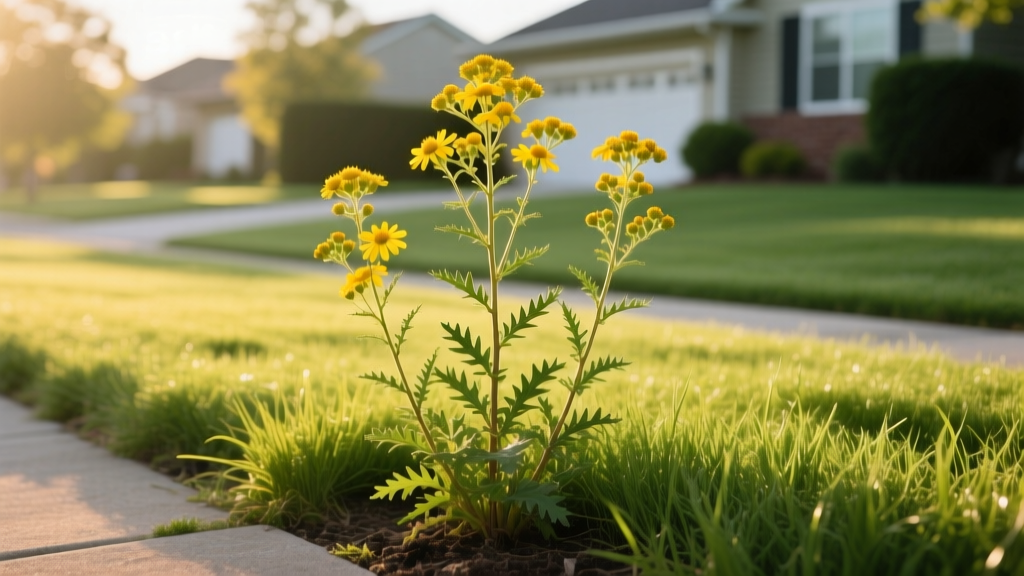
How to Identify and Eliminate Tall Weeds with Yellow Flowers
When your turf is suddenly overrun by tall weeds with yellow flowers, it is rarely just a cosmetic issue. These aggressive broadleaf invaders thrive in compromised soil and can quickly outcompete cool- and warm-season grasses for sunlight, water, and nutrients. Unlike low-growing clover or creeping charlie, tall yellow-flowering weeds like wild mustard and yellow rocket can reach heights of two to four feet, shading out your turf and dropping thousands of seeds before you even notice them. Effective eradication requires precise identification, targeted chemical intervention, and immediate cultural corrections to your lawn care routine.
The Usual Suspects: Diagnostic Matrix for Yellow-Flowered Weeds
Before reaching for a broad-spectrum herbicide, you must identify the specific weed species. Different weeds have varying life cycles (annual vs. perennial) and root structures (taproot vs. rhizome), which dictate your control strategy. According to Penn State Extension, accurate identification prevents the misapplication of costly chemicals.
| Weed Species | Max Height | Leaf Characteristics | Flower Structure | Root System & Life Cycle |
|---|---|---|---|---|
| Wild Mustard (Sinapis arvensis) | 1 to 4 feet | Large, deeply lobed, coarse leaves with hairy undersides | Clusters of 4 bright yellow petals at stem tips | Shallow taproot; Winter/Summer Annual |
| Yellow Rocket (Barbarea vulgaris) | 1 to 2.5 feet | Dark green, glossy, deeply cut basal rosette leaves | Dense, spike-like clusters of small yellow flowers | Fibrous taproot; Winter Annual/Biennial |
| Common Dandelion (Taraxacum officinale) | 12 to 18 inches (when bolting) | Basal rosette, deeply toothed margins pointing toward center | Solitary yellow flower on a single, hollow, milky stem | Deep, fleshy taproot (up to 10 feet); Perennial |
| Orange Hawkweed (Hieracium aurantiacum) | 1 to 3 feet | Spatula-shaped, heavily covered in fine white/bristly hairs | Orange-yellow daisy-like flower heads in clusters | Shallow fibrous roots with aggressive stolons; Perennial |
Symptom Diagnosis: Why Are These Weeds Taking Over?
Tall weeds with yellow flowers do not establish in thick, healthy turf. Their presence is a direct symptom of underlying environmental or cultural failures. If you kill the weeds without fixing the soil, they will return the following season.
1. Severe Soil Compaction
Wild mustard and yellow rocket thrive in compacted soils where grass roots cannot penetrate. If your soil penetration resistance exceeds 300 psi (measured with a standard penetrometer), turfgrass suffocates while these broadleaf weeds flourish. Compaction reduces soil oxygen, which grass requires for nutrient uptake but these weeds can tolerate in low levels.
2. Nitrogen Deficiency and Low pH
A lawn lacking nitrogen (showing pale green or yellowing blades) cannot compete with the rapid vertical growth of yellow rocket. Furthermore, if your soil pH drops below 6.0, essential macronutrients like phosphorus become locked up. Weeds are highly adapted to acidic, low-fertility soils, whereas Kentucky bluegrass and tall fescue require a pH between 6.2 and 6.8.
Diagnostic Warning: Do not apply nitrogen fertilizer while tall yellow weeds are actively flowering. Adding nitrogen during the bolting stage will only accelerate weed seed production. Eradicate the weeds first, then fertilize the recovering turf.
Rescue Fixes: The 3-Stage Eradication Protocol
Eliminating mature, tall weeds with yellow flowers requires a phased approach. Mowing alone is insufficient, as species like wild mustard will simply flower closer to the ground if repeatedly cut. The University of Minnesota Extension recommends combining mechanical disruption with targeted post-emergent chemistry.
Stage 1: Mechanical Reduction (Day 1)
Set your mower deck to its highest setting (typically 3.5 to 4 inches) and mow the lawn. This removes the upper canopy of the weeds, reducing their photosynthetic capacity and exposing the lower stems. For isolated dandelions or hawkweed patches, use a stand-up weeder (like the Fiskars 3-Claw Weeder) to extract the taproot. Ensure the soil is moist (water the day before) to get full root extraction; leaving even 1 inch of a dandelion taproot will result in regrowth within 14 days.
Stage 2: Targeted Post-Emergent Herbicide (Day 3)
Once the weeds have begun to push new lateral growth from the mowing cut, apply a selective broadleaf herbicide. For the tough, waxy leaves of wild mustard and yellow rocket, a single active ingredient like 2,4-D is often ineffective. You need a multi-active ester formulation.
- Product Recommendation: SpeedZone Broadleaf Herbicide (contains carfentrazone-ethyl, 2,4-D, MCPP, and dicamba).
- Mixing Rate: 1.5 to 2.0 fluid ounces per 1,000 square feet.
- Surfactant Requirement: You must add a Non-Ionic Surfactant (NIS) at 0.25% v/v (approximately 1/2 teaspoon per gallon of water). This breaks the surface tension of the waxy mustard leaves, allowing the herbicide to penetrate the cuticle.
- Application Conditions: Spray when temperatures are between 65°F and 85°F. Avoid application if rain is forecast within 24 hours or if wind speeds exceed 5 mph to prevent drift onto ornamental shrubs.
Stage 3: Pre-Emergent Barrier (Weeks 6-8)
Post-emergents kill existing weeds but do nothing to stop the seeds they dropped before you intervened. To break the life cycle, apply a pre-emergent herbicide in early fall (for winter annuals like yellow rocket) or early spring (for summer annuals like wild mustard).
Expert Formulation Note: Use Prodiamine 65 WDG at a rate of 0.23 to 0.40 ounces per 1,000 square feet. Water it in immediately with 0.25 inches of irrigation to push the chemical into the top 1-inch of the soil profile where weed seeds germinate. Do not overseed within 4 months of a prodiamine application.
Post-Rescue Lawn Recovery and Prevention
After the tall weeds with yellow flowers have curled, blackened, and died back (usually 10 to 14 days post-spray), the bare patches left behind are highly vulnerable to crabgrass and nutgrass. Immediate turf recovery is mandatory.
- Core Aeration: Rent a walk-behind core aerator and pull 3-inch deep plugs across the entire lawn. This directly resolves the soil compaction that invited the weeds in the first place.
- Overseeding: Apply 4 to 6 pounds of high-quality, weed-free turfgrass seed per 1,000 square feet. For cool-season lawns, a blend of 70% turf-type tall fescue and 30% Kentucky bluegrass provides the density required to naturally choke out future weed seedlings.
- Starter Fertilizer: Apply a starter fertilizer with a high phosphorus ratio (e.g., 10-18-10) at the rate specified on the bag to encourage rapid root establishment of the new grass.
- Optimize Mowing: Once the new grass reaches 4 inches, begin mowing at 3 inches. Never remove more than 1/3 of the grass blade at a single cutting. Taller grass shades the soil surface, preventing sunlight from reaching dormant yellow weed seeds.
Frequently Asked Questions
Can I use vinegar to kill tall weeds with yellow flowers?
Horticultural vinegar (20% to 30% acetic acid) will burn the foliage of wild mustard and yellow rocket, but it is strictly a contact herbicide. It does not translocate to the root system. The weeds will brown and die back within hours, but the roots will push up new shoots within two weeks. For permanent eradication of perennial and established annual weeds, systemic synthetic herbicides or manual root extraction are required.
Are these yellow-flowered weeds toxic to pets?
While common dandelions and wild mustard are generally non-toxic to dogs and cats, Orange Hawkweed and certain species of buttercup (which also feature yellow flowers) can cause gastrointestinal upset, blistering of the mouth, and vomiting if ingested in large quantities. If you suspect your pet has consumed unknown weeds, consult the ASPCA Animal Poison Control database immediately.
Why did my pre-emergent fail to stop wild mustard?
Wild mustard seeds can remain dormant in the soil seed bank for up to 10 years. If your pre-emergent barrier was compromised by excessive foot traffic, late application (after soil temperatures hit 55°F for 3 consecutive days), or insufficient watering-in, the chemical barrier breaks down. Additionally, the UC Statewide IPM Program notes that mature seeds dropped late in the season can sometimes germinate immediately if soil moisture is high, bypassing the standard spring pre-emergent window.

