
Lawn Care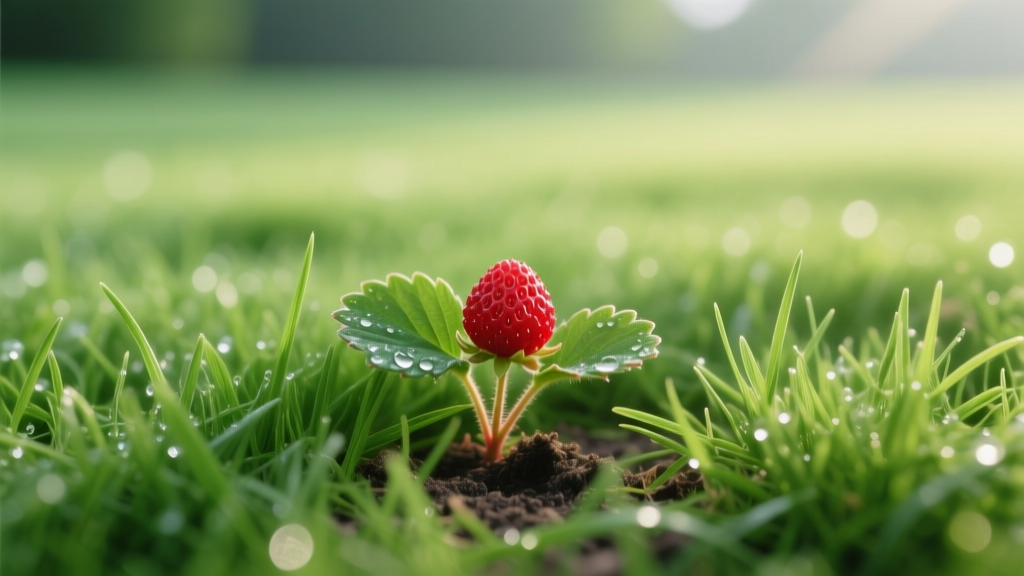
Small Red Berry Growing in Grass: Eradicate or Establish?
Identification Matrix: What Exactly Is Growing?
Spotting a small red berry growing in grass triggers two immediate reactions: concern over lawn uniformity and curiosity about the plant's identity. Before reaching for a broadleaf herbicide or a trowel, accurate identification is mandatory. Turfgrass ecosystems frequently host three primary red-berried interlopers, each demanding a vastly different management strategy. Misidentifying these species leads to wasted chemical applications or missed opportunities for shade-tolerant groundcover establishment.
| Species | Flower Color | Leaf Structure | Berry Taste & Texture | Growth Habit & Turf Impact |
|---|---|---|---|---|
| Wild Strawberry (Fragaria virginiana / vesca) |
White with yellow centers | Trifoliate, heavily toothed edges, pale green underside | Sweet, aromatic, soft | Stoloniferous; outcompetes weak turf in partial shade. Excellent edible groundcover. |
| Mock Strawberry (Potentilla indica) |
Yellow with yellow centers | Trifoliate, lighter green, less pronounced teeth | Tasteless, dry, mealy | Aggressive stolon spread; forms dense mats that smother cool-season grasses. Considered a noxious weed in several states. |
| Wintergreen / Teaberry (Gaultheria procumbens) |
White, bell-shaped | Evergreen, leathery, oval, minty scent when crushed | Minty, medicinal, firm | Woody sub-shrub; thrives in highly acidic, deep-shade soils where turfgrass universally fails. |
According to the University of Minnesota Extension, wild and mock strawberries are frequently confused by homeowners, but the flower color is the most reliable diagnostic feature in spring. Mock strawberry (Potentilla indica, formerly Duchesnea indica) is notably listed by the Invasive Species Network as an aggressive invader in disturbed turf areas, necessitating immediate eradication.
The Eradication Protocol: Removing Unwanted Berry Weeds
If your identification confirms Potentilla indica (Mock Strawberry) or you simply demand a monostand of turfgrass, eradication requires targeting the stolon network. Hand-pulling is largely ineffective; leaving even a half-inch of the rhizome or stolon node guarantees regrowth within 14 to 21 days.
Chemical Control (Selective Herbicides)
For cool-season lawns (Kentucky Bluegrass, Tall Fescue, Perennial Ryegrass), a three-way herbicide formulation is the industry standard for stoloniferous weeds. Look for products containing 2,4-D, Dicamba, and MCPP (e.g., SpeedZone Broadleaf Herbicide for Turf).
- Application Rate: Mix 1.5 fl oz of concentrate per 1,000 square feet.
- Surfactant: Add a non-ionic surfactant at 0.25% v/v (roughly 1/2 teaspoon per gallon) to break the waxy cuticle of the strawberry leaves.
- Timing: Apply in early fall (September) when the plant is actively pulling nutrients into its root system for winter storage. Spring applications often only burn the foliage, leading to a 60% relapse rate.
- Warm-Season Turf Note: If you maintain St. Augustine or Centipede grass, avoid 2,4-D, which can cause severe phytotoxicity. Use a Triclopyr-based product (e.g., Ortho WeedClear for Southern Lawns) at 1.25 fl oz per 1,000 sq ft.
Organic and Cultural Control
For organic lawns, horticultural vinegar (20% acetic acid) combined with an orange oil d-limonene surfactant will desiccate the foliage. However, this is a non-selective contact burn. You must apply it using a precision shielded sprayer to avoid killing surrounding turfgrass. Repeated applications every 10 days are required to exhaust the root carbohydrate reserves. Alternatively, smothering with 3mm black silage tarps for 45 days during peak summer heat (soil temperatures exceeding 110°F) will solarize and destroy the stolon network without chemicals.
The Establishment Guide: Planting Red-Berry Groundcovers
Flipping the paradigm from eradication to cultivation: if your lawn suffers from heavy shade, acidic soil, or constant foot traffic damage, intentionally establishing a red-berried groundcover is a superior ecological and aesthetic choice. Fragaria vesca (Alpine/Woodland Strawberry) and Gaultheria procumbens (Wintergreen) are premier alternatives to failing fescue.
Site Selection and Soil Prep
Wintergreen requires a soil pH between 4.5 and 5.5, while wild strawberries prefer a slightly higher pH of 5.8 to 6.5. Before planting, conduct a core soil test. If your pH is above 6.5, incorporate 1.5 lbs of elemental sulfur per 1,000 square feet into the top 4 inches of soil three months prior to planting to safely lower the alkalinity. Remove all existing turfgrass using a sod cutter set to a 2-inch depth to eliminate root competition.
Spacing, Planting, and Mulching
Purchase bare-root plugs or 3-inch potted starters. As of 2026, high-quality Fragaria vesca 'Alexandria' plugs typically cost between $1.85 and $2.40 each from specialty native nurseries.
- Grid Layout: Space plugs on 12-inch centers in a staggered diamond pattern. This density ensures the stolons will knit together into a solid mat within 60 to 90 days.
- Planting Depth: The crown (where the roots meet the stem) must sit exactly at the soil line. Burying the crown causes rot; planting too high exposes the roots to desiccation.
- Mulch: Apply a 1-inch layer of composted pine needles between the plugs. Pine needles maintain the acidic microenvironment required for berry production and suppress initial weed pressure while the stolons spread.
Watering and Fertilization Schedules
During the first 45 days of establishment, water the plugs with 0.25 inches of water every 48 hours. Once stolon runners begin anchoring into the soil, transition to deep, infrequent watering (0.5 inches twice a week). Fertilize sparingly; a single application of a 5-3-4 organic granular fertilizer (derived from poultry manure and kelp) at a rate of 4 lbs per 1,000 sq ft in early spring provides sufficient nitrogen without promoting excessive, weak foliage growth.
Troubleshooting Establishment Failures
Even with meticulous prep, groundcover establishment can stall. Use this diagnostic checklist to correct failing plantings:
⚠️ Symptom: Crowns are rotting and turning black at the soil line.
Cause: Over-mulching or planting the crown below grade.
Fix: Immediately pull back mulch 2 inches from the crown. Re-grade the soil to expose the top 10% of the root flare to air circulation.
Cause: Over-mulching or planting the crown below grade.
Fix: Immediately pull back mulch 2 inches from the crown. Re-grade the soil to expose the top 10% of the root flare to air circulation.
💡 Symptom: Plants are stunted, leaves are pale yellow, and no runners are forming.
Cause: Soil pH is too high (alkaline), locking out iron and manganese.
Fix: Apply a liquid chelated iron drench (Sequestrene 138) at 2 tablespoons per gallon to provide immediate relief, followed by a granular sulfur application to permanently lower the pH.
Cause: Soil pH is too high (alkaline), locking out iron and manganese.
Fix: Apply a liquid chelated iron drench (Sequestrene 138) at 2 tablespoons per gallon to provide immediate relief, followed by a granular sulfur application to permanently lower the pH.
Decision Framework: Keep, Kill, or Cultivate?
Use this rapid decision matrix to determine your next steps when you find a small red berry growing in grass:
- KILL: If the plant has yellow flowers (Potentilla indica), it is an invasive mock strawberry. Eradicate immediately with a three-way herbicide to protect your turf's root zone.
- KEEP: If the plant has white flowers, sweet berries, and is confined to a small, sunny patch of otherwise healthy lawn, simply mow over it. Wild strawberries are highly beneficial to native pollinators and tolerate standard 3-inch mowing heights.
- CULTIVATE: If the area is deeply shaded, the soil is acidic, and your turfgrass is thinning out annually, eradicate the failing grass and intentionally establish a grid of Fragaria vesca or Gaultheria procumbens plugs for a permanent, low-maintenance edible landscape.
Safety and Toxicity Considerations
When managing unknown berries in areas frequented by children or pets, exercise extreme caution. While wild strawberries and wintergreen berries (which yield natural methyl salicylate, the active compound in aspirin) are safe for human consumption in normal quantities, the seeds and concentrated essential oils of wintergreen can be toxic to dogs if ingested in large volumes. Conversely, the berries of the invasive Mock Strawberry are not toxic, but their mealy texture and lack of nutritional value make them an undesirable presence in play areas. Always prioritize positive identification via local university extension resources, such as the NC State University Plant Database, before allowing pets to forage in untreated lawn zones.

